Black Seed Oil Benefits: What the Research Says
From skin health to blood sugar, here's what studies on black seed oil actually show.
Key takeaways
- Black seed oil comes from Nigella sativa seeds and is rich in thymoquinone.
- Human studies suggest modest benefits for blood sugar and cholesterol.
- It may help some skin conditions when applied topically.
Black seed oil has a long history in traditional medicine and is now one of the most researched plant oils.[1]
What is black seed oil?
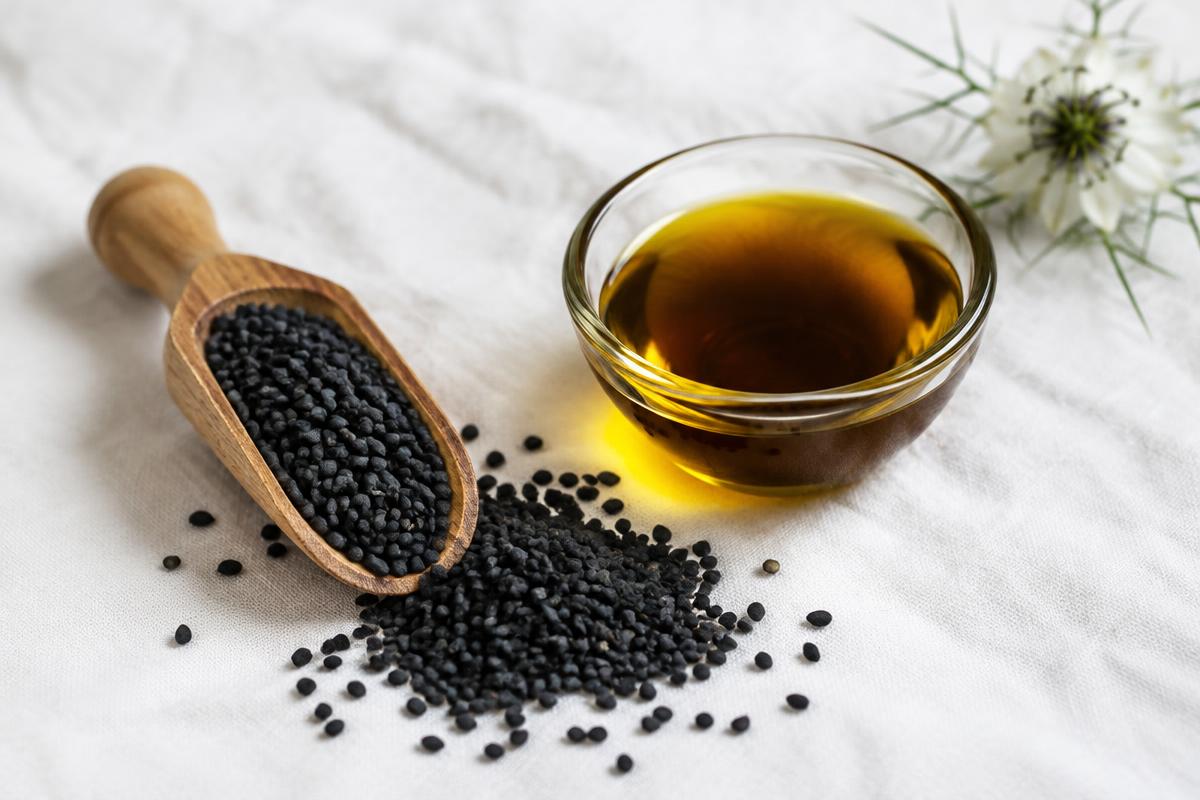
It's pressed from the seeds of Nigella sativa, also called black cumin. Learn more on our Nigella sativa research hub.
Blood sugar and cholesterol
A meta-analysis found Nigella sativa supplementation was associated with improvements in fasting blood sugar and blood lipids in people with type 2 diabetes.[2]
Skin health
Small trials have explored topical use for conditions like eczema.
Inflammation
Thymoquinone has shown anti-inflammatory activity in experimental studies.[3]
How to take black seed oil
- Common amounts in studies range from 1–3 g per day.
- Take with food.
- Choose cold-pressed oil from a reputable source.
Frequently asked questions
How long does black seed oil take to work?
Studies typically run for 8–12 weeks before measuring changes.
Does black seed oil have side effects?
Some people experience stomach upset. It may interact with blood sugar or blood pressure medication.
The bottom line
Black seed oil shows modest, promising benefits in human studies, especially for metabolic markers. More large, high-quality trials are needed.
Read this next
Black Seed Oil
What Does Black Seed Oil Taste Like?
Bold, bitter and peppery — here's what to expect from black seed oil's taste, and how to skip it.
Black Seed Oil
Is Black Seed Oil a Binder? What the Term Actually Means
'Binder' is a wellness term, not a medical one. Here's where black seed oil and oregano oil fit.

Thymoquinone
Thymoquinone: The Key Compound in Black Seed Oil
A summary of the research on thymoquinone, black seed oil's main bioactive compound.
Black Seed Oil
Black Seed vs Black Cumin vs Nigella: Are They the Same?
One plant, many names — and two that are often confused.
Nigella sativa
Nigella Sativa: Research Overview of Black Seed
The plant, the compounds and where the evidence is strongest.
Digestive Health
Black Cumin Seed Oil and H. Pylori: What Studies Show
A clinical trial tested black seed alongside standard H. pylori treatment. Here's what it found — and what it didn't.
Sources
- Ahmad A, Husain A, Mujeeb M, et al. A review on therapeutic potential of Nigella sativa: A miracle herb. Asian Pac J Trop Biomed. 2013;3(5):337-352.
- Daryabeygi-Khotbehsara R, Golzarand M, Ghaffari MP, Djafarian K. Nigella sativa improves glucose homeostasis and serum lipids in type 2 diabetes: a systematic review and meta-analysis. Complement Ther Med. 2017;35:6-13.
- Darakhshan S, Bidmeshki Pour A, Hosseinzadeh Colagar A, Sisakhtnezhad S. Thymoquinone and its therapeutic potentials. Pharmacol Res. 2015;95-96:138-158.