Nigella Sativa: Research Overview of Black Seed
The plant, the compounds and where the evidence is strongest.
Key takeaways
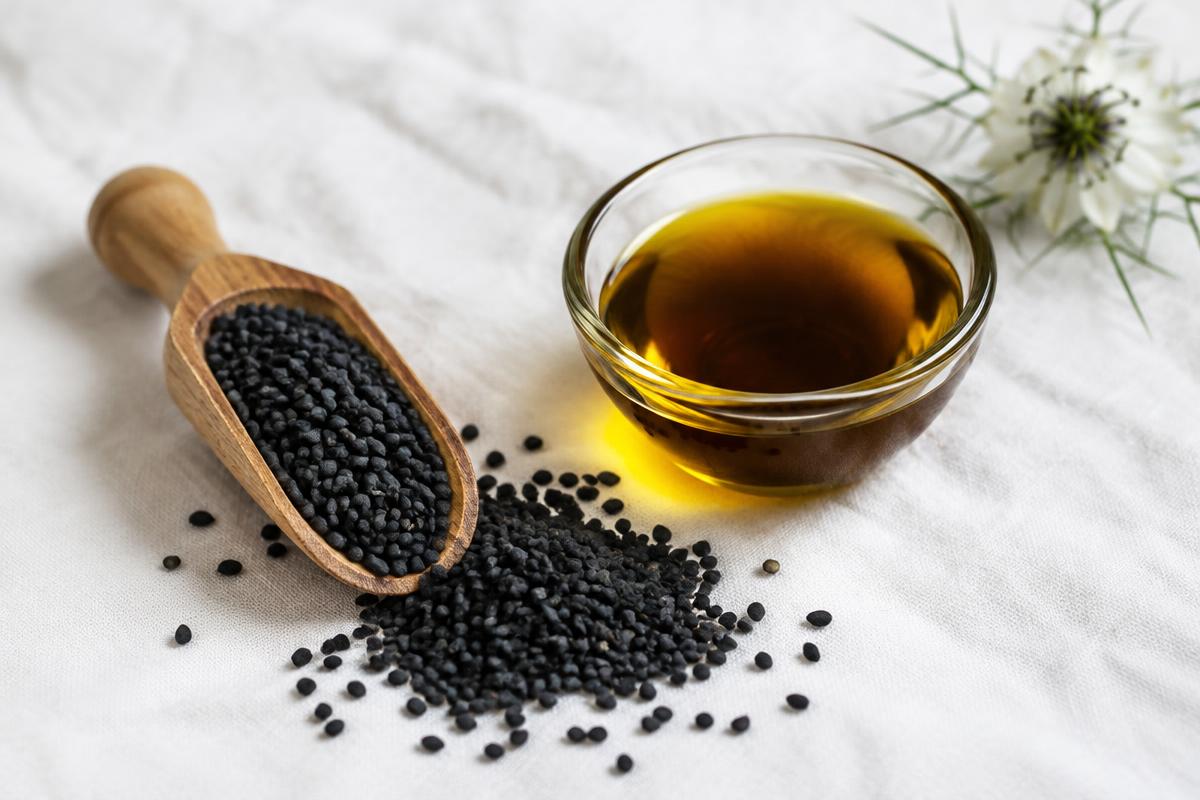
- Nigella sativa is a flowering plant whose seeds give black seed oil.
- Thymoquinone is its key active compound.
- Strongest human evidence: blood sugar and cholesterol.
The plant
Nigella sativa is an annual flowering plant in the buttercup family, grown across the Middle East, North Africa and South Asia.[1]
Active compounds
- Thymoquinone — see thymoquinone research
- Thymohydroquinone
- Fatty acids (linoleic, oleic)
Evidence summary
| Area | Strength of evidence |
|---|---|
| Blood sugar | Moderate (meta-analyses)[^2] |
| Cholesterol | Moderate (meta-analyses)[^3] |
| Weight | Small effect[^4] |
| Asthma & allergies | Small trials |
| Skin | Small trials |
Frequently asked questions
What are the benefits of nigella seed?
Most evidence relates to blood sugar, cholesterol, inflammation and skin.
The bottom line
Nigella sativa is one of the most researched medicinal seeds, with the best evidence for metabolic health.
Read this next
Thymoquinone
Thymoquinone: The Key Compound in Black Seed Oil
A summary of the research on thymoquinone, black seed oil's main bioactive compound.
Black Seed Oil
Black Seed vs Black Cumin vs Nigella: Are They the Same?
One plant, many names — and two that are often confused.
Nigella sativa
Black Cumin and Cancer: What Lab and Animal Research Shows
Headlines about 'black cumin and cancer' often overstate early lab findings. Here's a grounded look at the actual research.
Black Seed Oil
Black Seed Oil Benefits: What the Research Says
From skin health to blood sugar, here's what studies on black seed oil actually show.
Black Seed Oil
Black Seed Oil and the Immune System: Research Review
Immune cells, inflammation and antioxidant defences in the studies.
Digestive Health
Black Cumin Seed Oil and H. Pylori: What Studies Show
A clinical trial tested black seed alongside standard H. pylori treatment. Here's what it found — and what it didn't.
Sources
- Ahmad A, Husain A, Mujeeb M, et al. A review on therapeutic potential of Nigella sativa: a miracle herb. Asian Pac J Trop Biomed. 2013;3(5):337-352.
- Daryabeygi-Khotbehsara R, Golzarand M, Ghaffari MP, Djafarian K. Nigella sativa improves glucose homeostasis and serum lipids in type 2 diabetes: a systematic review and meta-analysis. Complement Ther Med. 2017;35:6-13.
- Sahebkar A, Beccuti G, Simental-Mendía LE, et al. Nigella sativa (black seed) effects on plasma lipid concentrations in humans: a systematic review and meta-analysis of randomized placebo-controlled trials. Pharmacol Res. 2016;106:37-50.
- Namazi N, Larijani B, Ayati MH, Abdollahi M. The effects of Nigella sativa L. on obesity: a systematic review and meta-analysis. J Ethnopharmacol. 2018;219:173-181.