How Much Black Seed Oil to Take Daily
Doses used in studies, translated into teaspoons and capsules.
Key takeaways
- Studies commonly used 1–3 ml (about ¼–½ teaspoon) up to 5 ml (1 teaspoon) daily.
- Start low and take with food.
- There's no official recommended dose.
Doses used in research
Clinical trials have used roughly 1–5 ml of oil or 1–3 grams of seed powder per day, usually for 4–12 weeks.[1]
| Amount | Approximate equivalent |
|---|---|
| 1 ml | About ¼ teaspoon |
| 2.5 ml | ½ teaspoon |
| 5 ml | 1 teaspoon |
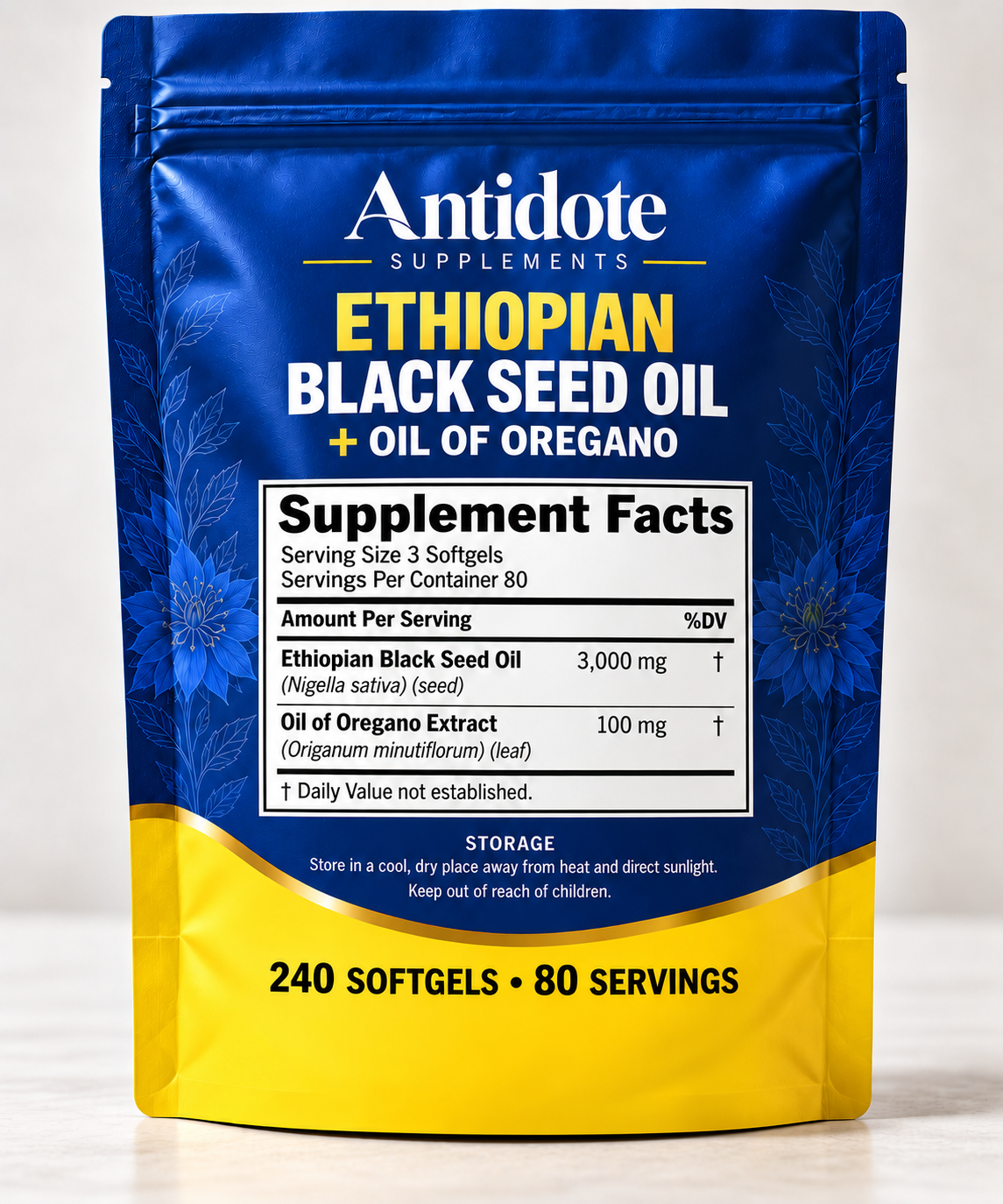
| 500 mg capsule | About 0.5 ml |
When to take it
Take it with a meal, once or twice a day. Morning or evening doesn't appear to matter.
Who should be careful
- Pregnant women
- People on blood thinners, diabetes or blood pressure medicine
- Before surgery
Frequently asked questions
Can I take black seed oil on an empty stomach?
Some do, but it's more likely to cause stomach upset. Food helps.
Is a tablespoon of black seed oil too much?
A tablespoon (15 ml) is above most study doses. Stick to 1 teaspoon or less unless advised.
The bottom line
Most research used about ¼ to 1 teaspoon of black seed oil daily with food. Follow your product label and start low.
Read this next
Black Seed Oil
Black Seed Oil Benefits: What the Research Says
From skin health to blood sugar, here's what studies on black seed oil actually show.
Safety
Can You Take Black Seed Oil While Breastfeeding or Pregnant?
Food amounts vs supplements during pregnancy and breastfeeding.
Black Seed Oil
What Does Black Seed Oil Taste Like?
Bold, bitter and peppery — here's what to expect from black seed oil's taste, and how to skip it.
Black Seed Oil
Is Black Seed Oil a Binder? What the Term Actually Means
'Binder' is a wellness term, not a medical one. Here's where black seed oil and oregano oil fit.
Black Seed Oil
Black Seed Oil for Hair: Benefits and How to Use It
A simple scalp routine, realistic results and how it compares with hair vitamins.
Black Seed Oil
Black Seed Oil for Skin: Benefits and How to Use It
Eczema, acne, dry skin and wound care — what Nigella oil may do for skin.
Sources
- Tavakkoli A, Mahdian V, Razavi BM, Hosseinzadeh H. Review on clinical trials of black seed (Nigella sativa) and its active constituent, thymoquinone. J Pharmacopuncture. 2017;20(3):179-193.
- Ahmad A, Husain A, Mujeeb M, et al. A review on therapeutic potential of Nigella sativa: a miracle herb. Asian Pac J Trop Biomed. 2013;3(5):337-352.