United Kingdom
How to Make Oregano Oil at Home (and Why Store-Bought Is Stronger)
You can infuse oregano oil at home, but it will not match a true steam-distilled oil of oregano. Here is how, and why.

Key takeaways
- Homemade oregano oil is an infusion: oregano steeped in a carrier oil.
- True oil of oregano is steam-distilled and far more concentrated in carvacrol.
- Homemade oil is lovely for cooking; store-bought is the supplement-strength option.
Making oregano oil at home is a satisfying kitchen project, but it helps to know what you are actually making, and how it differs from the supplement in the bottle.
What homemade oregano oil is
A home version is an infusion: fresh or dried oregano steeped in a carrier oil such as olive oil. It picks up the herb's flavour and some of its aromatic compounds, but gently. True oil of oregano is steam-distilled, a process that concentrates the active compound carvacrol to levels a kitchen infusion cannot reach.[1][2]
How to make it
- Wash and fully dry a generous bunch of fresh oregano; any water risks spoilage.
- Bruise the leaves lightly to release their oils.
- Cover completely with good olive oil in a clean glass jar.
- Seal and leave on a sunny windowsill for two weeks, shaking daily.
- Strain through muslin into a clean bottle and store in a cool, dark place.
What it is good for
Homemade oregano oil is wonderful in cooking: dressings, marinades, drizzling over roasted vegetables. It carries the herb's flavour beautifully.
Why store-bought is stronger
Supplement-grade oil of oregano is steam-distilled and standardised, with a stated carvacrol percentage, often 70% or more. That concentration is why it is taken in drops or softgels, and why the research on oregano oil uses distilled oil, not infusions.[1][3] If you want oregano oil as a supplement, a tested store-bought product is the right choice.
Antidote Supplements
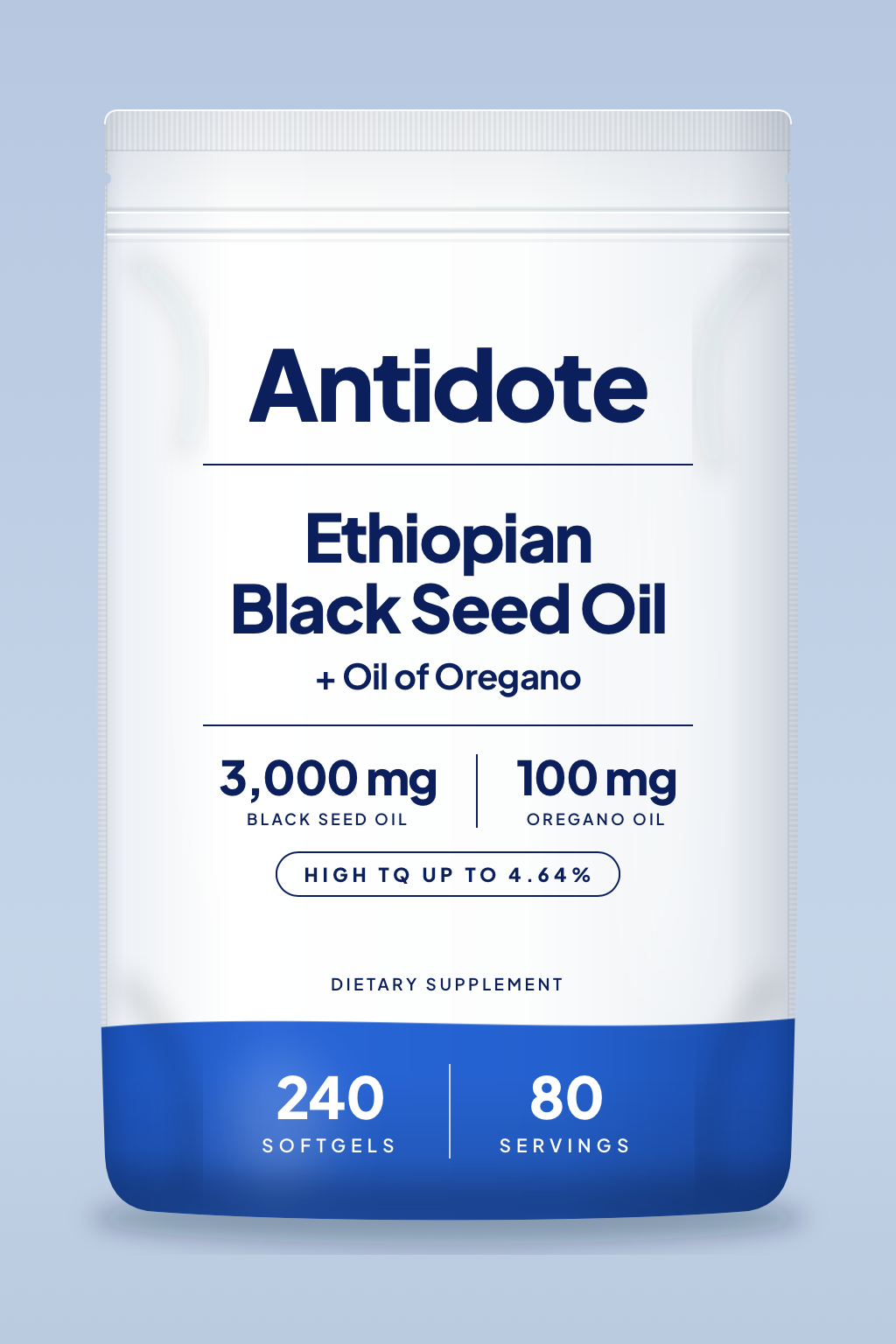
The Antidote Supplements combination softgels contain 3,000 mg black seed oil and 100 mg oregano oil extract per three-softgel serving, with up to 4.64% naturally occurring thymoquinone and 80 servings in each 240-softgel pouch.
The bottom line
Homemade oregano oil is a lovely culinary infusion, but true oil of oregano is steam-distilled and far stronger. For supplement use, choose a tested product with a stated carvacrol content.
Medical reviewer
Dr Hossein Samaei
MD, FRACGP
Read this next
Oregano Oil
Oregano Oil: Benefits, Uses and Side Effects (Complete Guide)
The complete UK guide to oregano oil: what it is, what the research shows, how to take it and who should check first.
Oregano Oil
Oil of Oregano: What It Is and How to Use It
Oil of oregano is the concentrated supplement form of the oregano herb. Here is what it is and how to use it properly.
Oregano Oil
Oregano Oil Benefits: What It Can and Can't Do
Oregano oil has real strengths and real limits. Here is an honest look at what it can and can't do.

Oregano Oil
Oil of Wild Oregano: What Makes Wild Oregano Different?
Wild oregano is not just a marketing word. Here is what it means, why it matters for carvacrol content, and what to look for.
Oregano Oil
Oregano Oil Capsules: Benefits, Dosage and How to Choose
What oregano oil capsules offer, how much to take, and the label details that separate a good product from a weak one.

Oregano Oil
Advantages of Oregano Oil Over Other Natural Supplements
What sets oregano oil apart from other natural supplements, and where it fits in a simple daily routine.
Sources
- Leyva-Lopez N, et al. Essential oils of oregano: Biological activity beyond their antimicrobial properties. Molecules. 2017;22(6):989.
- Suntres ZE, Coccimiglio J, Alipour M. The bioactivity and toxicological actions of carvacrol. Critical Reviews in Food Science and Nutrition. 2015;55(3):304-318.
- NHS. Vitamins, supplements and nutrition: herbal remedies and supplements.