Scalp Psoriasis Treatment: From Shampoos to Natural Options
Thick, scaly scalp plaques need a dedicated routine — here's what dermatologists recommend, plus the evidence on black cumin seed oil.
Key takeaways
- Scalp psoriasis causes thick, silvery-scaled plaques that can extend beyond the hairline.
- Medicated shampoos with coal tar or salicylic acid are first-line treatments; prescription topicals treat flares.
- "Sebo-psoriasis" describes overlap between psoriasis and seborrheic dermatitis and may need a combination approach.
- Black cumin seed oil has anti-inflammatory activity in lab studies but hasn't been proven in human psoriasis trials.
Scalp psoriasis affects roughly half of people with plaque psoriasis at some point, often extending past the hairline onto the forehead, neck or behind the ears.
What is scalp psoriasis?
It develops when skin cells on the scalp multiply too quickly, forming thick, well-defined, silvery-white scaly patches, often with noticeable redness underneath. It can itch, flake visibly, and in severe cases cause temporary hair loss from scratching or thick plaque buildup.
What is sebo-psoriasis?
Some people have features of both psoriasis and seborrheic dermatitis on the scalp at once — sometimes called sebo-psoriasis. It tends to look greasier and less sharply defined than classic psoriasis plaques, and often responds best to a combination of antifungal and anti-inflammatory ingredients.
Medicated shampoo and treatment options
| Option | How it works |
|---|---|
| Coal tar shampoo | Slows skin cell turnover, reduces scaling |
| Salicylic acid shampoo | Softens and lifts thick scale |
| Topical corticosteroid solutions/foams | Reduces inflammation during flares |
| Vitamin D analogue (calcipotriene) | Slows excess skin cell growth |
| Phototherapy / biologics | For moderate-to-severe or widespread disease |
Does black cumin seed oil help psoriasis?
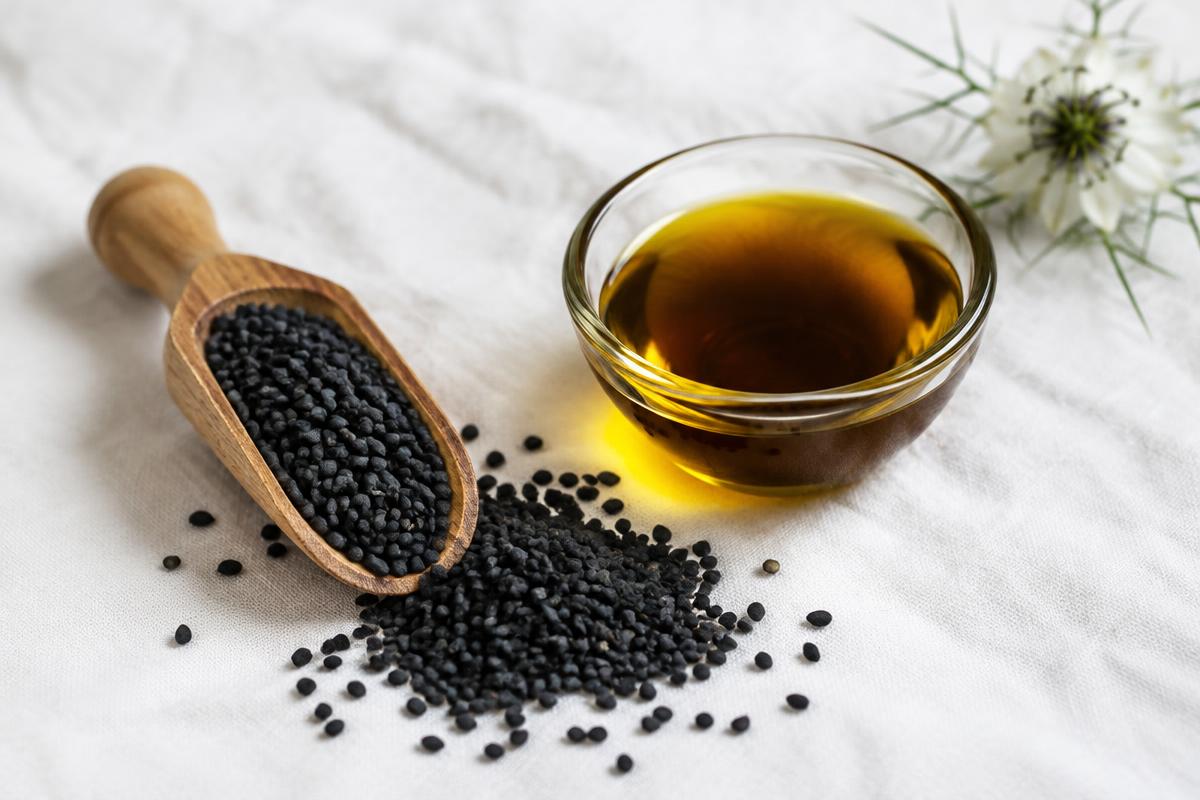
Black cumin seed oil (Nigella sativa) contains thymoquinone, which has shown anti-inflammatory and immune-modulating effects in lab and animal studies relevant to psoriasis-like inflammation.[1] However, there isn't yet a strong human clinical trial testing black seed oil specifically for scalp psoriasis. Some people use it diluted as a scalp oil treatment to soften scale before shampooing, similar to its use in scalp eczema, but it should be seen as a gentle supportive step, not a substitute for medicated shampoo or prescribed treatment.
Scalp care tips
- Avoid picking at scale, which can trigger bleeding and worsen plaques (the Koebner phenomenon).
- Let medicated shampoo sit for 5–10 minutes before rinsing.
- Moisturize the scalp between washes if it feels tight or dry.
- Track flares — stress, cold weather and skin injury are common triggers.
When to see a doctor
Black seed oil and oregano oil are not a substitute for diagnosis or prescribed treatment. See a healthcare professional if symptoms are severe, getting worse or not improving.
Frequently asked questions
Can scalp psoriasis cause hair loss?
Yes, temporarily — usually from scratching, forceful scale removal, or thick plaque buildup rather than psoriasis destroying follicles directly. Hair typically regrows once the scalp clears.
How is sebo-psoriasis different from regular psoriasis?
Sebo-psoriasis has features of both seborrheic dermatitis and psoriasis, often appearing greasier and less sharply bordered, and may need antifungal plus anti-inflammatory treatment.
Is black cumin seed oil the same as black seed oil?
Yes, black cumin seed oil and black seed oil both refer to Nigella sativa oil.
The bottom line
Scalp psoriasis usually needs a dedicated shampoo routine and sometimes prescription treatment. Black cumin seed oil shows promising anti-inflammatory activity in lab research but isn't a proven substitute for medicated scalp treatments.
Read this next
Skin
How to Treat Eczema on the Scalp (and Tell It Apart From Dandruff)
An itchy, flaking scalp could be eczema, seborrheic dermatitis, or both — here's how to tell and treat it.
Skin
Psoriasis vs. Eczema: How to Tell the Difference
Red, itchy, scaly skin could be psoriasis or eczema — the differences matter for treatment.

Skin
Light Therapy for Psoriasis: How It Works and What Else Helps
From UV phototherapy to vitamin D and injections, here's how psoriasis treatment has expanded beyond creams.
Black Seed Oil
What Does Black Seed Oil Taste Like?
Bold, bitter and peppery — here's what to expect from black seed oil's taste, and how to skip it.
Black Seed Oil
Is Black Seed Oil a Binder? What the Term Actually Means
'Binder' is a wellness term, not a medical one. Here's where black seed oil and oregano oil fit.
Skin
Black Seed Oil for Hair Loss: Does It Help Hair Grow Back?
What small studies show about black seed oil for thinning hair, and how it compares with proven treatments.