Australia
Oil of Oregano Tablets vs Capsules vs Drops: Which Format Suits You?
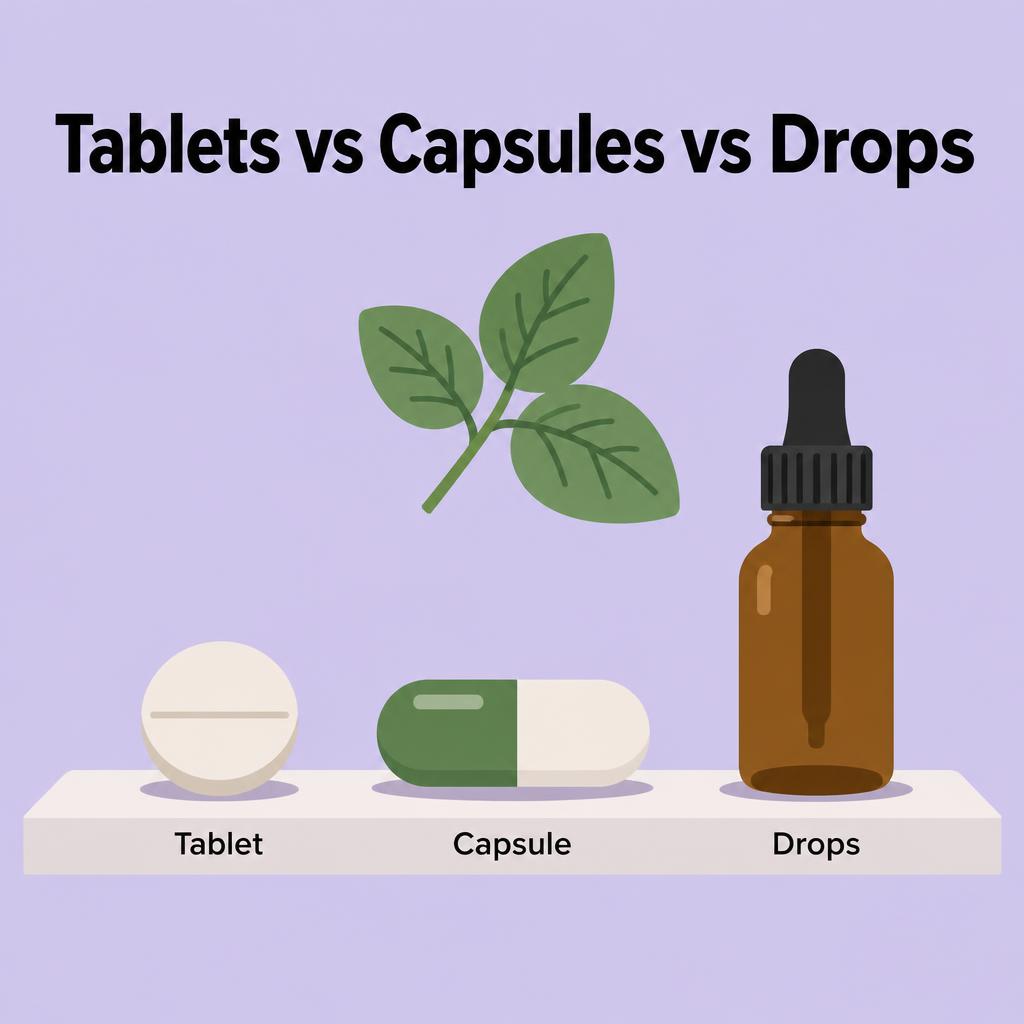
Oregano oil comes as tablets, capsules and drops. Here is how the formats compare on taste, dosing and convenience.
Key takeaways
- Oregano oil is a liquid, so most products are softgels, capsules or drops.
- Products called tablets often contain dried herb or oil absorbed into a powder.
- Softgels give a measured dose without the strong taste.
Searching for oregano oil tablets brings up several formats. Each suits a different kind of routine.
Tablets
Because oregano oil is a liquid, true pressed tablets are less common. Products sold as tablets may contain dried oregano leaf or oil bound to a powder, so check the milligrams of oil on the label.[1]
Capsules and softgels
Softgels hold the oil sealed in a gel shell. They give a measured amount, hide the strong taste and are easy on the go.
Drops
Drops allow flexible amounts but taste very strong and must be diluted. Carvacrol can irritate the mouth and throat undiluted.[2]
Quick comparison
- Convenience: softgels and capsules.
- Flexible dosing: drops.
- Taste: softgels win.
- Label clarity: look for oil amounts in milligrams, whatever the format.
Antidote Supplements
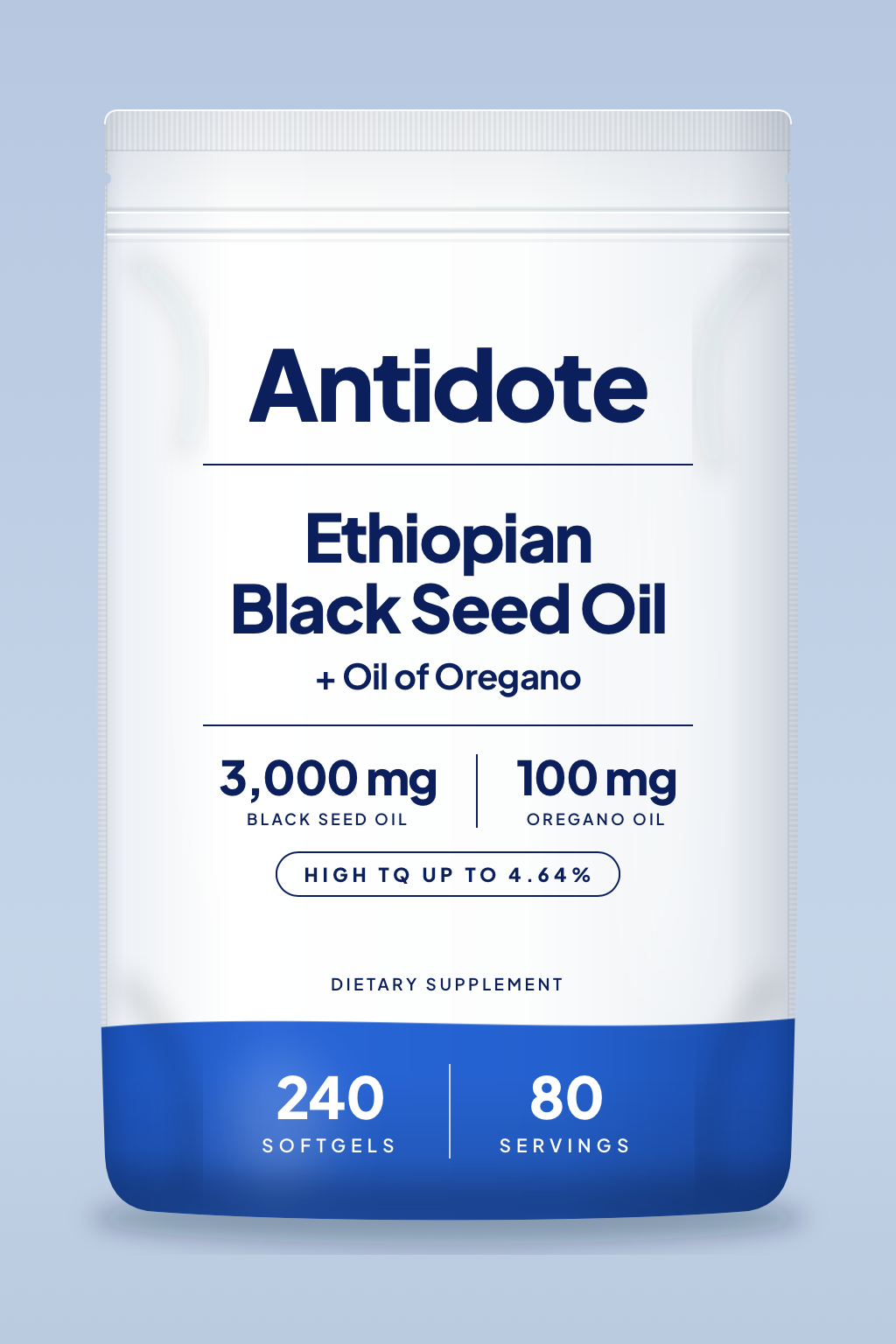
The Antidote Supplements combination softgels contain 3,000 mg black seed oil and 100 mg oregano oil extract per three-softgel serving, with up to 4.64% naturally occurring thymoquinone and 80 servings in each 240-softgel pouch. It is a softgel, not a tablet or drop.
The bottom line
Softgels are the easiest way to take oregano oil, drops give flexibility and tablets often contain dried herb. Compare actual oil amounts on the label.
Medical reviewer
Dr Donald Otasowie
MBBS, FRACGP
Read this next
Buying Guides
Oil of Oregano in Australia: How to Choose a Quality Product
A practical checklist for oregano identity, concentration, intended use and Australian registration claims before you order.
Buying Guides
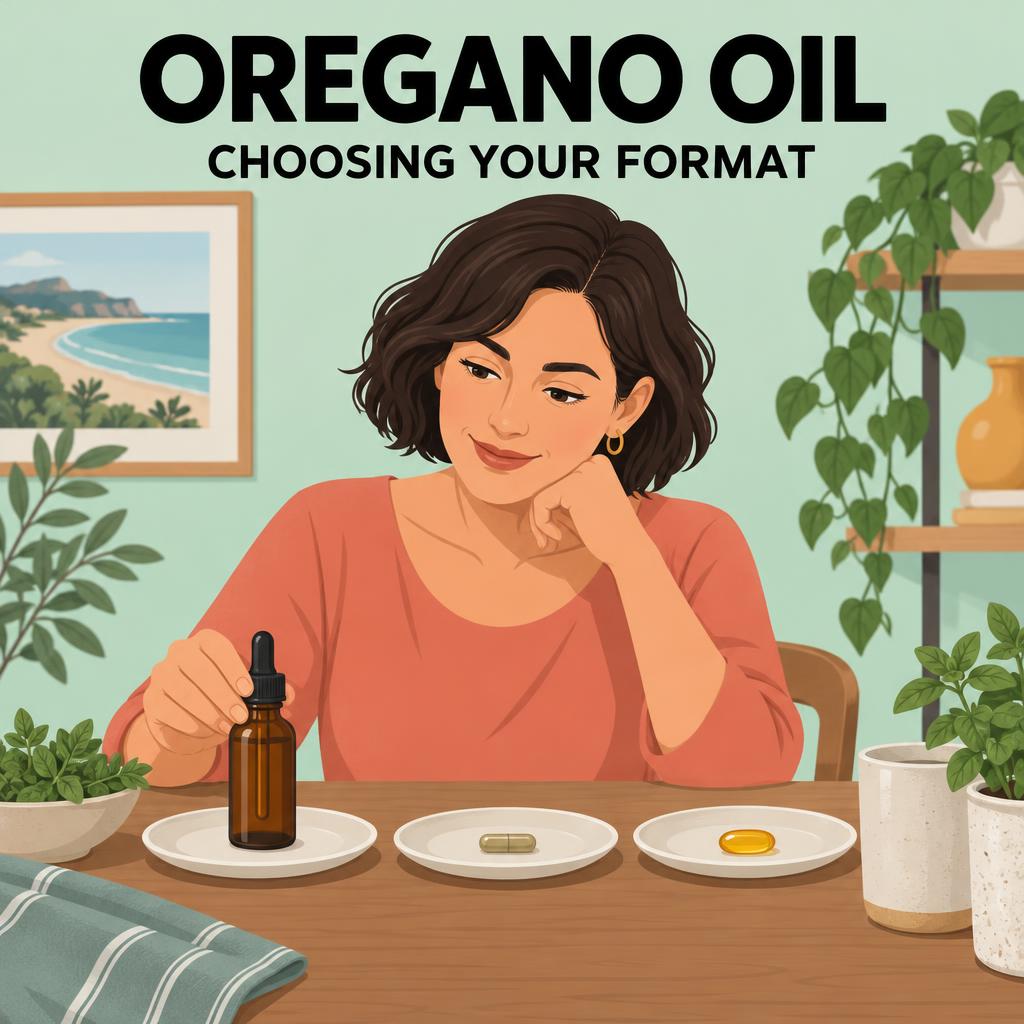
Buying Oregano Oil in Australia: Capsules, Liquid or Softgels?
Compare taste, measurement, capsule ingredients and travel convenience before choosing an oregano oil format in Australia.
Buying Guides
Where to Buy Oregano Oil in Australia
Compare pharmacies, specialist retailers and online sellers by product identity, oral directions and current delivered cost, without invented stockist lists.
Buying Guides
Organic Oregano Oil: Is Organic Worth It in Australia?
How organic certification works in Australia, what it does and does not tell you about an oregano oil, and other quality signs to check.
Buying Guides
Oil of Oregano Supplements: A Buyer's Guide
Not all oregano oil supplements are equal. Here is what to check on the label before you buy in Australia.
How to Use
Oil of Oregano: What It Is and How to Use It in Australia
Understand oregano supplements, essential oils and kitchen infusions before choosing a format or following a serving instruction.
Sources
- Therapeutic Goods Administration. Understanding listed and registered complementary medicine regulation.
- Suntres ZE, Coccimiglio J, Alipour M. The bioactivity and toxicological actions of carvacrol. Critical Reviews in Food Science and Nutrition. 2015;55(3):304–318.
- Leyva-López N, et al. Essential oils of oregano: Biological activity beyond their antimicrobial properties. Molecules. 2017;22(6):989.