United States
Foods That Kill Parasites in Humans: What the Research Shows (US Guide)
Americans search for foods that kill parasites more than 22,000 times a month. Here are the six with real studies behind them, ranked by how strong that research is.
Key takeaways
- Black seed (Nigella sativa) has the strongest human research of any food in this list, including randomized trials on gut microbes.
- Papaya seeds cleared intestinal parasites in 76.7% of children in a small placebo-controlled pilot study.
- Oil of oregano is the most studied herb oil for gut parasites, with one human study and extensive lab data.
- Pumpkin seeds and garlic have a long traditional record and supportive lab and case data.
- These foods work best as part of a gut-supportive routine, alongside testing when symptoms are persistent.
Foods that kill parasites in humans is one of the most searched natural health questions in the United States, with more than 22,000 searches every month. The internet is full of lists. Very few of them tell you which foods actually have studies behind them.
This guide does. We looked at the published research on the most popular anti-parasite foods and ranked them by evidence, from human trials down to lab results. Two of the top three, black seed and oregano, are also the two oils Americans most often combine in a daily routine.
Quick answer: the top foods ranked by research
| Food | Key compound | Best evidence | Strength |
|---|---|---|---|
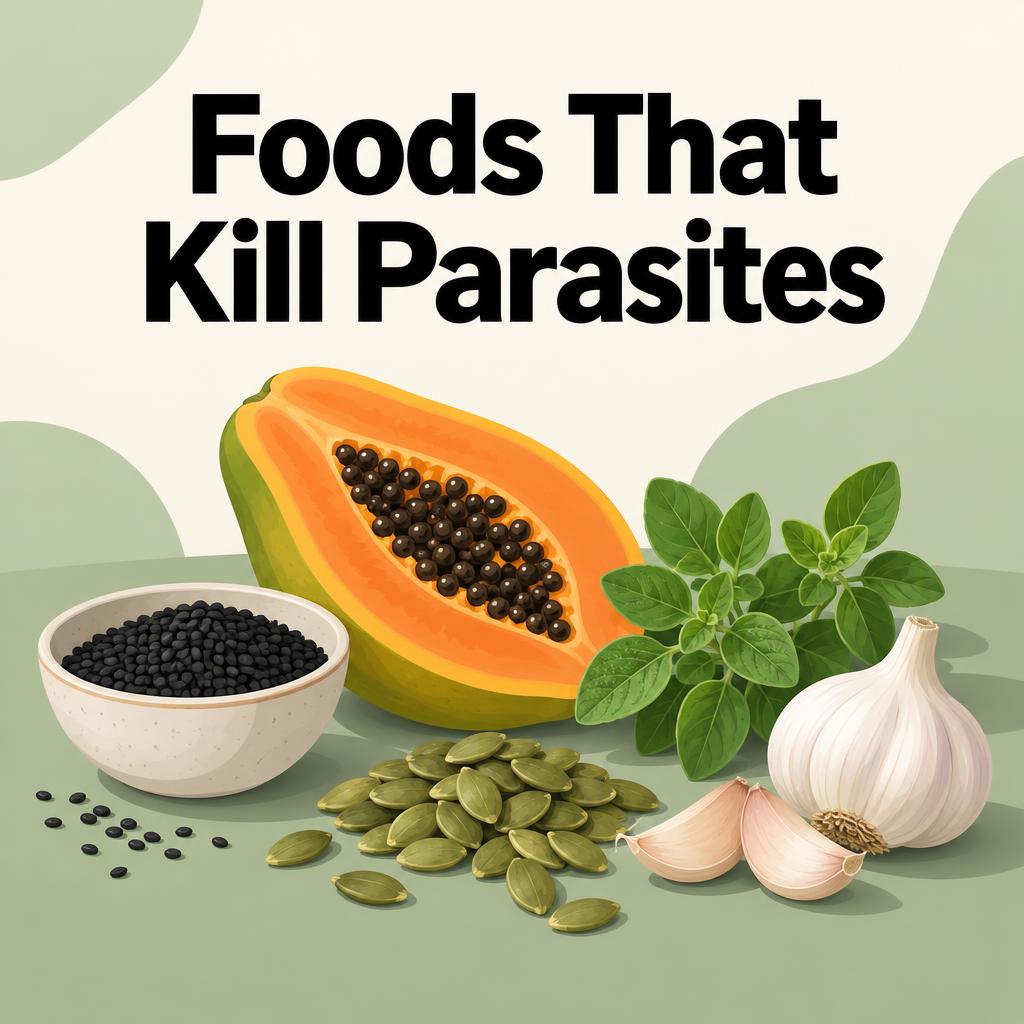
| Black seed (Nigella sativa) | Thymoquinone | Human trials in tapeworm, amoeba and H. pylori | Strongest |
| Papaya seeds | Benzyl isothiocyanate | Placebo-controlled pilot study in 60 children | Promising |
| Oil of oregano | Carvacrol | Human study in 14 adults plus extensive lab data | Promising |
| Pumpkin seeds | Cucurbitine | Traditional use and case reports, often with areca nut | Early |
| Garlic | Allicin | Lab studies and a small older study in children | Early |
| Fermented foods | Probiotic bacteria | Gut microbiome research | Supportive |
1. Black seed: the food with the most human research
Black seed, also called black cumin or kalonji, comes from the Nigella sativa plant. It is a kitchen spice across the Middle East and South Asia, and it is the food with the deepest human research on gut microbes and parasites.
- Tapeworm in children: a field trial found black seed reduced tapeworm egg counts by a margin comparable to the standard drug niclosamide.[1]
- Amoeba: a randomized, double-blind trial in Egyptian children reported a 78.8% cure rate with black seed powder, close to the 91.2% seen with metronidazole.
- H. pylori: a 2010 trial found 2 g a day of ground black seed cleared H. pylori in 66.7% of people, statistically similar to triple antibiotic therapy.[2] A 2023 double-blind trial found it worked well as an add-on to standard treatment.[3]
- Schistosoma: animal research found black seed oil reduced worm and egg counts in the liver.[4]
The key compound is thymoquinone, and its level varies a lot between oils. Cold-pressed Ethiopian black seed oil is known for naturally high thymoquinone, which is why it is the most sought-after origin. You can learn more in our guide on whether black seed oil kills parasites.
2. Papaya seeds: a surprising placebo-controlled result
The small black seeds inside a papaya are peppery and edible. In a pilot study, 60 children with intestinal parasites were given either a single dose of dried papaya seed mixed with honey or honey alone. A week later, 76.7% of the papaya seed group had clear stool samples, compared with 16.7% on honey.[5]
It is a small study, but it is placebo-controlled, which puts papaya seeds ahead of most foods on viral lists. Most people grind a teaspoon of dried seeds into a smoothie or honey.
3. Oil of oregano: the most studied herb oil for gut parasites
Oregano oil is rich in carvacrol, one of the most researched natural antimicrobial compounds. In a 2000 human study, adults with gut parasites took 600 mg of emulsified oregano oil a day for six weeks. Blastocystis cleared in 8 of 11 people, two other parasite types cleared completely, and gut symptoms improved in most participants.[6]
Herbal formulas that include oregano oil have also performed well for gut balance. In a study of 104 people with small intestinal bacterial overgrowth, herbal blends worked as well as the antibiotic rifaximin.[7] For the full breakdown, read does oil of oregano kill parasites.
4. Pumpkin seeds: a traditional remedy with case support
Raw pumpkin seeds contain cucurbitine, a compound traditionally used to help expel tapeworms. In China they have been combined with areca nut extract for decades, and a published case report describes a patient who passed all 20 of her tapeworms after this approach.[8] Human trials of pumpkin seeds on their own are still lacking.
5. Garlic: strong in the lab
Garlic's allicin is active against several gut parasites in laboratory studies, including Giardia. A small older study in Egyptian children reported improvement in giardiasis and dwarf tapeworm with aqueous garlic extract.[9] It is a cheap, everyday addition to a gut-friendly diet.
6. Fermented foods: supporting the gut environment
Yogurt, kefir, sauerkraut and kimchi supply beneficial bacteria that help maintain a balanced gut environment. They are not anti-parasite foods on their own, but a healthy microbiome is part of the foundation that every gut cleanse routine builds on.
How to add these foods to your routine
- Make black seed your daily foundation, either as a spice or as cold-pressed black seed oil.
- Add oregano oil in short courses, using a product made for oral use.
- Use papaya seeds, pumpkin seeds and garlic as food, not megadoses.
- Eat fermented foods and plenty of fiber to support regularity.
- If symptoms are persistent, get a stool test so you know exactly what you are dealing with.
Getting both oils in one serving
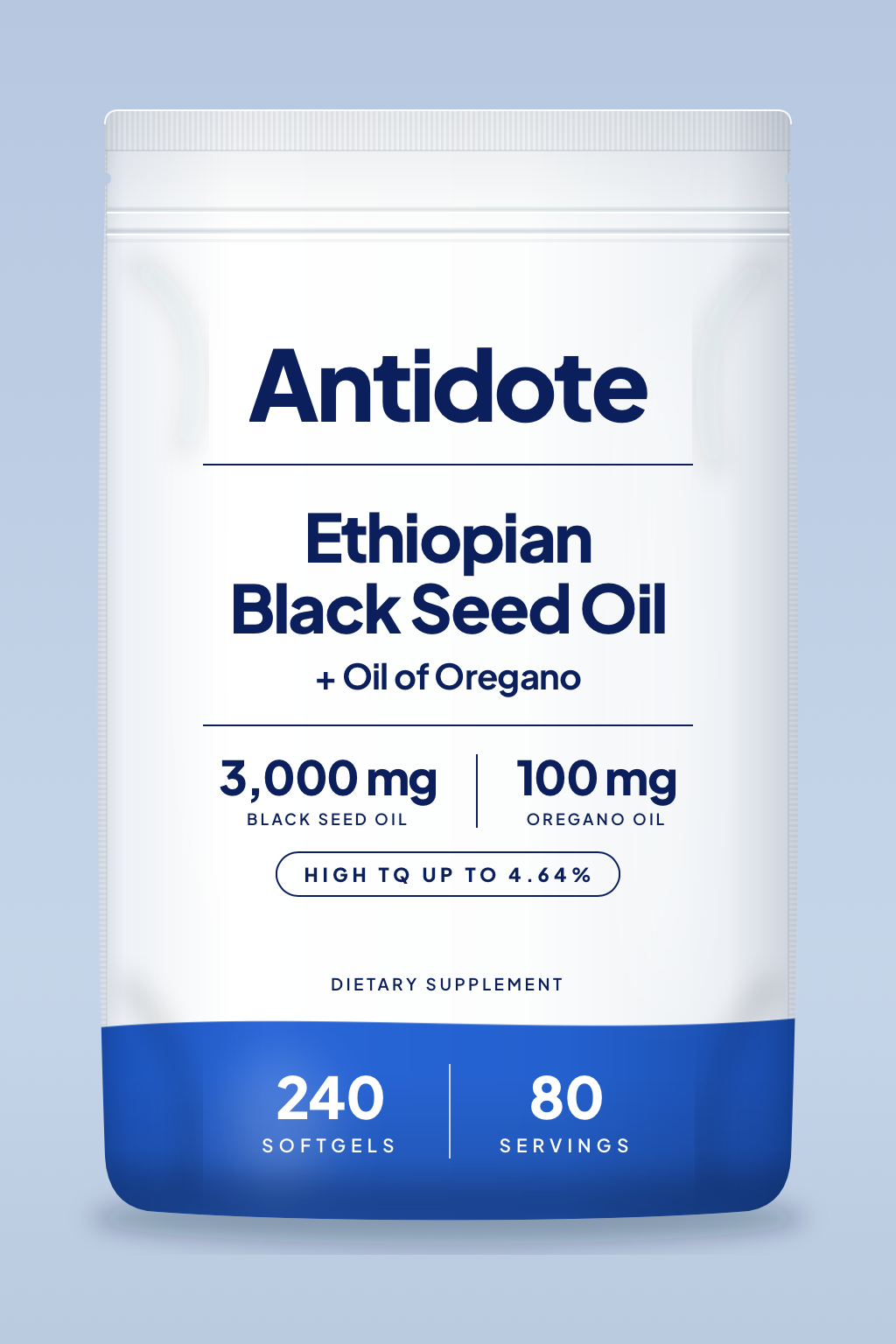
Black seed oil and oregano oil are the two highest-ranked ingredients in this guide. A combination softgel delivers both in one measured, taste-free serving, which makes the routine far easier to keep up than measuring two strong-tasting oils.
Frequently asked questions
What food kills parasites in humans fastest?
No food works as fast as prescription medicine. Among foods, papaya seeds showed results within a week in one pilot study, and black seed has the broadest human research overall.
Does black seed oil kill parasites?
Human trials found black seed reduced tapeworm eggs and cleared amoeba at rates close to standard drugs, and animal studies support activity against Schistosoma. Most trials used ground seed, and the oil carries the same key compound, thymoquinone.
Can I take black seed oil and oregano oil together?
Yes. They are commonly taken together, and no interaction between the two is documented. A combination softgel is the simplest way to take both.
Is garlic or oregano better for parasites?
Oregano oil has a human study on gut parasites, while garlic's evidence is mostly from the lab. Many people use both: garlic as food and oregano oil as a supplement.
The bottom line
The foods with the best research against parasites are black seed, papaya seeds and oil of oregano, followed by pumpkin seeds and garlic. Black seed stands out with multiple human trials, and oregano oil is the most studied herb oil for gut parasites. Build a routine around these two, eat the supporting foods, and test if symptoms persist.
Read this next
Parasite Cleanse
Parasite Cleanse Diet: What to Eat and What to Avoid (US Guide)
What you eat during a parasite cleanse matters. Here is a simple US parasite cleanse diet: the foods with research, the foods to cut back on, and a sample day.
Parasite Cleanse
Natural Parasite Cleanse in the USA: Herbs, Foods and What the Research Shows
A natural parasite cleanse works best when it is built on the herbs and foods with research behind them. Here is the evidence, and a simple 30-day plan.
Parasite Cleanse
How Long Does It Take to Kill Parasites? Medicine and Natural Timelines (USA)
From a single pinworm dose to a six-week oregano oil course, here is how long it takes to kill parasites, with the timelines used in real studies.
Oregano Oil
Does Oil of Oregano Kill Parasites? What the Research Says
Oil of oregano has a long folk reputation against parasites, and one small human trial exists. Here is what the evidence actually shows.
Black Seed Oil
Does Black Seed Oil Kill Parasites? What the Research Says
Black seed oil has a folk reputation against parasites, and some early research exists. Here is what studies actually show and where the limits are.
Parasite Cleanse
Best Human Parasite Cleanse in the USA: Ingredient-by-Ingredient Breakdown
The best human parasite cleanse is the one built on ingredients with studies behind them. Here is every common ingredient, ranked by how much human research it has.
Sources
- Akhtar MS, Riffat S. Field trial of Saussurea lappa roots against nematodes and Nigella sativa seeds against cestodes in children. Journal of the Pakistan Medical Association. 1991;41(8):185-187.
- Salem EM, Yar T, Bamosa AO, et al. Comparative study of Nigella sativa and triple therapy in eradication of Helicobacter pylori in patients with non-ulcer dyspepsia. Saudi Journal of Gastroenterology. 2010;16(3):207-214.
- Randomised, double-blind, placebo-controlled trial of Nigella sativa as an adjunct to quadruple therapy for Helicobacter pylori. BMC Complementary Medicine and Therapies. 2023.
- Mahmoud MR, El-Abhar HS, Saleh S. The effect of Nigella sativa oil against the liver damage induced by Schistosoma mansoni infection in mice. Journal of Ethnopharmacology. 2002;79(1):1-11.
- Okeniyi JAO, Ogunlesi TA, Oyelami OA, Adeyemi LA. Effectiveness of dried Carica papaya seeds against human intestinal parasitosis: a pilot study. Journal of Medicinal Food. 2007;10(1):194-196.
- Force M, Sparks WS, Ronzio RA. Inhibition of enteric parasites by emulsified oil of oregano in vivo. Phytotherapy Research. 2000;14(3):213-214.
- Chedid V, Dhalla S, Clarke JO, et al. Herbal therapy is equivalent to rifaximin for the treatment of small intestinal bacterial overgrowth. Global Advances in Health and Medicine. 2014;3(3):16-24.
- Ito A, Li T, Chen X, et al. Mini review on chemotherapy of taeniasis and cysticercosis due to Taenia solium in Asia, and a case report with 20 tapeworms in China. Tropical Biomedicine. 2013;30(2):164-173.
- Soffar SA, Mokhtar GM. Evaluation of the antiparasitic effect of aqueous garlic (Allium sativum) extract in hymenolepiasis nana and giardiasis. Journal of the Egyptian Society of Parasitology. 1991;21(2):497-502.