United Kingdom
Oil of Oregano with Black Seed Oil Side Effects: What to Know Before You Start
The oregano and black seed oil combination is well tolerated by most people, but a few side effects and interactions are worth knowing before your first capsule.
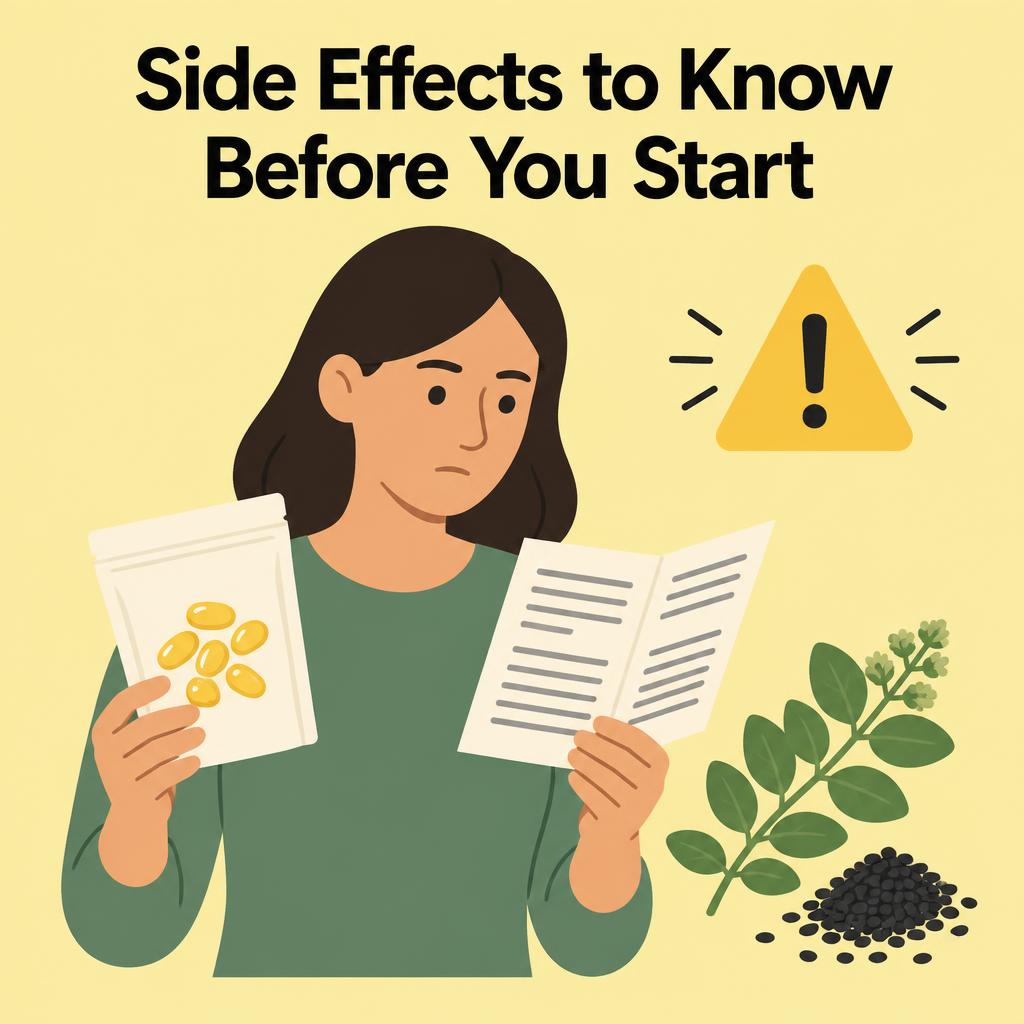
Key takeaways
- Most people tolerate oregano and black seed oil softgels well.
- The most common complaints are mild: stomach upset, heartburn or an aftertaste.
- Both oils can interact with blood thinners and diabetes medicines.
- Pregnancy, breastfeeding and scheduled surgery are reasons to pause and seek advice.
The overall safety picture
Both oils have long histories of traditional use, and modern human trials report good tolerability at typical supplemental doses. Serious adverse effects are rare in the published literature. That said, natural does not mean effect-free, so it pays to know the common issues.
Common, mild side effects
The complaints that come up most often are digestive: mild nausea, heartburn, loose stools or a herbal aftertaste. These usually settle by taking the softgels with a proper meal rather than on an empty stomach, or by reducing the dose temporarily.
Skin reactions are uncommon with oral softgels but possible in people allergic to the mint family (for oregano) or to Nigella sativa seed. Stop and seek advice if you notice a rash, itching or swelling.
Interactions to take seriously
Both oregano oil and black seed oil may slow blood clotting, so combining them with anticoagulants such as warfarin, or with antiplatelet medicines, needs a clinician's input. Both may also lower blood sugar and blood pressure slightly, which can add to the effect of medicines for diabetes or hypertension.
If you have surgery planned, the usual advice is to stop supplements that affect clotting around two weeks beforehand. Your surgical team can confirm the right timing.
Who should avoid the combination
Oregano oil supplements are not recommended during pregnancy, and there is too little safety data to recommend the combination while breastfeeding. Young children should not take concentrated oregano oil. Anyone with a bleeding disorder or on multiple medicines should check with their GP first.
Starting sensibly
Begin with the labelled serving, three softgels in the case of the Antidote Supplements combination, taken with food. Give it a week or two before judging how you feel, and keep a note of any changes. Most people find the combination settles into their routine without any drama.
The bottom line
Oregano and black seed oil softgels are well tolerated by most adults, with mild digestive upset the most common issue. Check with a pharmacist if you take blood thinners, diabetes or blood pressure medicines, and avoid the combination in pregnancy.
Medical reviewer
Dr Nidham Oda
MBChB, FRACGP
Read this next
Safety
Oregano Oil Side Effects and How to Avoid Them
Oregano oil is potent, so a little care goes a long way. The common side effects and the simple ways to avoid them.
Safety
Black Seed Oil Side Effects: Who Should Be Careful
Black seed oil is well tolerated by most adults, but some people should take care. The honest safety picture.

Oregano Oil + Black Seed Oil
Black Seed Oregano Oil: Everything You Need to Know
The complete beginner's briefing on black seed oregano oil: what it is, why it exists and how to take it.
Dosage & Timing
Oregano and Black Seed Oil Capsules: How Many to Take and When
Combination capsules make dosing simple, but how many should you actually take? Here is how to read the label, time your dose and build a routine.

Oregano Oil + Black Seed Oil
Wild Oregano Oil with Black Seed Oil: Why 'Wild' Matters
Wild oregano is not just a marketing word. Here is what wild-crafted actually means, why it can change what is in the bottle and how it pairs with black seed oil.
Oregano Oil + Black Seed Oil
Oregano and Black Seed Oil Benefits for Immunity, Gut Health and Inflammation
The combination's three biggest draws are immune support, gut balance and calmer inflammation. Here is what each oil contributes and what the evidence shows.