United Kingdom
Black Seed Oil Side Effects: Who Should Be Careful
Black seed oil is well tolerated by most adults, but some people should take care. The honest safety picture.
Key takeaways
- Most healthy adults tolerate black seed oil well at label amounts.
- Possible mild effects include stomach upset, especially on an empty stomach.
- Pregnant or breastfeeding women, people on medication and those with upcoming surgery should check with their GP first.
Black seed oil has a long record of traditional use and is well tolerated by most adults at label amounts. That said, no supplement suits absolutely everyone, so here is the honest safety picture.
The most common experiences
The most frequently reported effects are mild and digestive: an unsettled stomach or a peppery aftertaste, usually when the oil is taken on an empty stomach or in larger amounts than the label suggests. Taking it with food resolves this for most people.[1]
Who should check with their GP first
- Pregnant or breastfeeding women, as a sensible precaution with any supplement.
- People taking regular medication, including blood pressure, blood sugar or blood thinning medicines, because supplements can interact.
- Anyone with surgery planned, who should mention all supplements to their surgical team.
- People with existing liver or kidney conditions.
Skin use
Used on skin or hair, black seed oil suits most people, but patch test on a small area first if your skin is sensitive. Discontinue if irritation appears.
The golden rules
- Follow the label serving; more is not better.
- Take it with food.
- Buy a tested oil from a transparent brand.
- Tell your GP or pharmacist about every supplement you take.[2]
Antidote Supplements
Antidote Supplements Ethiopian Black Seed Oil comes as 50 mL liquid drops; follow the label directions.
The bottom line
Black seed oil is well tolerated by most adults at label amounts, with mild digestive upset the most common complaint. If you are pregnant, breastfeeding, on medication or having surgery, check with your GP first.
Medical reviewer
Dr Nisar Hussain
MBBS, DTCD, FRACGP
Read this next
Black Seed Oil
Black Seed Oil: Benefits, Uses and Side Effects (Complete Guide)
The complete UK guide to black seed oil: what it is, what the research shows, how to take it and who should check first.

Black Seed Oil
Black Seed Oil Benefits for Women
Why black seed oil is popular with women: the research areas, the beauty tradition and realistic expectations.
Black Seed Oil
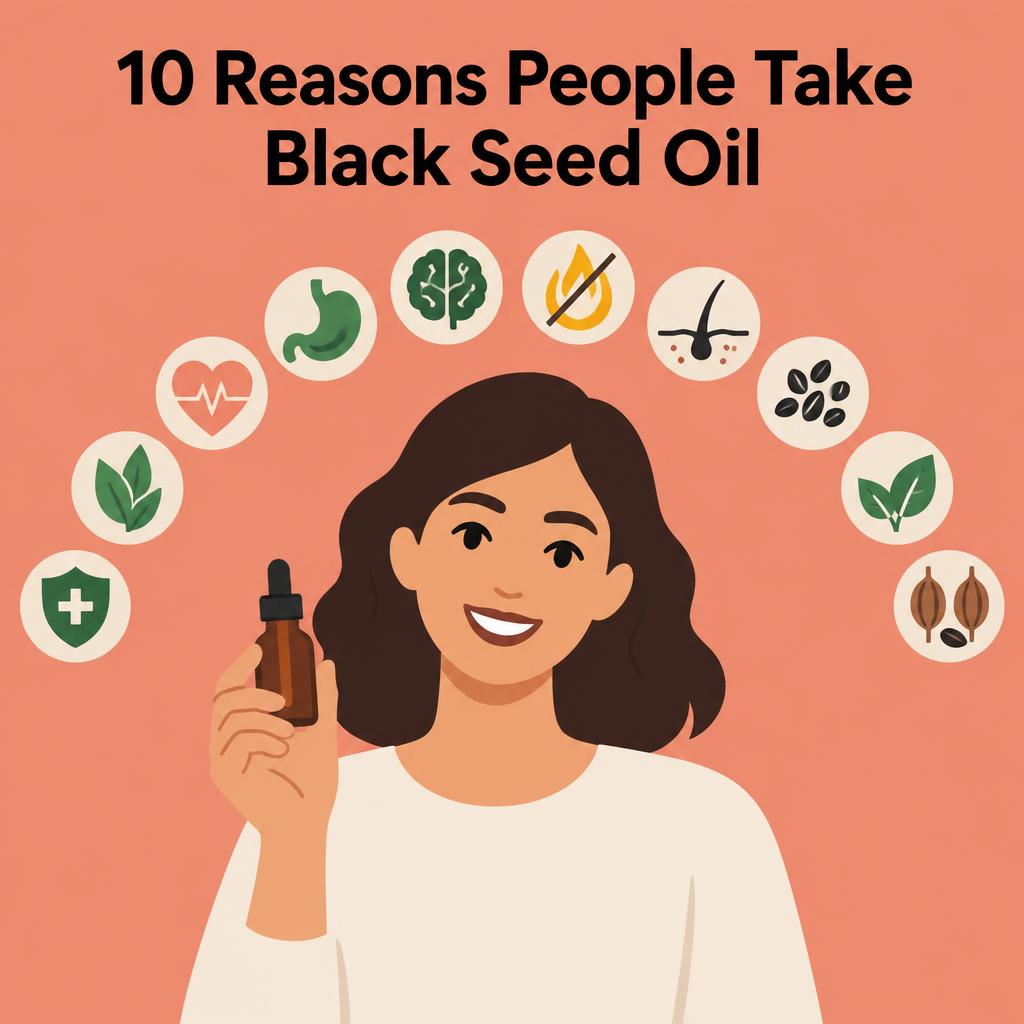
Black Seed Oil Benefits: 10 Reasons People Take It
From metabolic support to antioxidant intake, here are the ten most common reasons people take black seed oil every day.
Black Seed Oil
Black Cumin Seed Oil: A Complete Guide
Black cumin seed oil is black seed oil by another name. This guide covers what it is, the research and how to take it.
Black Seed Oil
Advantages of Black Seed Oil: Why It's Been Used for Centuries
Black seed oil has been used for over two thousand years. Here is why it has lasted, and what modern research adds.
How to Use
Black Seed Oil Capsules vs Liquid: Which Is Better?
Capsules or liquid drops? Here is how the two formats compare on taste, convenience, dose control and value.
Sources
- Li Z, et al. Nigella sativa and health outcomes: An overview of systematic reviews and meta-analyses. Frontiers in Nutrition. 2023;10:1107750.
- NHS. Vitamins, supplements and nutrition: herbal remedies and supplements.
- Ahmad A, et al. A review on therapeutic potential of Nigella sativa: A miracle herb. Asian Pacific Journal of Tropical Biomedicine. 2013;3(5):337-352.
