United States
Parasite Cleanse Supplements in the USA: How to Read the Label
Two parasite cleanse supplements can look identical on the front and be completely different on the back. Here is how to read a US Supplement Facts panel in five minutes.
Key takeaways
- The Supplement Facts panel, not the front label, tells you what you are actually buying.
- Proprietary blends hide how much of each herb you get; exact amounts are a quality signal.
- For black seed oil, look for a stated thymoquinone percentage; for oregano oil, look for carvacrol.
- The FDA statement on every US supplement label is standard, and it applies to every brand.
The US market for parasite cleanse supplements is crowded, and most front labels promise the same thing. The real differences are on the back, in the Supplement Facts panel. Once you know what to look for, you can compare any two products in a few minutes.
Step 1: Find the Supplement Facts panel
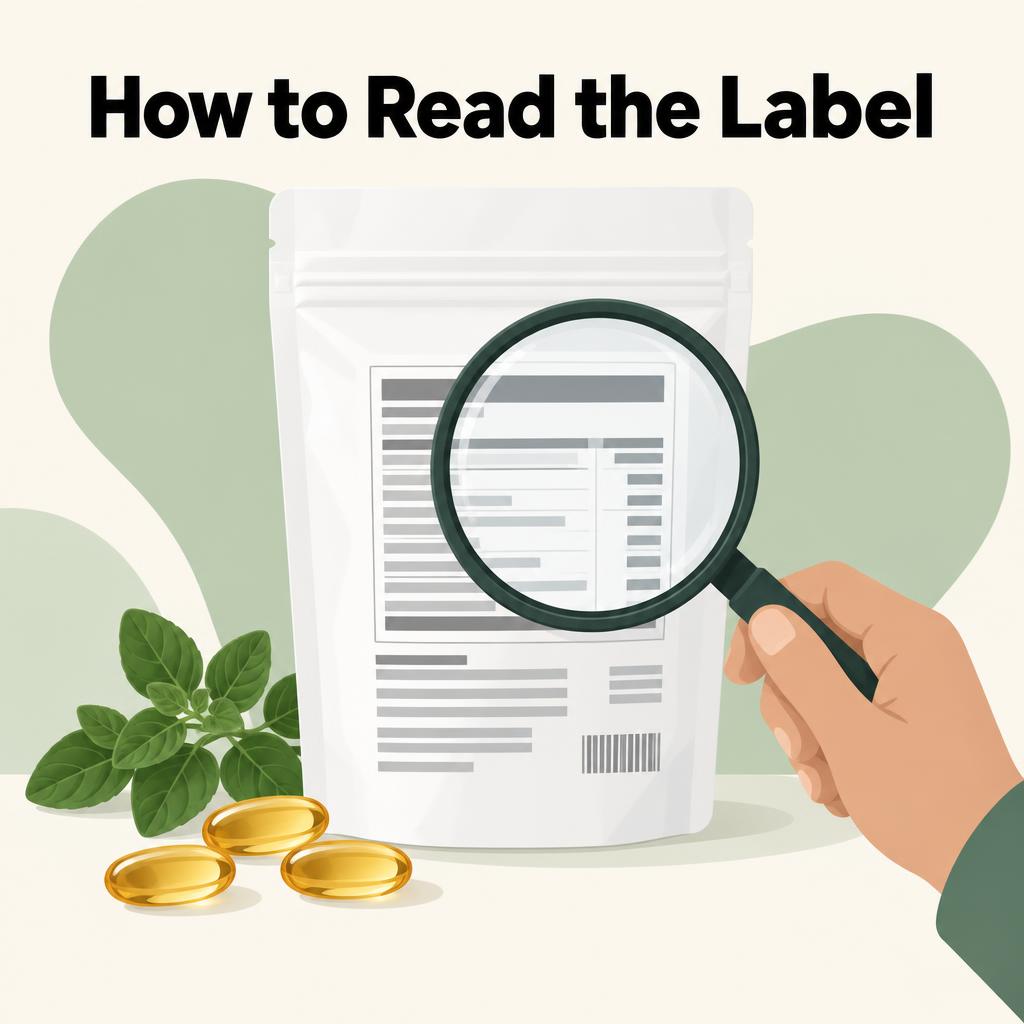
Every dietary supplement sold in the US must carry a Supplement Facts panel listing the serving size, servings per container and each dietary ingredient.[1] This is the only part of the label that tells you exactly what is in each serving. Ignore the front-of-pack claims until you have read it.
Step 2: Check the serving size
Serving size changes everything. A product listing 1,500 mg per serving looks weaker than one listing 3,000 mg, until you notice the first serving is one capsule and the second is three. Always compare amount per serving and servings per container together to work out real value.
Step 3: Watch out for proprietary blends
A proprietary blend lists a total weight for a group of herbs without saying how much of each is inside. A 1,000 mg blend of 12 herbs could contain 900 mg of the cheapest one and a sprinkle of the rest. This is the single most common feature of US parasite cleanses, and the biggest reason two similar-looking products perform differently.
| Proprietary blend | Transparent label | |
|---|---|---|
| What you see | One total weight for many herbs | Exact mg of every ingredient |
| Can you compare? | No | Yes |
| Can you match study doses? | No | Yes |
| Quality signal | Weak | Strong |
Step 4: Look for the active compounds
The best-studied cleanse ingredients each have a signature compound, and quality brands tell you how much is there.
- Black seed oil: look for thymoquinone (TQ). It is the compound behind most black seed research, and levels vary widely between oils. Cold-pressed Ethiopian black seed oil can naturally reach over 4%.[2]
- Oil of oregano: look for carvacrol, the compound behind oregano's antimicrobial research.[3] Check the product is labeled for oral use.
- Wormwood, black walnut and clove: these rarely list active compounds at all.
Step 5: Check the form and the source
Cold-pressed and hexane-free are genuine quality markers for black seed oil because heat and solvents can degrade delicate compounds. Origin matters too: a label that names the country, such as Ethiopia, shows the brand knows where its oil comes from. For oregano oil, an emulsified or softgel form is easier on the stomach than raw drops, and the human parasite study used an emulsified form.[4]
Step 6: Understand the FDA statement
Almost every US supplement label carries the line: These statements have not been evaluated by the Food and Drug Administration. This product is not intended to diagnose, treat, cure, or prevent any disease. This is a standard requirement whenever a supplement describes its role in the body.[1] It appears on every brand, so it tells you nothing about quality either way.
A worked example
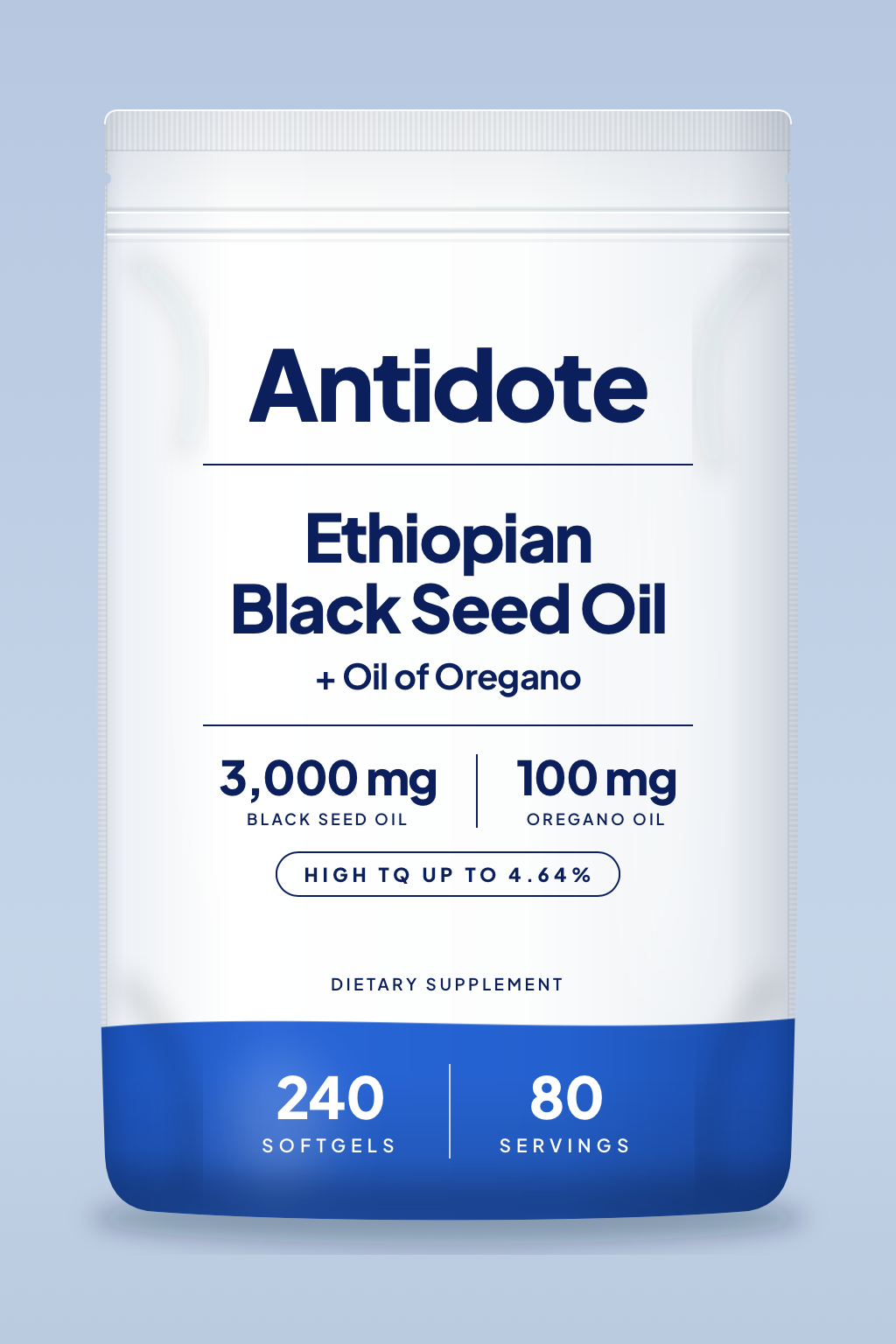
Here is how a transparent label reads. Antidote Supplements Ethiopian Black Seed Oil With Oil of Oregano lists a serving size of three softgels, 3,000 mg of black seed oil and 100 mg of oregano oil extract, and up to 4.64% naturally occurring thymoquinone, with 80 servings per pouch. Every number you need to compare it is right there.
Your 30-second label checklist
Serving size and servings per container. Exact mg of each ingredient. Thymoquinone for black seed oil. Carvacrol for oregano oil. Cold-pressed and origin stated. A named US-facing manufacturer or distributor.
Frequently asked questions
What should I look for in a parasite cleanse supplement?
Exact amounts of each ingredient, no proprietary blends, stated active compounds such as thymoquinone and carvacrol, and ingredients with human research behind them.
Are proprietary blends bad?
They are not unsafe by default, but they stop you knowing how much of each herb you get, so you cannot compare products or match study doses.
Why does every supplement say it is not evaluated by the FDA?
US law requires that statement whenever a supplement describes how it supports the body. It is standard on every brand.
What is a good thymoquinone level in black seed oil?
Levels vary widely. Brands that state thymoquinone are telling you they test their oil, and cold-pressed Ethiopian oils can naturally exceed 4%.
The bottom line
Reading a parasite cleanse supplement label comes down to the Supplement Facts panel: serving size, exact amounts, no hidden blends and stated active compounds. Thymoquinone for black seed oil and carvacrol for oregano oil are the two numbers that separate tested products from the rest.
Read this next
Parasite Cleanse
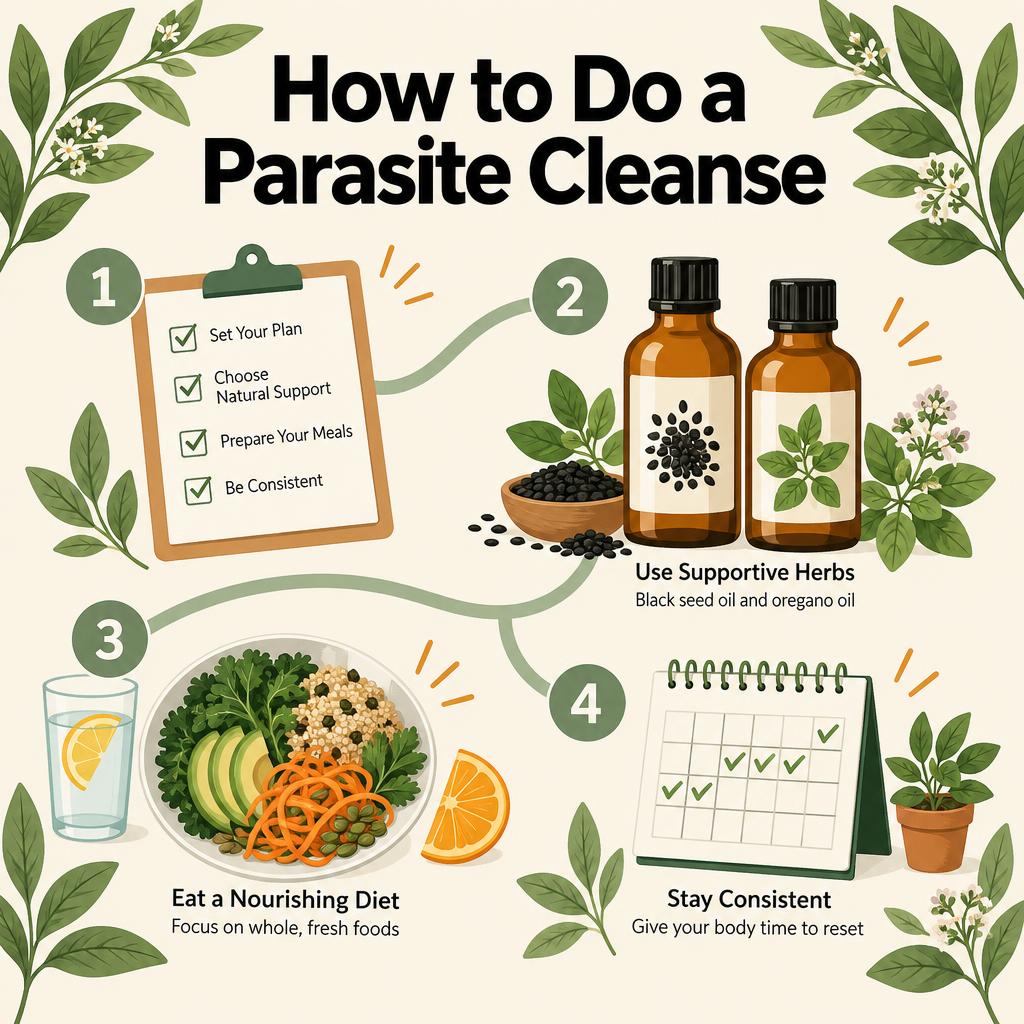
How to Do a Parasite Cleanse: A Step-by-Step Guide for Americans
Over 4,000 Americans a month search for how to do a parasite cleanse. Here is a clear, seven-step guide built on the ingredients and timelines from real research.
Parasite Cleanse
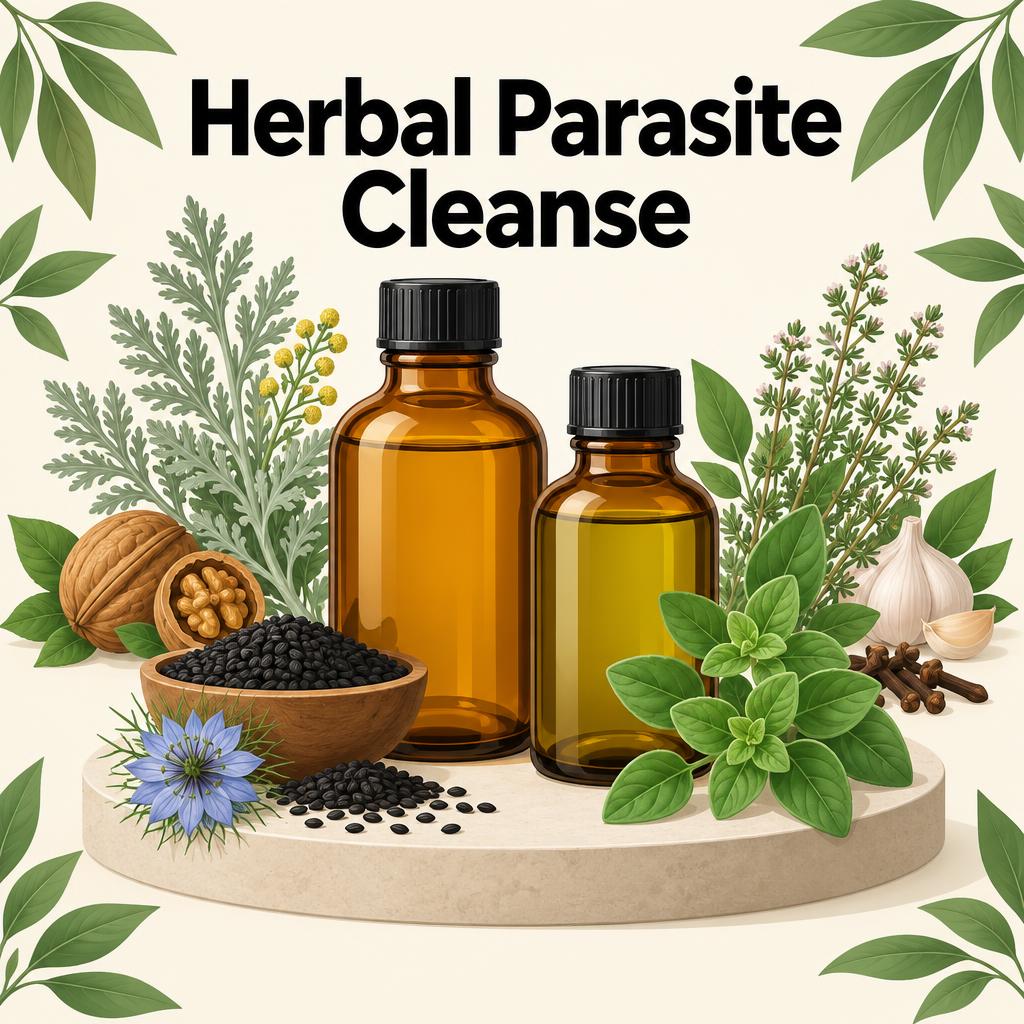
Herbal Parasite Cleanse in the USA: Why Black Seed Oil and Oregano Oil Lead the Herbs
Herbal parasite cleanses can contain a dozen or more herbs. Here is what each common herb is, why it is used and how much research stands behind it.
Parasite Cleanse
Best Human Parasite Cleanse in the USA: Ingredient-by-Ingredient Breakdown
The best human parasite cleanse is the one built on ingredients with studies behind them. Here is every common ingredient, ranked by how much human research it has.
Parasite Cleanse
Foods That Kill Parasites in Humans: What the Research Shows (US Guide)
Americans search for foods that kill parasites more than 22,000 times a month. Here are the six with real studies behind them, ranked by how strong that research is.
Oregano Oil + Black Seed Oil
Best Oil of Oregano with Black Seed Oil: How to Choose a Good One
What separates a good oil of oregano with black seed oil from a forgettable one: the label checks that actually matter, explained simply.
Parasite Cleanse
Natural Parasite Cleanse in the USA: Herbs, Foods and What the Research Shows
A natural parasite cleanse works best when it is built on the herbs and foods with research behind them. Here is the evidence, and a simple 30-day plan.
Sources
- US Food and Drug Administration. Dietary Supplement Labeling Guide.
- Hannan MA, et al. Black cumin (Nigella sativa L.): a comprehensive review on phytochemistry, health benefits, molecular pharmacology, and safety. Nutrients. 2021.
- Leyva-Lopez N, et al. Essential oils of oregano: biological activity beyond their antimicrobial properties. Molecules. 2017.
- Force M, Sparks WS, Ronzio RA. Inhibition of enteric parasites by emulsified oil of oregano in vivo. Phytotherapy Research. 2000;14(3):213-214.