Australia
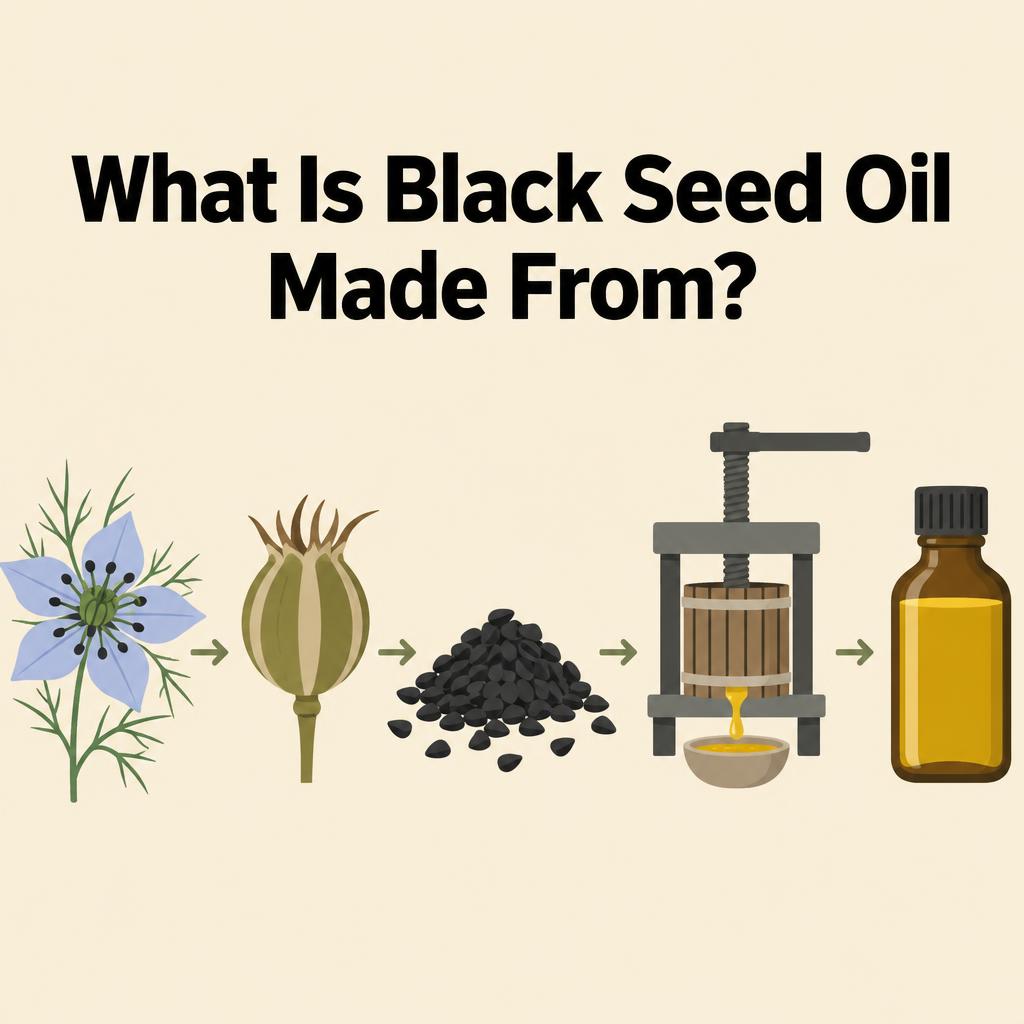
What Is Black Seed Oil Made From? From Flower to Bottle
Black seed oil is pressed from the tiny seeds of the Nigella sativa flower. Here is how the plant becomes the oil in your bottle.
Key takeaways
- Black seed oil comes from the seeds of Nigella sativa, a flowering plant.
- Quality oils are usually cold pressed from the seeds.
- Thymoquinone is one of the oil's best-studied natural compounds.
Black seed oil has a short ingredient list: one plant, pressed carefully. Knowing where it comes from helps you choose a quality bottle.
The plant: Nigella sativa
Nigella sativa is a small annual plant with pale blue or white flowers. It grows across North Africa, the Middle East and South Asia, and Ethiopia is a well-known source.[1]
The seeds
After flowering, the plant forms a seed pod packed with small, black, slightly angular seeds. These are the seeds also sold as kalonji or black cumin.
How the oil is made
- Seeds are harvested, dried and cleaned.
- They are pressed, often cold pressed, to release the oil.
- The oil is filtered and bottled, ideally in dark glass to protect it from light.
What is in the oil
Black seed oil is rich in fatty acids such as linoleic acid, plus thymoquinone and other aromatic compounds that researchers study for antioxidant activity.[1][2]
Checking an Australian label
Listed complementary medicines in Australia show their ingredients and an AUST L number.[3] Look for Nigella sativa seed oil as the named ingredient.
Antidote Supplements
Antidote Supplements Ethiopian Black Seed Oil comes as 50 mL liquid drops; follow the label directions. It is made from Ethiopian Nigella sativa seeds.
The bottom line
Black seed oil is made by pressing the seeds of the Nigella sativa flower. Choose a cold-pressed oil in dark glass with Nigella sativa clearly named on the label.
Medical reviewer
Dr Darren So
FRACGP, DCH, MBBS, BSc, RANZCOG, MYMH
Read this next
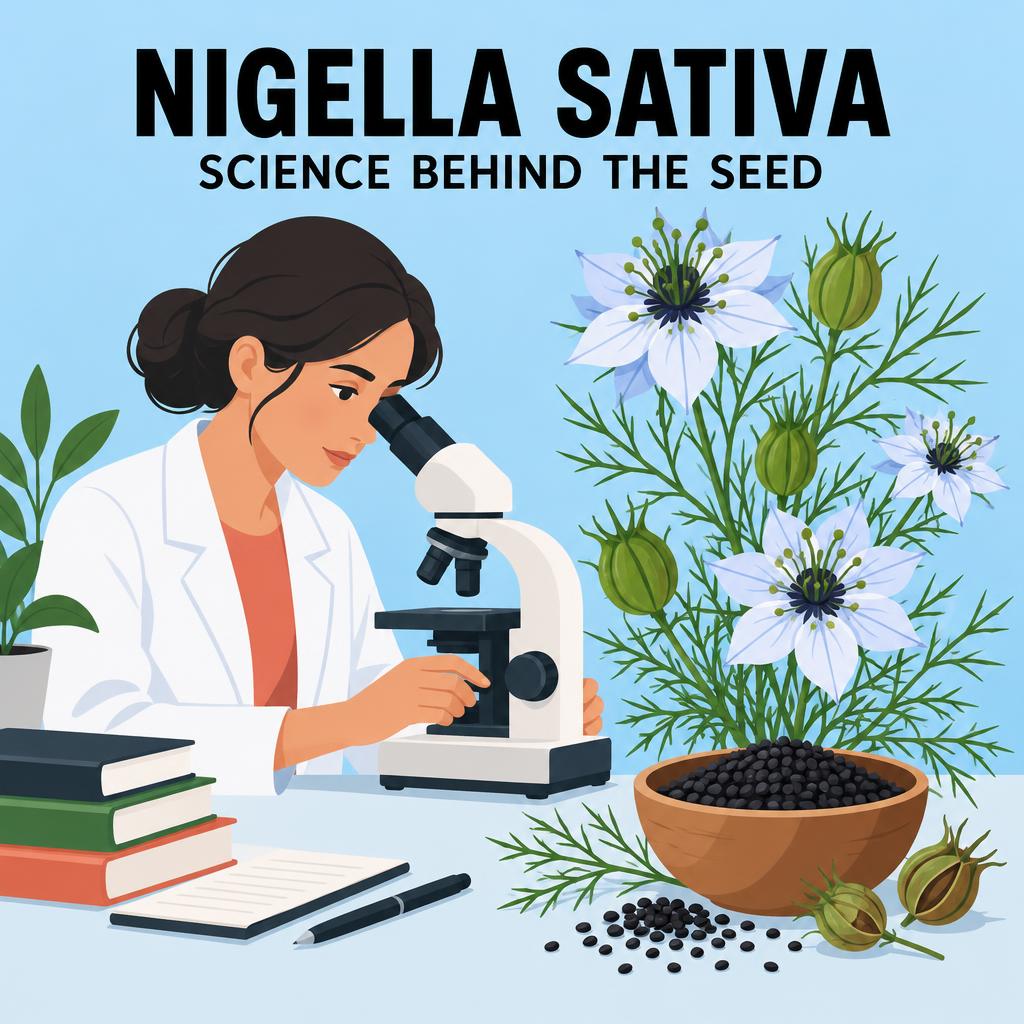
Nigella sativa
Black Seed Oil (Nigella Sativa): The Science Behind the Seed, Australian Guide
Understand how laboratory studies, human trials and systematic reviews contribute to the evidence for Nigella sativa.
Black Seed Oil
Is Black Seed Oil Bad for Your Liver? An Australian Evidence Guide
What studies report about Nigella sativa and liver measures, and who should check with a doctor before using black seed oil.
Black Seed Oil
Is Black Seed Oil Good for Testosterone? What Australian Men Should Know
Animal studies and a small fertility trial have sparked interest, but testosterone claims need careful reading. Here is the evidence.
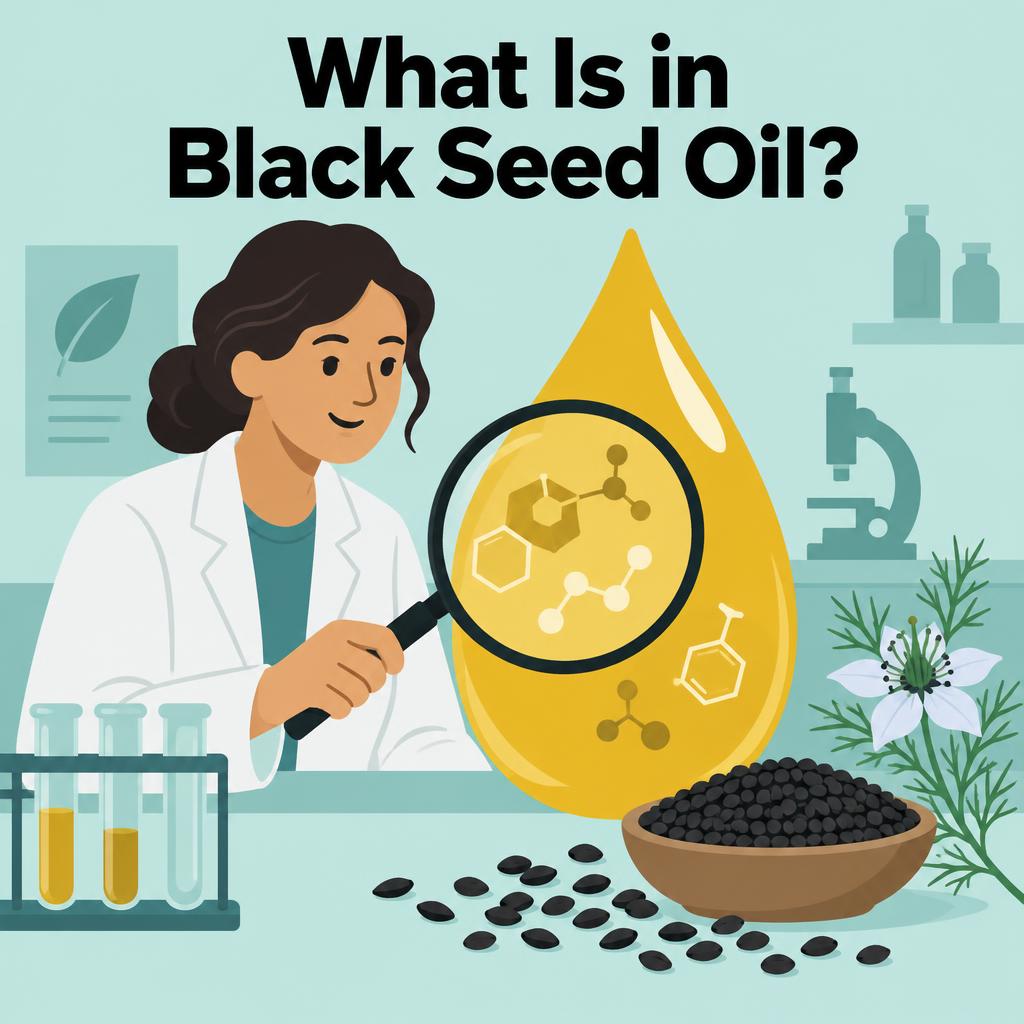
Thymoquinone
What Is in Black Seed Oil? Thymoquinone and Other Compounds Explained
Black seed oil combines fatty acids with active compounds such as thymoquinone. Here is a clear guide to what is inside and how labels describe it.
Black Seed Oil
Does Black Seed Oil Kill Parasites? What the Research Says in Australia
Traditional use and a few early studies have fuelled interest in Nigella sativa for parasites. Here is what the evidence covers and when to see a GP.
Black Seed Oil
Black Seed Oil for Male Fertility: How It's Used and What Studies Show
A placebo-controlled trial reported improved semen measures with black seed oil. Learn what was studied and how it fits with fertility care in Australia.
Sources
- Ahmad A, et al. A review on therapeutic potential of Nigella sativa: A miracle herb. Asian Pacific Journal of Tropical Biomedicine. 2013;3(5):337–352.
- Li Z, et al. Nigella sativa and health outcomes: An overview of systematic reviews and meta-analyses. Frontiers in Nutrition. 2023;10:1107750.
- Therapeutic Goods Administration. Understanding listed and registered complementary medicine regulation.
