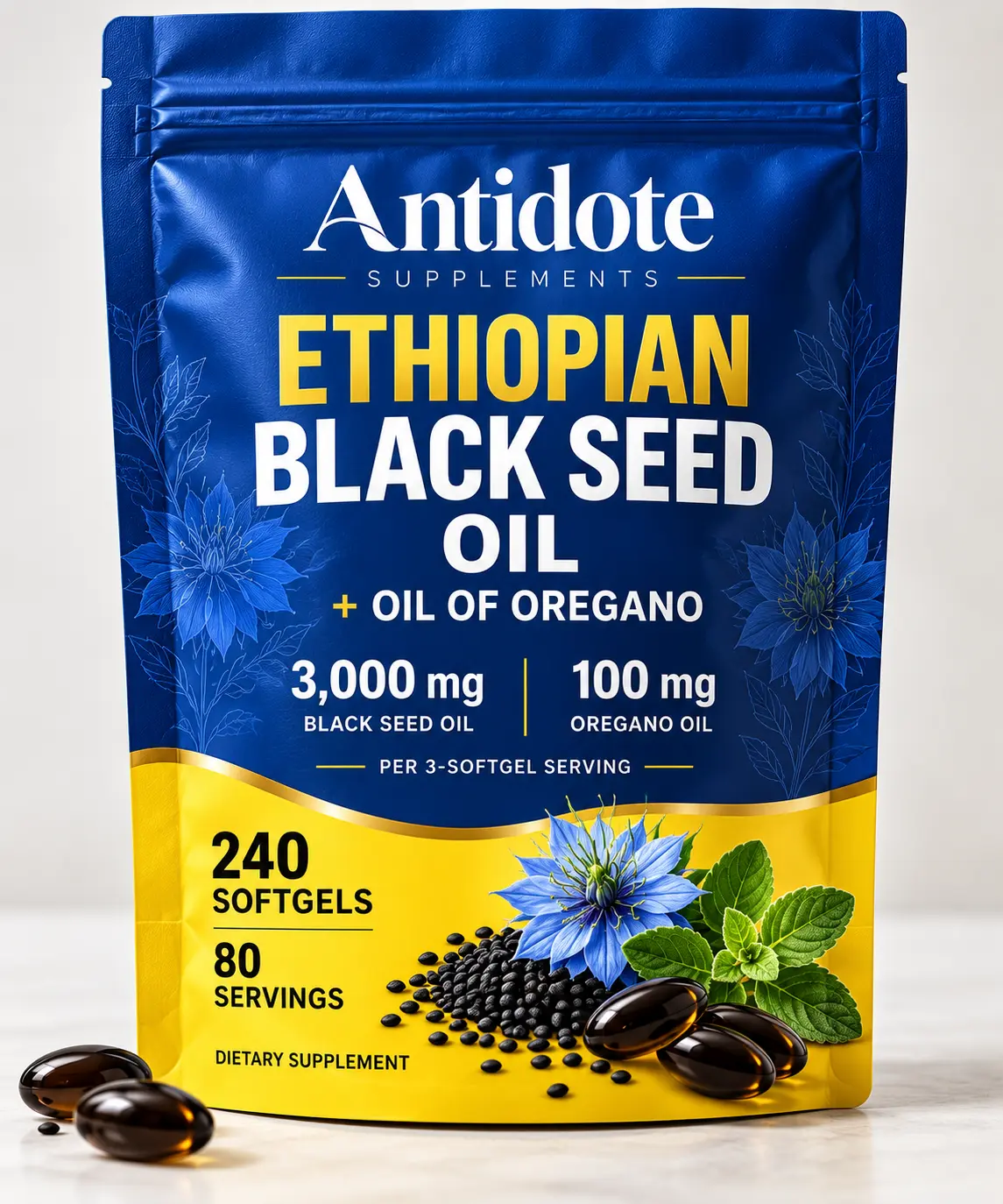
Black Currant Oil vs. Black Seed Oil: What's the Difference?
Despite the similar names, these are two different oils with different active compounds and uses.
Key takeaways
- Black currant oil comes from the seeds of the black currant berry and is rich in gamma-linolenic acid (GLA), an omega-6 fat.
- Black seed oil comes from Nigella sativa seeds and contains thymoquinone, a different class of active compound entirely.
- Both have been studied for skin conditions like eczema, but through different proposed mechanisms.
- They aren't interchangeable, and combining them should be discussed with a doctor if you're on medication.
Black currant oil and black seed oil are easy to mix up by name, but they come from completely different plants, have different compositions, and are used somewhat differently.
What is black currant oil?
Black currant oil is pressed from the seeds of black currant berries (Ribes nigrum). It's notable for its gamma-linolenic acid (GLA) content, an omega-6 fatty acid also found in evening primrose and borage oil. GLA has been studied for skin barrier support and inflammatory skin conditions.
What is black seed oil?
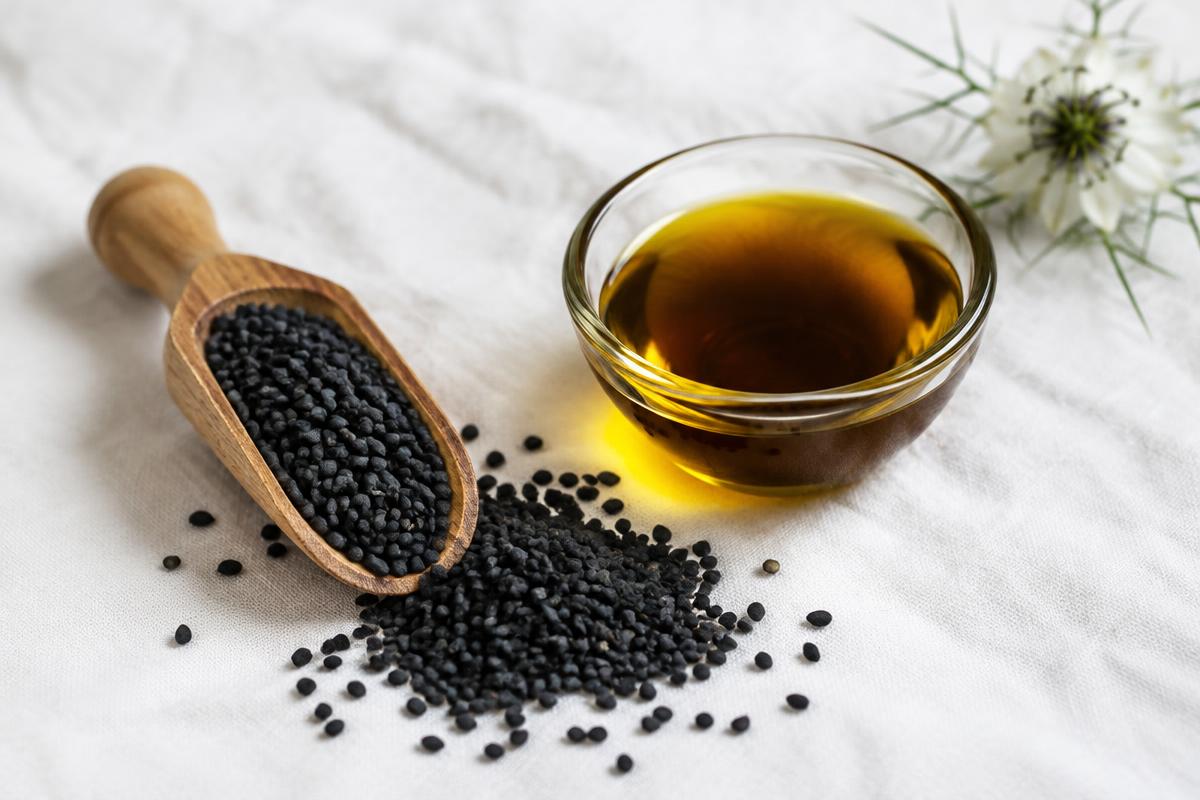
Black seed oil comes from the seeds of Nigella sativa, sometimes called black cumin. Its signature compound is thymoquinone, which has shown anti-inflammatory and antioxidant activity across a range of lab and some human studies.[1] It's a completely different plant family and chemical profile from black currant.
How do they compare?
| Black currant oil | Black seed oil | |
|---|---|---|
| Source | Black currant berry seeds | Nigella sativa seeds |
| Key compound | Gamma-linolenic acid (GLA) | Thymoquinone |
| Common uses | Skin barrier support, inflammatory skin conditions, PMS | Skin, immune support, metabolic health, hair |
| Taste/smell | Mild, neutral | Pungent, peppery |
Does black currant oil help eczema?
Some small studies have looked at GLA-rich oils like black currant and evening primrose for eczema, with mixed results — a few show modest improvement in itching and dryness, while others find no significant benefit over placebo. It's considered a low-risk option to try but not a guaranteed fix.
Can you use both?
There's no known dangerous interaction between topical black currant oil and black seed oil, and some people layer a GLA-rich oil with a thymoquinone-rich one for skin support. If you take blood thinners or have a bleeding disorder, check with a doctor first, since high-dose GLA supplements have a mild theoretical effect on bleeding.
When to see a doctor
Black seed oil and oregano oil are not a substitute for diagnosis or prescribed treatment. See a healthcare professional if symptoms are severe, getting worse or not improving.
Frequently asked questions
Is black currant oil the same as black seed oil?
No. They come from unrelated plants and have different active compounds — GLA in black currant oil versus thymoquinone in black seed oil.
Which is better for eczema, black currant oil or black seed oil?
Evidence for both is limited and mixed. Black seed oil has a bit more human research in skin conditions like [hand eczema](/health-conditions/hand-eczema/), but neither replaces standard eczema treatment.
Can black currant oil be taken orally?
Yes, it's commonly sold as an oral supplement for skin and hormonal support, unlike black seed oil, which is used both orally and topically.
The bottom line
Black currant oil and black seed oil share a name pattern but little else — different plants, different active compounds, and different (though overlapping) uses in skin care. Neither is a proven cure for eczema, but both have some supportive evidence worth discussing with a doctor.
Read this next
Black Seed Oil
Is Black Seed Oil Comedogenic? What to Know Before Using It on Your Face
Black seed oil is generally considered low on the comedogenic scale, but individual skin can still react.
Skin
Eczema: Symptoms, Causes and Natural Approaches
Eczema causes dry, itchy, inflamed skin. Learn the causes and what studies say about black seed oil.
Skin
Hand Eczema: Treatment Options, Including the Black Seed Oil Study
A real clinical trial compared black seed oil to a prescription steroid for hand eczema — here's what it found.
Black Seed Oil
What Does Black Seed Oil Taste Like?
Bold, bitter and peppery — here's what to expect from black seed oil's taste, and how to skip it.
Black Seed Oil
Is Black Seed Oil a Binder? What the Term Actually Means
'Binder' is a wellness term, not a medical one. Here's where black seed oil and oregano oil fit.
Black Seed Oil
Black Seed Oil Benefits: What the Research Says
From skin health to blood sugar, here's what studies on black seed oil actually show.
Sources
- Yousefi M, Barikbin B, Kamalinejad M, et al. Comparison of therapeutic effect of topical Nigella with Betamethasone and Eucerin in hand eczema. J Eur Acad Dermatol Venereol. 2013;27(12):1498-1504.
- Ahmad A, Husain A, Mujeeb M, et al. A review on therapeutic potential of Nigella sativa: a miracle herb. Asian Pac J Trop Biomed. 2013;3(5):337-352.
- PubMed search: black currant seed oil gamma-linolenic acid eczema.