Cooking With Black Seed Oil: What You Need to Know
Black seed oil isn't meant for frying — here's how to use it in food without wrecking its beneficial compounds.
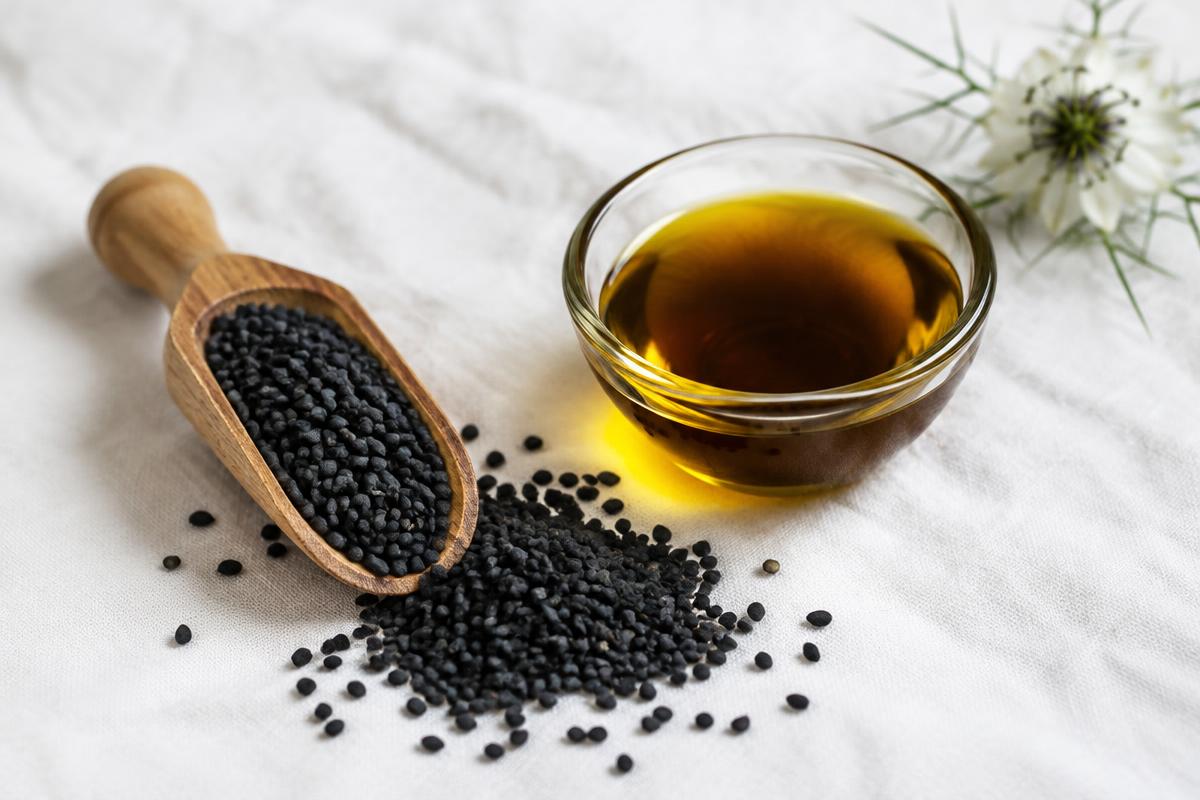
Key takeaways
- Black seed oil is not recommended for high-heat cooking, like frying or searing.
- Heat can degrade thymoquinone and cause the oil to smoke and taste bitter.
- It's best added to finished dishes, dressings or drizzled over food.
- Store it away from heat and light to preserve freshness.
Should you cook with black seed oil?
Black seed oil has a relatively low smoke point and contains heat-sensitive compounds, including thymoquinone. Exposing it to high heat — frying, deep-frying or prolonged roasting — can degrade these compounds and create a bitter, acrid taste. It's best treated like a finishing oil rather than a cooking oil for high heat.
Ways to add it to food without cooking it directly
- Drizzle over cooked vegetables, rice or soup right before serving.
- Whisk into salad dressings with olive oil, lemon and vinegar.
- Stir into hummus, yogurt or dips.
- Mix into honey as a spread.
- Add to smoothies or warm (not boiling) tea.
Simple recipe ideas
- Dressing: 1 tbsp black seed oil, 2 tbsp olive oil, juice of half a lemon, pinch of salt — whisk and pour over salad.
- Drizzle: add a few drops over roasted vegetables or soup just before eating.
- Spread: mix 1 tsp black seed oil into 1 tbsp honey for toast.
Can you bake with it?
Low, short baking (like in a quick bread batter) is less damaging than frying, but the oil's beneficial compounds are best preserved by avoiding sustained high heat altogether. If a recipe calls for a cooking oil, use olive or avocado oil and add black seed oil after cooking.
Storage tips
Keep black seed oil in a cool, dark place, tightly sealed, ideally refrigerated after opening. See our guide on how long black seed oil lasts.
When to see a doctor
Black seed oil and oregano oil are not a substitute for diagnosis or prescribed treatment. See a healthcare professional if symptoms are severe, getting worse or not improving.
Frequently asked questions
Can I fry food in black seed oil?
It's not recommended. High heat can degrade its beneficial compounds and produce a harsh, bitter taste.
Is it safe to add black seed oil to hot food?
Adding it to warm (not boiling) food just before serving is fine and preserves more of its compounds than direct frying.
The bottom line
Treat black seed oil like a finishing oil — add it after cooking rather than frying with it, to preserve both flavor and beneficial compounds.
Read this next
How to Use
Black Seed Oil With Honey: How to Mix and Take It
Mixing black seed oil with honey is a traditional pairing that also makes the oil easier to take.
How to Use
How Long Does Black Seed Oil Last? Storage & Shelf Life
Like most unrefined oils, black seed oil degrades over time — here's how to store it and know when to toss it.
Black Seed Oil
What Does Black Seed Oil Taste Like?
Bold, bitter and peppery — here's what to expect from black seed oil's taste, and how to skip it.
Black Seed Oil
Is Black Seed Oil a Binder? What the Term Actually Means
'Binder' is a wellness term, not a medical one. Here's where black seed oil and oregano oil fit.
Black Seed Oil
Black Seed Oil Benefits: What the Research Says
From skin health to blood sugar, here's what studies on black seed oil actually show.
Black Seed Oil
Black Seed Oil for Hair: Benefits and How to Use It
A simple scalp routine, realistic results and how it compares with hair vitamins.
Sources
- Darakhshan S, Bidmeshki Pour A, Hosseinzadeh Colagar A, Sisakhtnezhad S. Thymoquinone and its therapeutic potentials. Pharmacol Res. 2015;95-96:138-158.
- Ahmad A, Husain A, Mujeeb M, et al. A review on therapeutic potential of Nigella sativa: a miracle herb. Asian Pac J Trop Biomed. 2013;3(5):337-352.