Black Seed Oil With Honey: How to Mix and Take It
Mixing black seed oil with honey is a traditional pairing that also makes the oil easier to take.
Key takeaways
- Mixing black seed oil with honey is a traditional way to mask its bitter, peppery taste.
- A small clinical trial used an Nigella sativa and honey formulation for dyspepsia.
- A common starting ratio is about 1 teaspoon of honey to 1/2 teaspoon of black seed oil.
- Honey itself has some soothing properties for the digestive tract and throat.
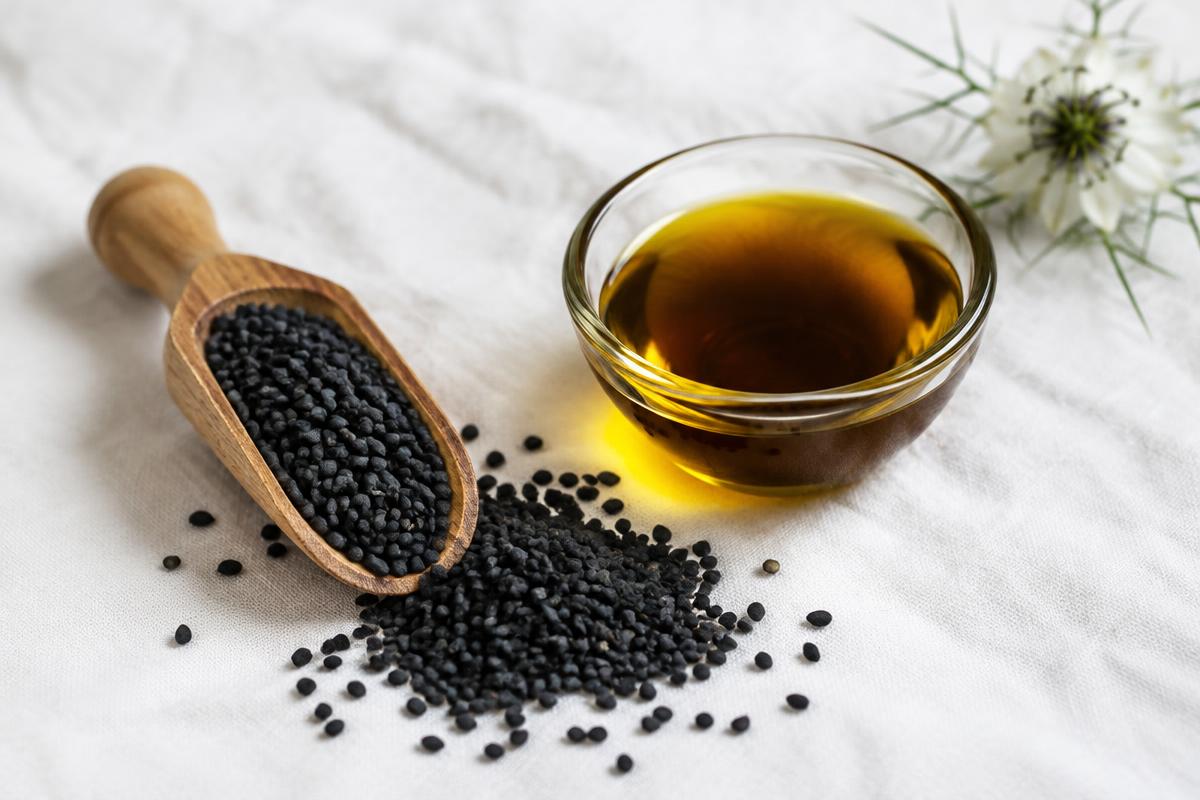
Black seed oil has a sharp, bitter, slightly peppery taste that many people find hard to take on its own. Mixing it with honey is one of the most common ways to make it more palatable — and it has some basis in traditional and clinical use.
Why combine black seed oil with honey?
Honey's sweetness balances the oil's bitterness, making it easier to take straight from a spoon. There's also a practical history behind this: a clinical trial tested a honey-based Nigella sativa oil formulation for functional dyspepsia and found it reduced symptoms compared with placebo.[1]
How to mix it
- Start with 1 teaspoon of raw honey.
- Add 1/4 to 1/2 teaspoon of black seed oil.
- Stir well and take directly, or stir into warm (not boiling) water or tea.
- Adjust the ratio to taste once you know how you respond.
When to take it
Many people take this mix in the morning on an empty stomach, or after a meal if the oil tends to cause stomach upset. See our guide on when to take black seed oil for more on timing.
What the evidence actually shows
Beyond the dyspepsia trial, there isn't strong clinical evidence that combining black seed oil with honey adds a specific health benefit beyond what each ingredient offers alone. It's mainly a practical way to make the oil more tolerable, while honey brings its own mild soothing properties, especially for the throat and stomach.
When to see a doctor
Black seed oil and oregano oil are not a substitute for diagnosis or prescribed treatment. See a healthcare professional if symptoms are severe, getting worse or not improving.
Frequently asked questions
What is the best ratio of black seed oil to honey?
There's no official ratio. A common starting point is about 1/2 teaspoon of oil per teaspoon of honey, adjusted to taste.
Can children have black seed oil with honey?
Honey should never be given to infants under 1 year old due to botulism risk. For older children, see a pediatrician before adding supplements. Learn more in our guide to [black seed oil for toddlers](/benefits-uses/black-seed-oil-for-toddlers/).
The bottom line
Mixing black seed oil with honey is a simple, traditional way to make the oil easier to take, with some supporting evidence for digestive comfort. It's a reasonable combination, not a proven cure.
Read this next
Dosage & Timing
When to Take Black Seed Oil: Morning or Night?
There's no strict rule for timing, but a few practical tips can help it sit better and fit into your day.
Digestive Health
Black Seed Oil for Indigestion and Dyspepsia
A placebo-controlled trial found symptom relief in functional dyspepsia.
Safety
Black Seed Oil for Toddlers: Is It Safe?
There's very limited safety research on black seed oil in young children — here's what parents should know before trying it.
Black Seed Oil
What Does Black Seed Oil Taste Like?
Bold, bitter and peppery — here's what to expect from black seed oil's taste, and how to skip it.
Black Seed Oil
Is Black Seed Oil a Binder? What the Term Actually Means
'Binder' is a wellness term, not a medical one. Here's where black seed oil and oregano oil fit.
Black Seed Oil
Black Seed Oil Benefits: What the Research Says
From skin health to blood sugar, here's what studies on black seed oil actually show.
Sources
- Mohtashami R, Huseini HF, Heydari M, et al. Efficacy and safety of honey based formulation of Nigella sativa seed oil in functional dyspepsia: a randomized, double-blind, placebo-controlled clinical trial. J Ethnopharmacol. 2015;175:147-152.
- Ahmad A, Husain A, Mujeeb M, et al. A review on therapeutic potential of Nigella sativa: a miracle herb. Asian Pac J Trop Biomed. 2013;3(5):337-352.