When to Take Black Seed Oil: Morning or Night?
There's no strict rule for timing, but a few practical tips can help it sit better and fit into your day.
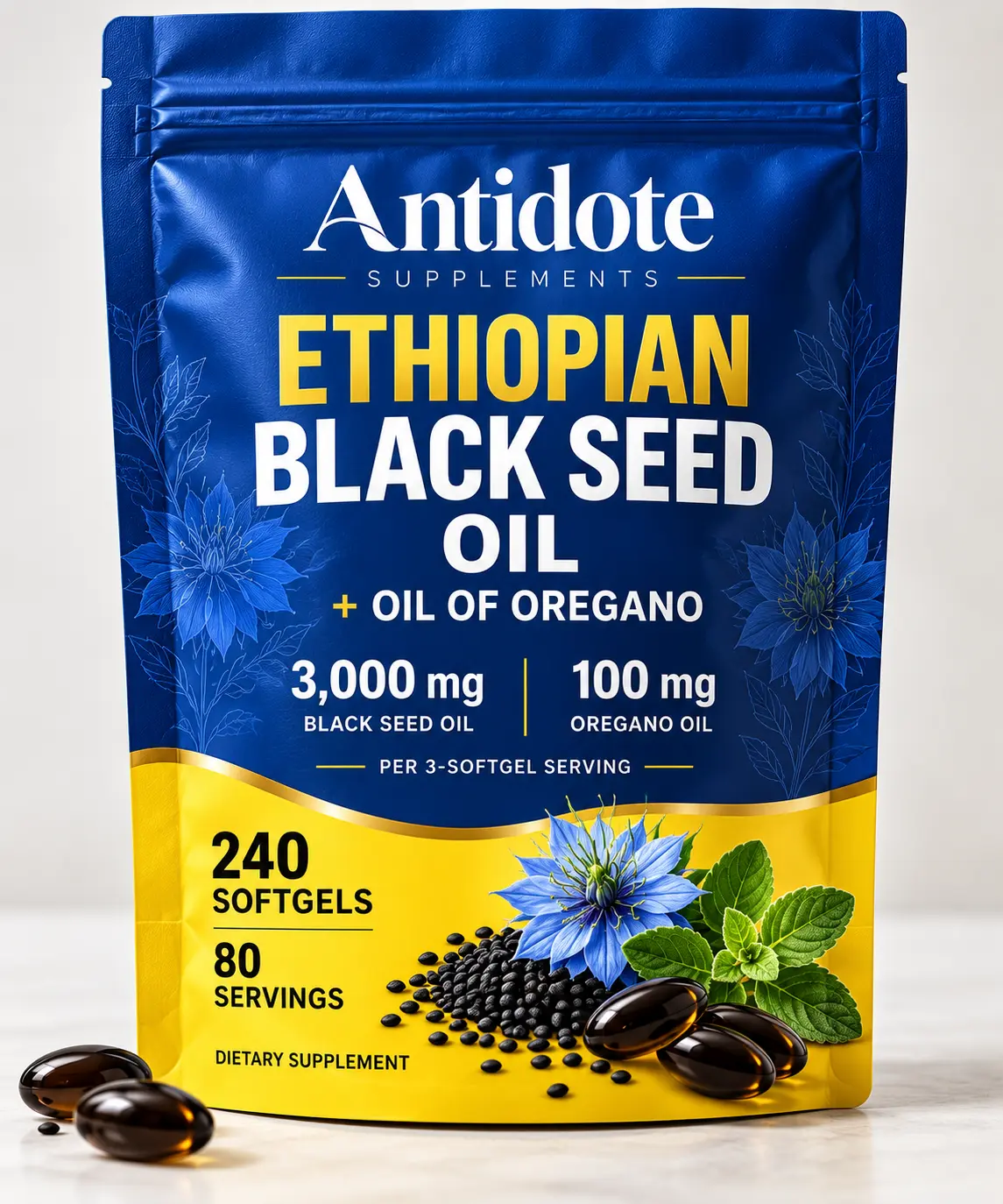
Key takeaways
- Black seed oil can be taken morning or night — consistency matters more than exact timing.
- Taking it with food can reduce stomach upset.
- Most studies used it once or twice daily.
- Avoid taking it right before bed if it affects your stomach.
Does timing matter?
There's no strong research showing black seed oil works better at a specific time of day. What matters more is taking it consistently, since most reported benefits come from regular use over weeks to months.
Morning vs. night
- Morning: many people like taking it with breakfast, pairing it with honey or in a smoothie — easy to remember and less likely to be skipped.
- Night: some prefer it before bed, especially if using it for digestion or relaxation, though there's no evidence it aids sleep specifically.
- Either way, taking it with food can reduce the chance of stomach upset or reflux, since the oil is fairly strong tasting and acidic on an empty stomach.
How often should you take it?
Clinical trials on Nigella sativa have generally used doses once or twice a day, often around 1–3 grams of seed oil or powder daily.[1] See our full breakdown in how much black seed oil to take daily.
Building a routine
- Pick one consistent time (e.g., with breakfast).
- Start with a small dose, such as half a teaspoon or one capsule.
- Take it with food or a drink to reduce bitterness and stomach upset.
- Track how you feel over 4–8 weeks before judging effects.
When to see a doctor
Black seed oil and oregano oil are not a substitute for diagnosis or prescribed treatment. See a healthcare professional if symptoms are severe, getting worse or not improving.
Frequently asked questions
Can I take black seed oil on an empty stomach?
You can, but it may cause heartburn or nausea in some people. Taking it with food is gentler.
Can I take black seed oil twice a day?
Many studies used twice-daily dosing. Check the total daily amount stays within typical studied doses and talk to a doctor if you take medications.
The bottom line
There's no single correct time to take black seed oil. Choose a time you'll stick with, ideally with food, and be consistent for several weeks to judge any effect.
Read this next
Dosage & Timing
How Much Black Seed Oil to Take Daily
Doses used in studies, translated into teaspoons and capsules.
Dosage & Timing
Black Seed Oil: Drops vs. Capsules vs. Lotion
Drops, capsules, and topical lotion all deliver black seed oil differently, and the right choice depends on your goal.
Black Seed Oil
What Does Black Seed Oil Taste Like?
Bold, bitter and peppery — here's what to expect from black seed oil's taste, and how to skip it.
Black Seed Oil
Is Black Seed Oil a Binder? What the Term Actually Means
'Binder' is a wellness term, not a medical one. Here's where black seed oil and oregano oil fit.
Black Seed Oil
Black Seed Oil Benefits: What the Research Says
From skin health to blood sugar, here's what studies on black seed oil actually show.
Black Seed Oil
Black Seed Oil for Hair: Benefits and How to Use It
A simple scalp routine, realistic results and how it compares with hair vitamins.
Sources
- Tavakkoli A, Mahdian V, Razavi BM, Hosseinzadeh H. Review on clinical trials of black seed (Nigella sativa) and its active constituent, thymoquinone. J Pharmacopuncture. 2017;20(3):179-193.
- Ahmad A, Husain A, Mujeeb M, et al. A review on therapeutic potential of Nigella sativa: a miracle herb. Asian Pac J Trop Biomed. 2013;3(5):337-352.