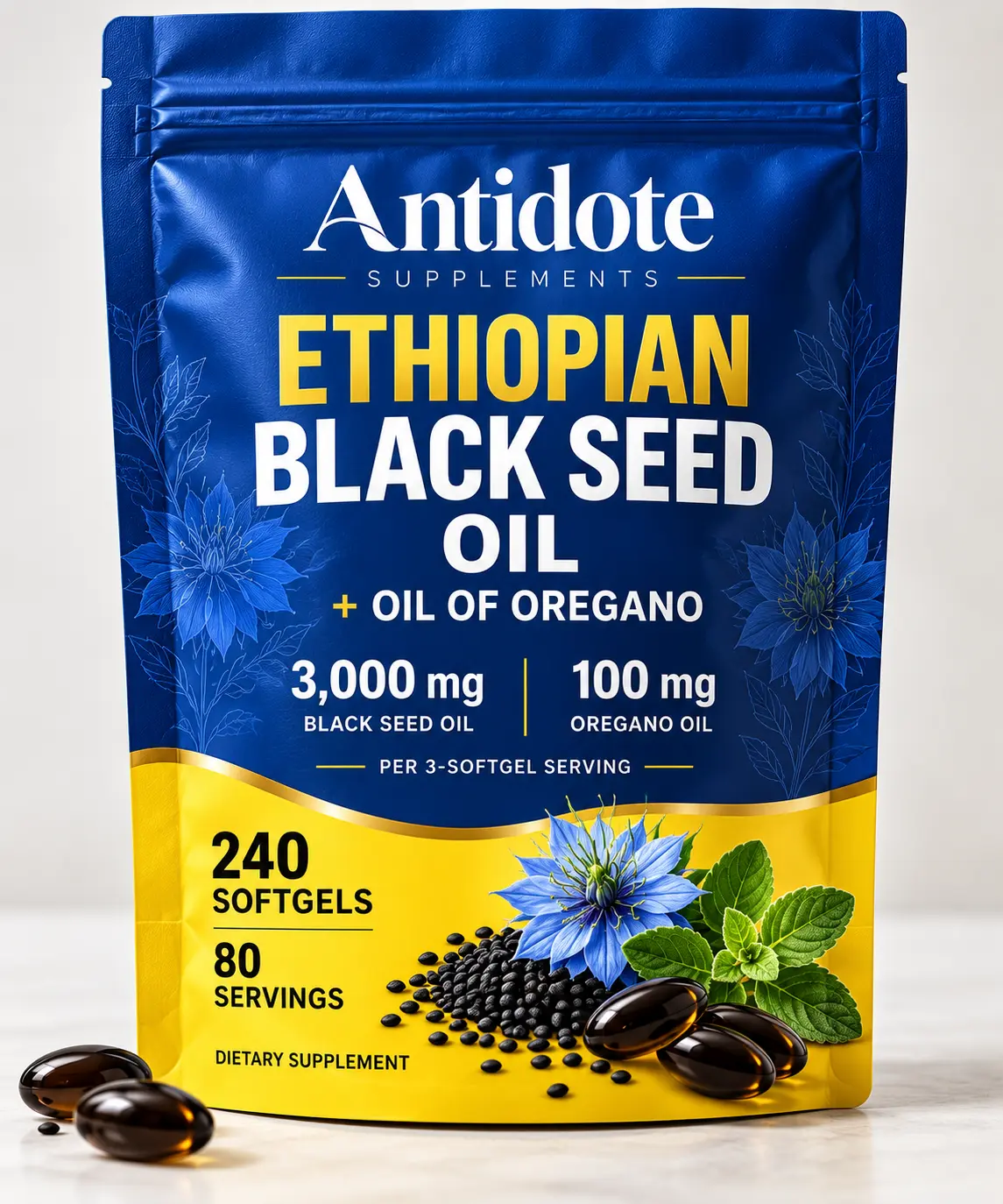
What Is Black Seed Oil? The Amazing Herb Behind It
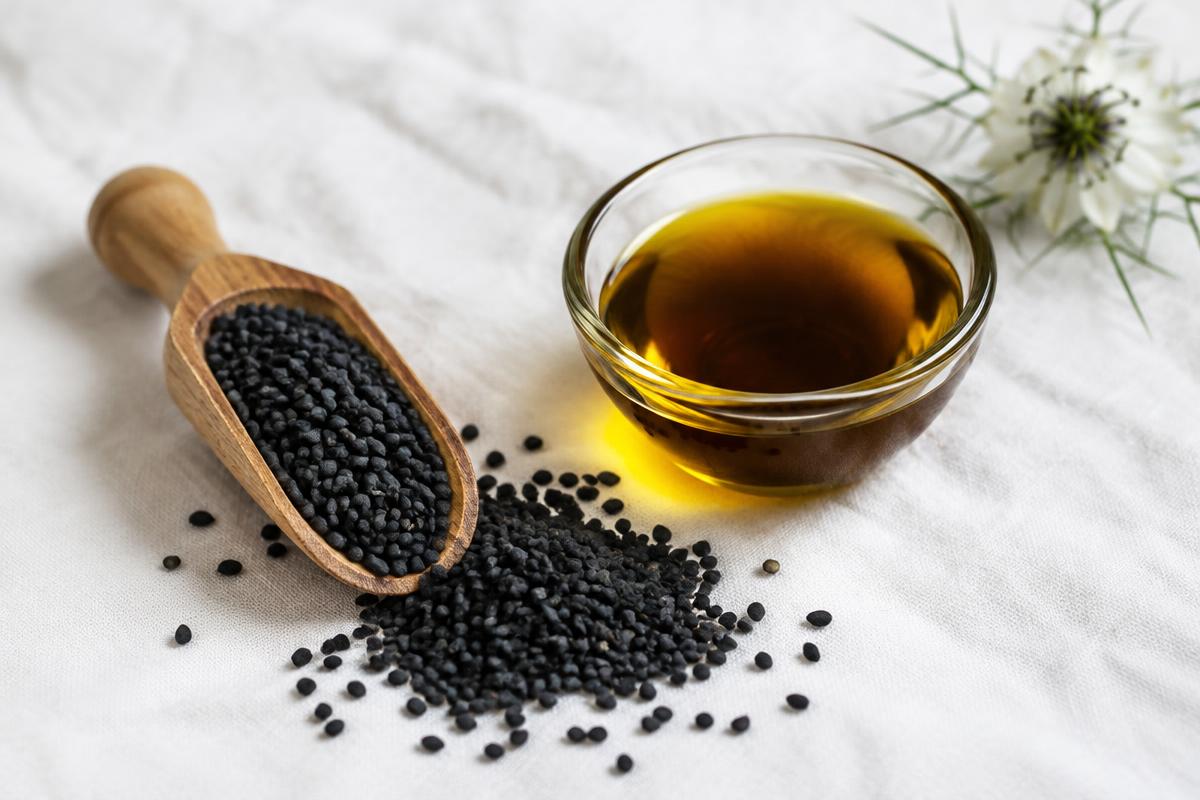
Black seed oil comes from the tiny black seeds of Nigella sativa, a flowering plant used in traditional medicine for centuries.
Key takeaways
- Black seed oil is pressed from the seeds of Nigella sativa, also called black cumin or 'black nigella' oil.
- It has been used in traditional medicine across the Middle East, South Asia and North Africa for centuries.
- Its main active compound, thymoquinone, has antioxidant and anti-inflammatory effects in lab studies.
- It's generally used as a dietary supplement, not a proven treatment for any disease.
If you've seen small bottles labeled 'black seed oil' or 'black cumin oil' at a health store, you might wonder what exactly it is. Despite the similar name, it isn't related to regular cumin at all.
What is black seed oil made from?
Black seed oil is cold-pressed from the small black seeds of Nigella sativa, a flowering plant native to South Asia, the Middle East and parts of Africa. The seeds are sometimes called black cumin, kalonji or black caraway, which causes confusion — but black seed and black cumin both refer to the same plant.
Why is it called an 'amazing herb'?
Nigella sativa has a long history in traditional and folk medicine, where it was used for a huge range of complaints — from digestive issues to skin conditions. That reputation is where nicknames like 'amazing herb' or 'miracle herb' come from.[1] Modern research hasn't confirmed it's a cure-all, but it has identified real bioactive compounds worth studying.
What's inside black seed oil?
- Thymoquinone — the most studied compound, with antioxidant and anti-inflammatory activity in lab and animal research.[2]
- Linoleic and oleic acid — unsaturated fatty acids that make up most of the oil.
- Thymol and carvacrol — minor aromatic compounds, also found in oregano oil.
- Vitamins and minerals in small amounts, including vitamin E.
How is it used?
People take black seed oil by the spoonful, in capsules, mixed into food or drinks, or apply it to skin and hair. See our guide on how much black seed oil to take daily.
What does the research actually show?
Most of the dramatic claims about black seed oil come from small studies, lab experiments or animal research. Some areas — like blood sugar and mild acne — have promising small human trials. Others are mostly theoretical. It should be seen as a complementary supplement, not a replacement for medical treatment.
When to see a doctor
Black seed oil and oregano oil are not a substitute for diagnosis or prescribed treatment. See a healthcare professional if symptoms are severe, getting worse or not improving.
Frequently asked questions
Is black seed oil the same as black cumin oil?
Yes, these names are used interchangeably for oil from Nigella sativa seeds.
Is black seed oil safe for everyone?
It's generally considered safe in normal food or supplement amounts for most adults, but it can interact with some medications and isn't recommended in pregnancy without medical advice.
What does black seed oil taste like?
It has a sharp, slightly bitter, peppery taste. See our guide on [what black seed oil tastes like](/benefits-uses/what-does-black-seed-oil-taste-like/) for tips on masking it.
The bottom line
Black seed oil is a traditional remedy with genuinely interesting compounds, most notably thymoquinone. It's reasonable to try as a supplement, but it isn't a proven cure for any condition.
Read this next
Black Seed Oil
Black Seed vs Black Cumin vs Nigella: Are They the Same?
One plant, many names — and two that are often confused.

Thymoquinone
Thymoquinone: The Key Compound in Black Seed Oil
A summary of the research on thymoquinone, black seed oil's main bioactive compound.
Black Seed Oil
Black Seed Oil Benefits: What the Research Says
From skin health to blood sugar, here's what studies on black seed oil actually show.
Black Seed Oil
What Does Black Seed Oil Taste Like?
Bold, bitter and peppery — here's what to expect from black seed oil's taste, and how to skip it.
Black Seed Oil
Is Black Seed Oil a Binder? What the Term Actually Means
'Binder' is a wellness term, not a medical one. Here's where black seed oil and oregano oil fit.
Black Seed Oil
Black Seed Oil for Hair: Benefits and How to Use It
A simple scalp routine, realistic results and how it compares with hair vitamins.
Sources
- Ahmad A, Husain A, Mujeeb M, et al. A review on therapeutic potential of Nigella sativa: a miracle herb. Asian Pac J Trop Biomed. 2013;3(5):337-352.
- Darakhshan S, Bidmeshki Pour A, Hosseinzadeh Colagar A, Sisakhtnezhad S. Thymoquinone and its therapeutic potentials. Pharmacol Res. 2015;95-96:138-158.
- Tavakkoli A, Mahdian V, Razavi BM, Hosseinzadeh H. Review on clinical trials of black seed (Nigella sativa) and its active constituent, thymoquinone. J Pharmacopuncture. 2017;20(3):179-193.