Black Seed Oil at 5% Thymoquinone: What That Number Means
A thymoquinone percentage can help you compare products, but testing methods and raw oil differences make direct rankings tricky.
Key takeaways
- A labeled thymoquinone percentage (e.g., 5%) reflects lab testing of that specific batch, typically via HPLC.
- Natural, unrefined black seed oil commonly contains roughly 1-6% thymoquinone, though figures vary by source and testing method.
- We can't publish a verified ranking of specific brands by thymoquinone %, since testing conditions and batches vary.
- Ask any brand for their Certificate of Analysis (COA) rather than relying on marketing copy alone.
What does "5% thymoquinone" mean on a label?
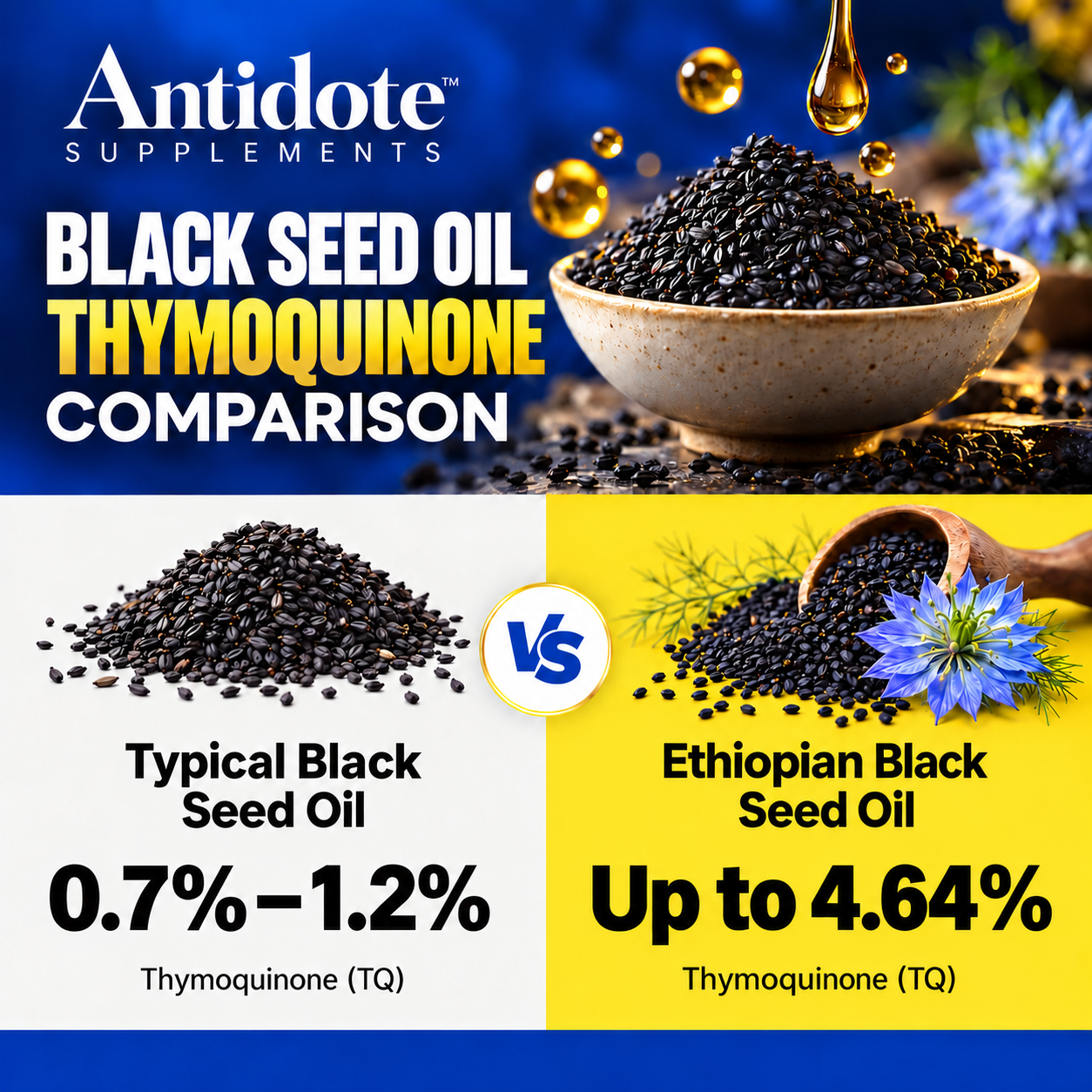
Thymoquinone is the most-studied active compound in black seed oil. A label claiming 5% thymoquinone means that, in lab testing, thymoquinone made up about 5% of that oil sample by weight — typically measured using high-performance liquid chromatography (HPLC), a standard method for identifying and quantifying specific compounds.
Is 5% a high or low number?
Thymoquinone content in cold-pressed Nigella sativa oil naturally varies, with studies reporting a range depending on seed origin, harvest and processing.[1] There's no single clinically established "ideal" percentage tied to specific health outcomes, since most human trials dose black seed oil in milliliters or grams rather than standardizing to a thymoquinone percentage.
Why we won't rank specific brands by thymoquinone %
Thymoquinone content can vary batch to batch, even within the same brand, due to seed source, storage and testing methodology. Without independently verifying every batch ourselves, we can't responsibly publish a ranked list of named brands by percentage. Instead, here's how to evaluate any product on your own.
How to compare products yourself
- Ask the brand directly for a current Certificate of Analysis (COA).
- Check that the COA specifies the testing method (HPLC is standard).
- Confirm the COA matches the batch/lot number on your bottle.
- Compare the percentage alongside extraction method and freshness, not in isolation.
Does testing method affect the result?
Yes. Variations in extraction, sample preparation and calibration standards between labs can produce different readings for similar oils. This is another reason a single percentage number should be interpreted cautiously rather than treated as an exact, universally comparable figure.
When to see a doctor
Black seed oil and oregano oil are not a substitute for diagnosis or prescribed treatment. See a healthcare professional if symptoms are severe, getting worse or not improving.
Frequently asked questions
Can thymoquinone content change after the bottle is opened?
Yes — thymoquinone can degrade over time with light, heat and air exposure, which is why dark glass bottles and proper storage matter.
Is thymoquinone the only active compound in black seed oil?
No. Black seed oil contains other compounds too, including various fatty acids and minor volatile oils, though thymoquinone is the most researched.
How is thymoquinone percentage different from dosage?
Percentage reflects concentration within the oil; dosage is the actual amount (ml or mg) you take, which combines with the percentage to determine total thymoquinone intake.
The bottom line
A thymoquinone percentage can be a useful data point, but testing methods and batch variation make strict brand rankings unreliable. Ask for a current Certificate of Analysis for any product you're considering.
Read this next
Buying Guides
How to Choose a Black Seed Oil Brand: A Practical Checklist
Instead of chasing a specific brand name, use this checklist to evaluate any black seed oil on its own merits.
Comparisons
Black Seed Oil Thymoquinone Content: How to Compare Brands
What TQ percentages mean, organic vs non-organic, and where to buy.
Comparisons
Egyptian vs. Ethiopian Black Seed Oil: How Do They Compare?
Black seed oil's origin is a common marketing point. Here's what actually varies by region, and what doesn't.
Buying Guides
Organic Black Seed Oil: Is It Worth Paying More For?
Organic certification covers farming practices, not necessarily potency. Here's what it means for black seed oil shoppers.
Buying Guides
Buying Black Seed Oil Wholesale: What to Know First
Buying in bulk can save money, but it raises the stakes on quality checks and storage. Here's what to confirm first.
Buying Guides
Where Can You Buy Black Cumin Seed Oil?
Black cumin seed oil is widely available, but quality and transparency vary a lot by where you shop. Here's an honest comparison.
Sources
- Darakhshan S, Bidmeshki Pour A, Hosseinzadeh Colagar A, Sisakhtnezhad S. Thymoquinone and its therapeutic potentials. Pharmacol Res. 2015;95-96:138-158.
- Tavakkoli A, Mahdian V, Razavi BM, Hosseinzadeh H. Review on clinical trials of black seed (Nigella sativa) and its active constituent, thymoquinone. J Pharmacopuncture. 2017;20(3):179-193.