Black Seed Oil Thymoquinone Content: How to Compare Brands
What TQ percentages mean, organic vs non-organic, and where to buy.
Key takeaways
- TQ content varies widely between oils.
- Look for third-party testing, not just a claimed number.
- Cold-pressed and organic are good quality signals.
What is TQ content?
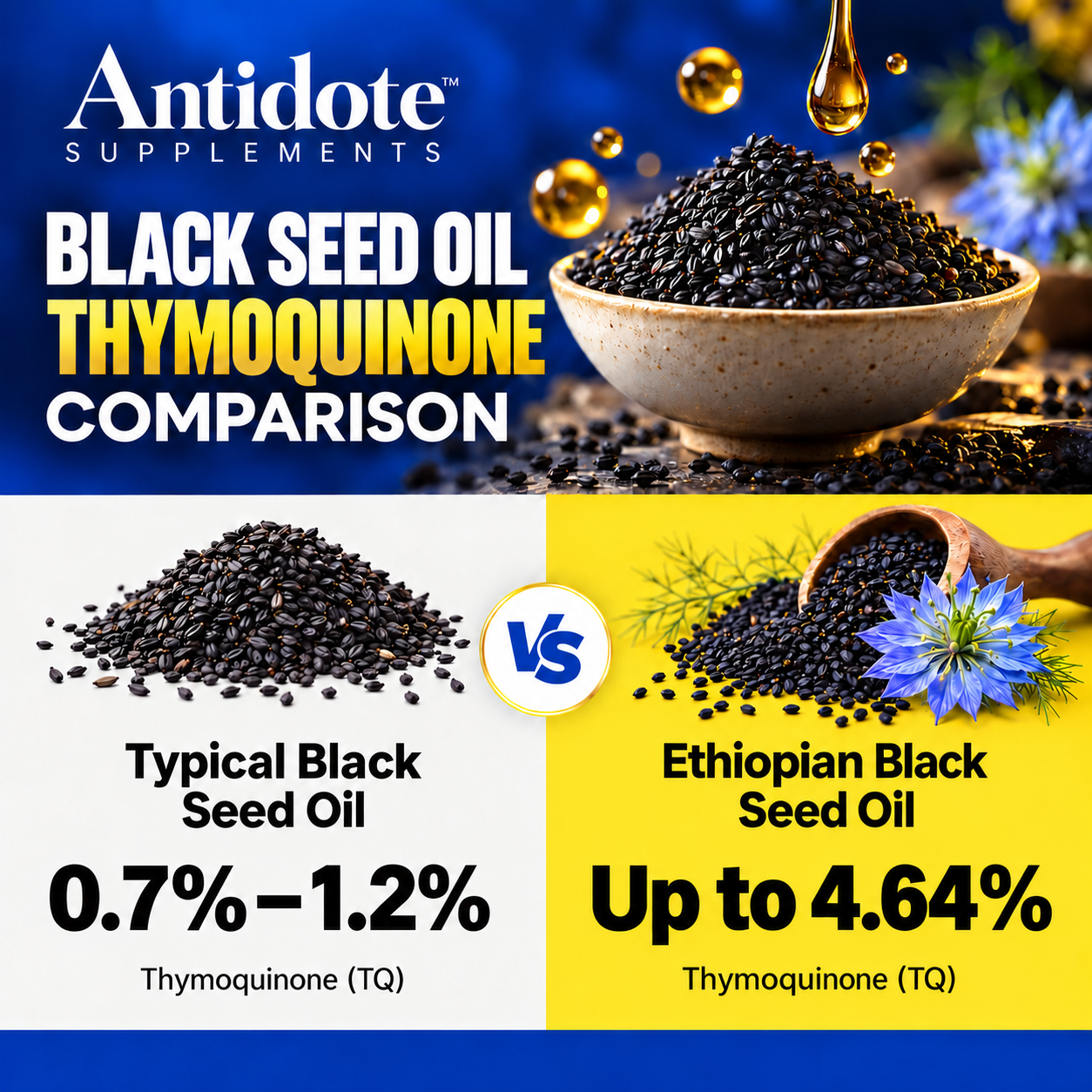
Thymoquinone (TQ) is black seed oil's main active compound.[1] Cold-pressed oils commonly contain around 0.5–3% TQ; higher claims should be backed by lab tests.
How to compare
- Stated TQ % with a test certificate
- Cold-pressed, unrefined
- Organic certification
- Origin of seeds (e.g. Ethiopian)
- Dark glass bottle and expiry date
Where to buy black cumin seed oil
Health stores, online marketplaces and brand websites. See our best black seed oil guide and shop.
Frequently asked questions
Is organic black seed oil better?
Organic certification limits pesticide use, but it doesn't guarantee higher TQ.
The bottom line
Compare black seed oils on tested TQ content, pressing method and freshness — not marketing claims.
Read this next
Buying Guides
The Best Black Seed Oils: A Buyer's Guide
What to look for in a black seed oil and how we evaluate products.
Ethiopian Black Seed Oil
Ethiopian Black Seed Oil: Benefits and How It Differs
Origin can influence flavour and compound levels. Here's what to know about Ethiopian black seed oil.
Buying Guides
How to Choose a Black Seed Oil Brand: A Practical Checklist
Instead of chasing a specific brand name, use this checklist to evaluate any black seed oil on its own merits.
Comparisons
Egyptian vs. Ethiopian Black Seed Oil: How Do They Compare?
Black seed oil's origin is a common marketing point. Here's what actually varies by region, and what doesn't.
Buying Guides
Organic Black Seed Oil: Is It Worth Paying More For?
Organic certification covers farming practices, not necessarily potency. Here's what it means for black seed oil shoppers.
Comparisons
Black Seed Oil at 5% Thymoquinone: What That Number Means
A thymoquinone percentage can help you compare products, but testing methods and raw oil differences make direct rankings tricky.