United Kingdom
Black Cumin Seed Oil Benefits: What Studies Show
What human studies and research reviews actually show about black cumin seed oil, explained in plain English.
Key takeaways
- Black cumin seed oil is the same oil as black seed oil, from Nigella sativa.
- Human studies have explored cholesterol, blood sugar, blood pressure and inflammation markers.
- Results are promising but most studies are small, so expectations should stay realistic.
Black cumin seed oil is simply another name for black seed oil, the oil pressed from Nigella sativa seeds. It is one of the most studied herbal oils in the world. Here is what the research actually shows, without the hype.
The most studied areas
Research reviews of human trials have looked at black seed oil in relation to cholesterol and blood fats, blood sugar control, blood pressure and markers of inflammation. Across these areas, results have generally been favourable, which is why the seed keeps attracting research attention.[1]
The compound behind the interest
Much of the research focuses on thymoquinone, the seed's signature compound. Laboratory studies describe antioxidant and anti-inflammatory activity, and it is the main reason scientists keep returning to this particular seed.[2]
How strong is the evidence
Honest answer: promising, not settled. Many trials are small, run for weeks rather than years, and use different oils at different amounts. A 2023 overview of systematic reviews concluded the evidence is encouraging while calling for larger, longer trials.[1] That is a normal stage for a traditional remedy working its way through modern science.
What this means for you
- A daily serving is a reasonable addition to an already healthy routine.
- It complements, never replaces, prescribed treatment.
- Choose an oil with a stated thymoquinone content so you know what you are taking.
- Give it consistent time, weeks rather than days, before judging.
Antidote Supplements
Antidote Supplements Ethiopian Black Seed Oil comes as 50 mL liquid drops; follow the label directions.
The bottom line
Studies on black cumin seed oil are genuinely promising across cholesterol, blood sugar and inflammation markers, but most are small. Treat it as a well supported daily supplement, not a medicine.
Medical reviewer
Dr Nisar Hussain
MBBS, DTCD, FRACGP
Read this next
Nigella sativa
Black Seed Oil (Nigella Sativa): The Science Behind the Seed
What makes Nigella sativa so studied? A look at the science behind black seed oil, from thymoquinone to human trials.
Black Seed Oil
Black Oil Seed Oil or Black Seed Oil? Clearing Up the Names
Black oil seed oil, black seed oil, black cumin: the names get tangled. Here is what each one actually means.
Nigella sativa
Black Seed vs Black Cumin Seed Oil: One Plant, Many Names
Black seed oil and black cumin seed oil come from the same plant, Nigella sativa. Here is why the two names exist and what to look for.
Nigella sativa
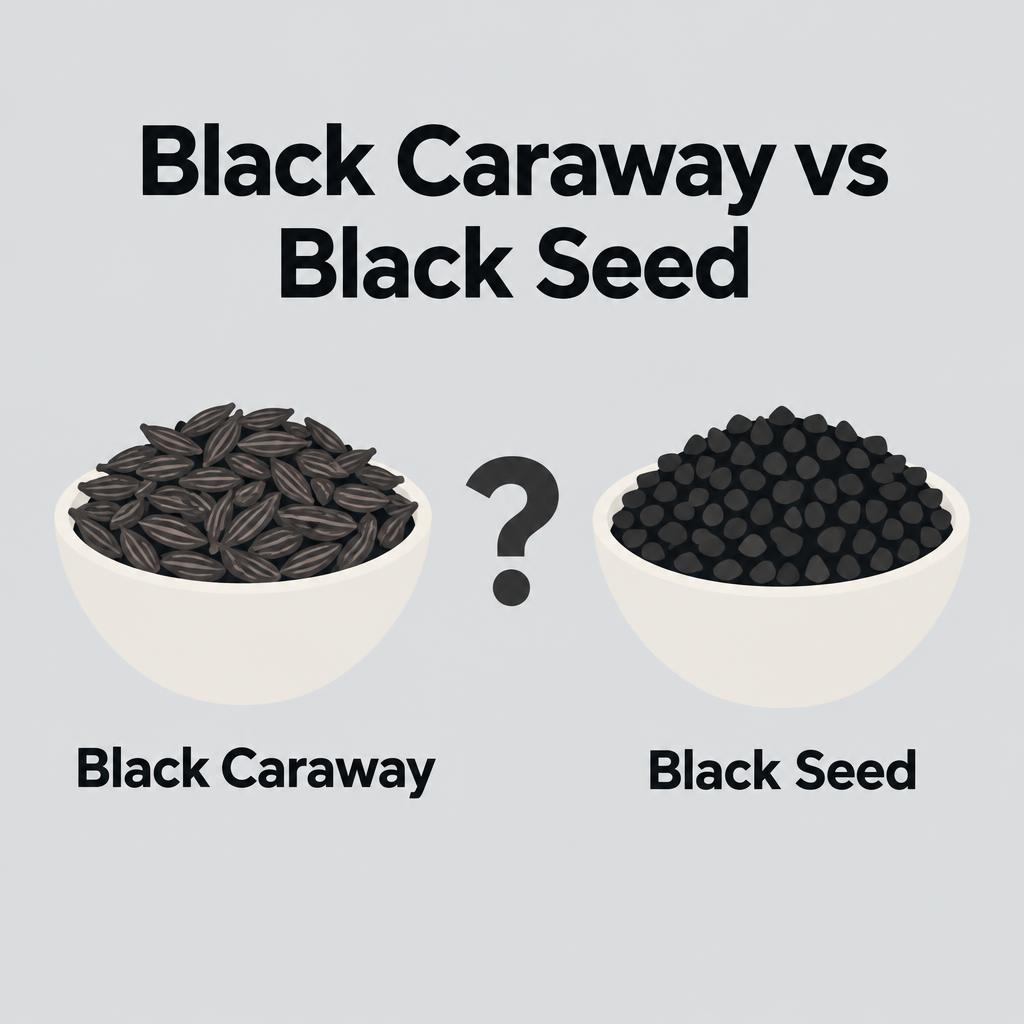
Black Caraway Seed Oil: Is It the Same as Black Seed Oil?
Black caraway and black seed are two different plants that share a confusing nickname. Here is how to tell them apart.
Nigella sativa
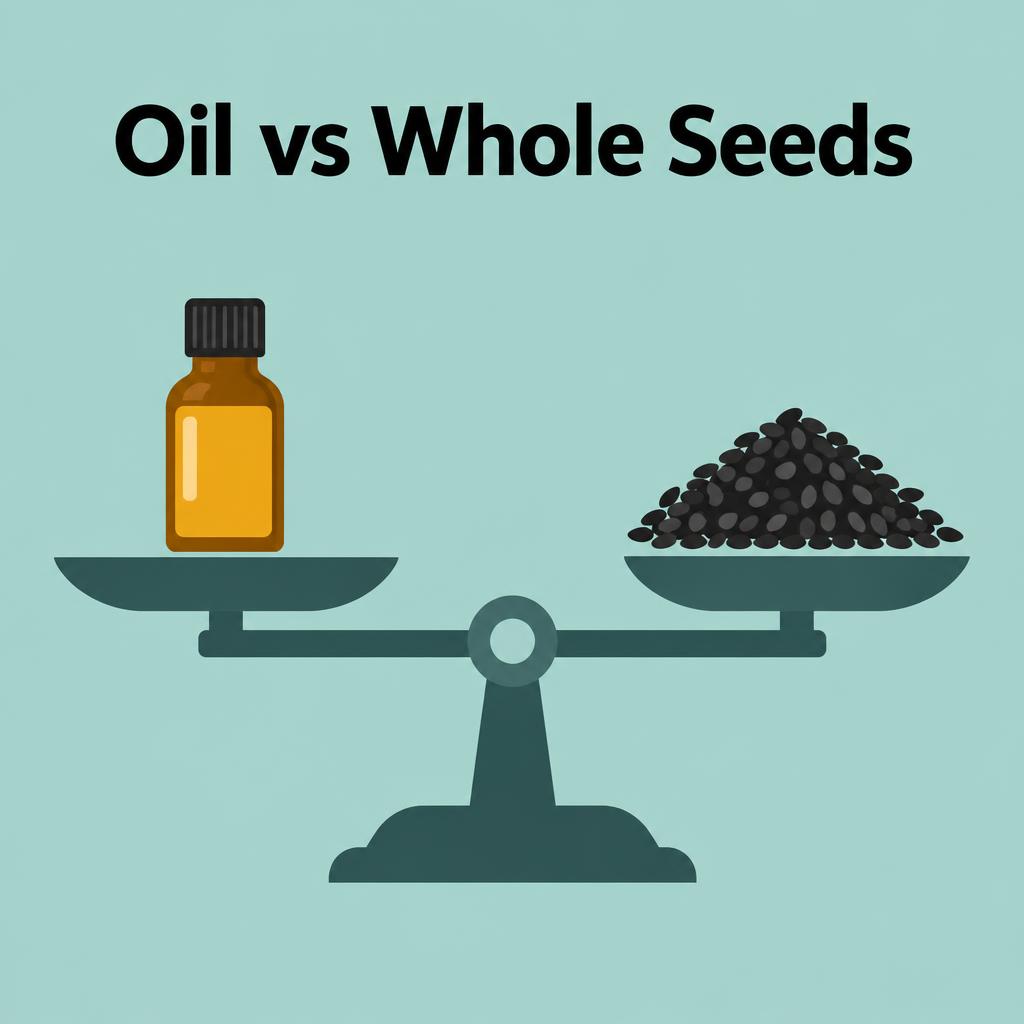
Black Seed Oil vs Whole Black Seeds: Which Is Better?
Whole black seeds or the pressed oil? Here is how they compare on active compounds, convenience and research.
Nigella sativa
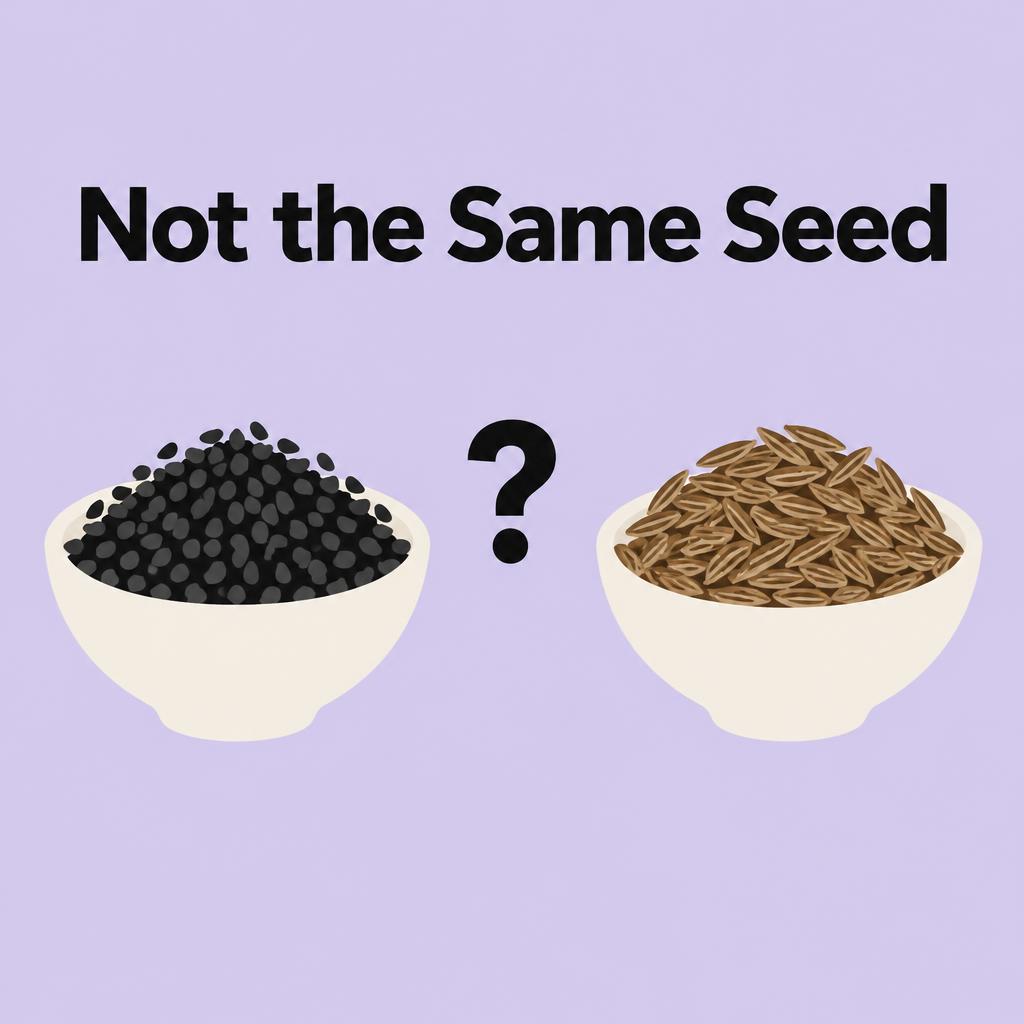
Is Black Seed Oil Made from Cumin? The Naming Mix-Up Explained
Black seed oil is not made from cumin. Here is why the names get mixed up and how to tell the two seeds apart.
Sources
- Li Z, et al. Nigella sativa and health outcomes: An overview of systematic reviews and meta-analyses. Frontiers in Nutrition. 2023;10:1107750.
- Khader M, Eckl PM. Thymoquinone: an emerging natural drug with a wide range of medical applications. Iranian Journal of Basic Medical Sciences. 2014;17(12):950-957.
- Ahmad A, et al. A review on therapeutic potential of Nigella sativa: A miracle herb. Asian Pacific Journal of Tropical Biomedicine. 2013;3(5):337-352.
