United Kingdom
Is Black Seed Oil Made from Cumin? The Naming Mix-Up Explained
Black seed oil is not made from cumin. Here is why the names get mixed up and how to tell the two seeds apart.
Key takeaways
- Black seed oil comes from Nigella sativa, not from cumin (Cuminum cyminum).
- The confusion comes from old informal names like black cumin.
- They are different plants with different flavours and different research.
No, black seed oil is not made from cumin. It comes from the seeds of Nigella sativa, a flowering plant in the buttercup family. The mix-up is understandable, and it has a long history.
Where the confusion comes from
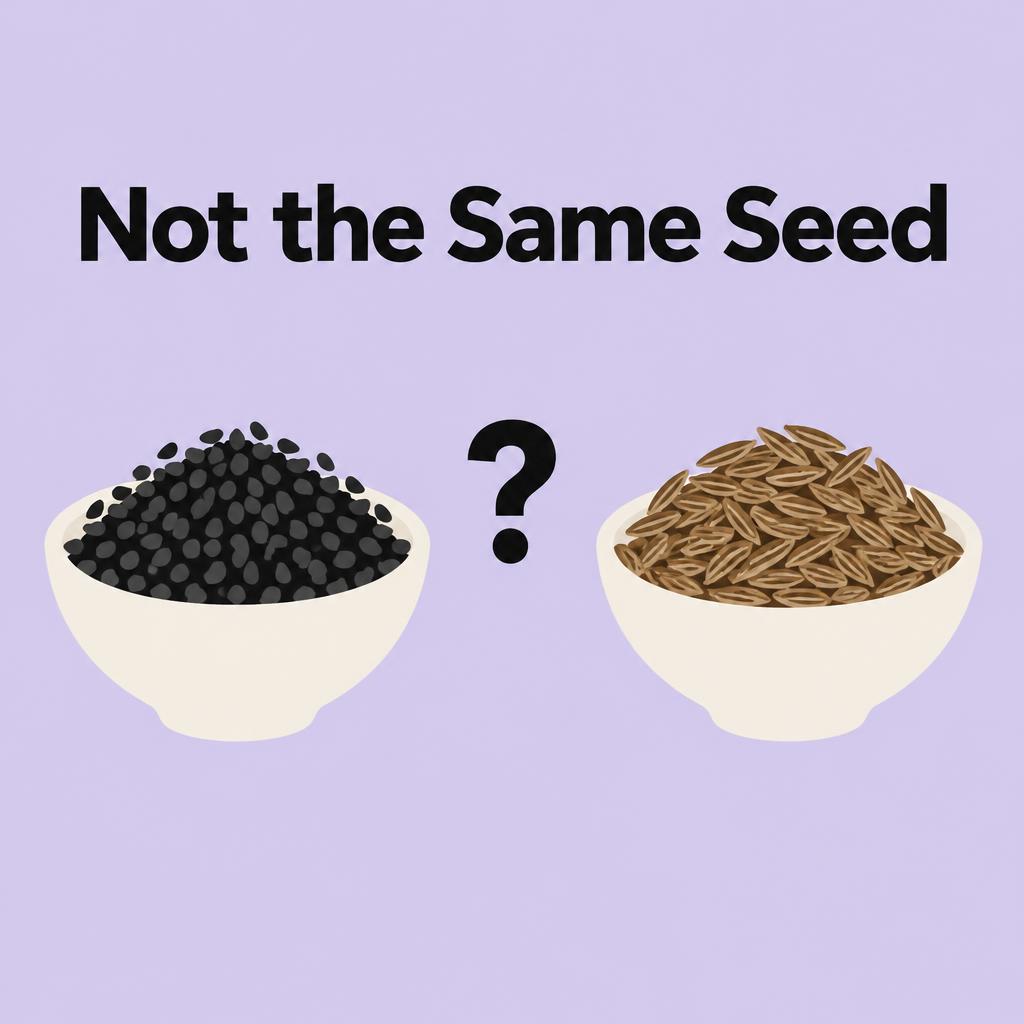
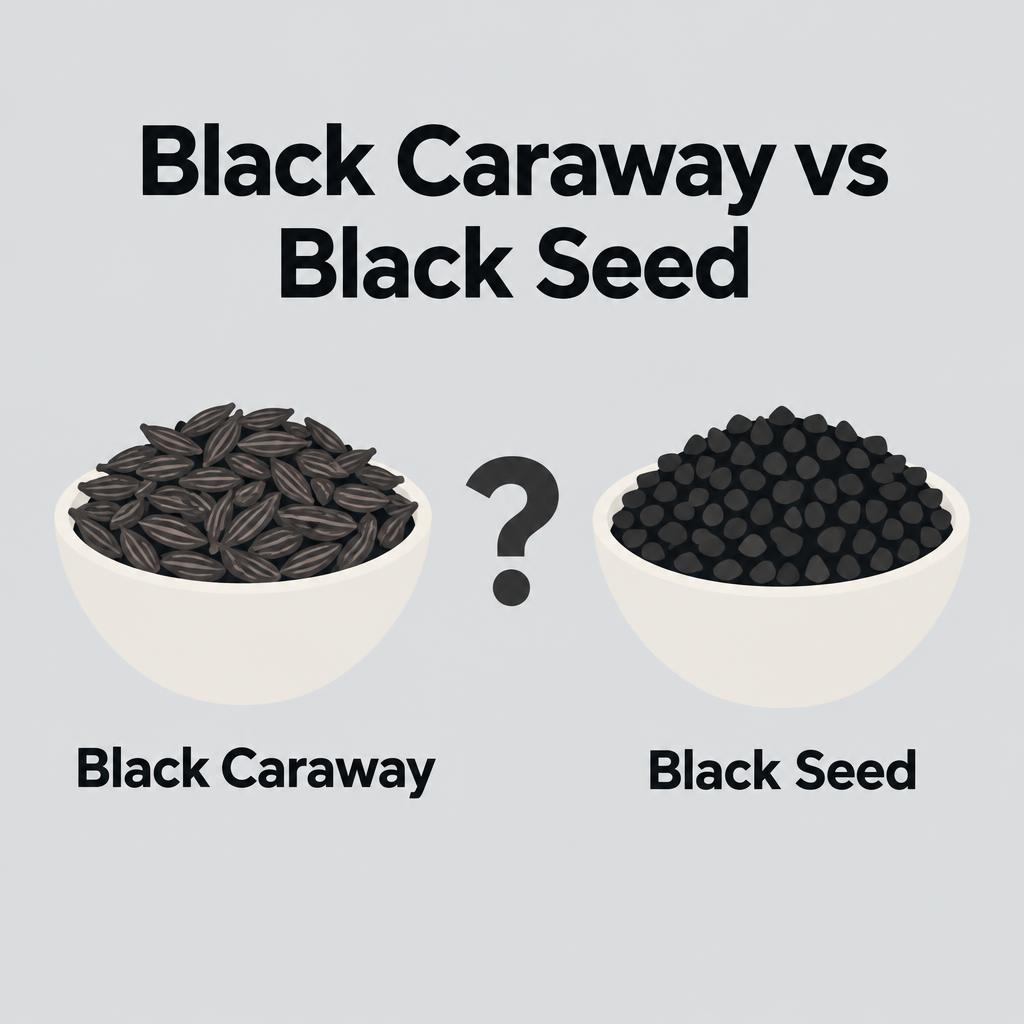
Nigella sativa seeds have been called black cumin, black caraway and kalonji in different languages and regions. None of these names is botanically accurate. True cumin is Cuminum cyminum, a completely different plant in the carrot family, with crescent-shaped brown seeds and a warm, earthy flavour.
How to tell them apart
- Black seed (Nigella sativa): small, matte black, roughly triangular seeds with a peppery, slightly bitter taste.
- Cumin (Cuminum cyminum): elongated, ridged, brown seeds with the familiar curry flavour.
- The oils: black seed oil is dark and peppery; cumin seed oil is rare and smells of cumin spice.
Why it matters
The research on black seed oil, including the 2023 overview of systematic reviews covering blood sugar, cholesterol and blood pressure, is about Nigella sativa specifically.[1] Cumin has its own separate research. When you buy black seed oil, check the label names Nigella sativa so you know you are getting the studied seed.[2]
Other names you will see
Kalonji is the common name in South Asian cooking, and black caraway appears in older texts. Both refer to Nigella sativa. If a recipe or supplement says black cumin, check the context: in cooking it may mean either seed, but in supplements it should mean Nigella sativa.
Antidote Supplements
Antidote Supplements Ethiopian Black Seed Oil comes as 50 mL liquid drops; follow the label directions.
The bottom line
Black seed oil comes from Nigella sativa, not cumin. The shared nickname black cumin causes the confusion. Check the label for Nigella sativa to be sure.
Medical reviewer
Dr Bruce (Hongwei) Wu
MBBS, FRACGP
Read this next
Nigella sativa
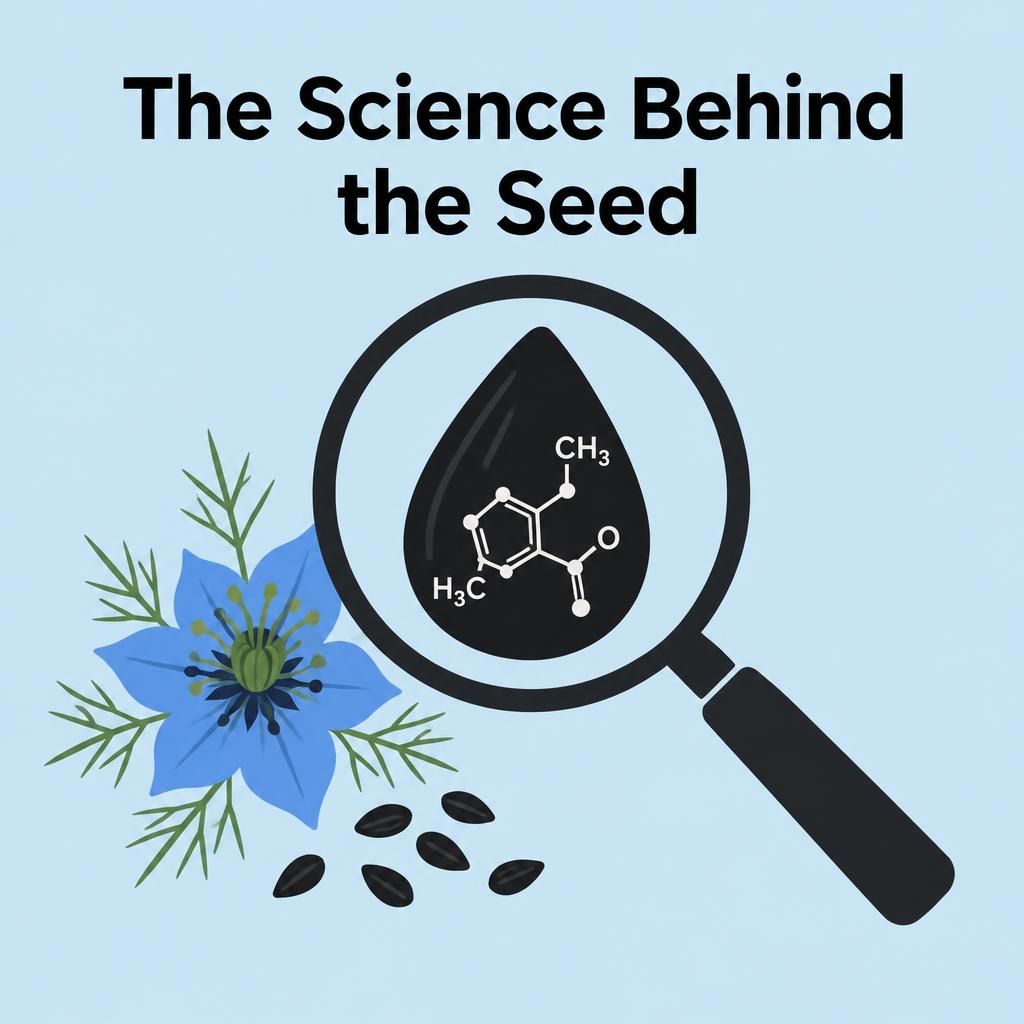
Black Seed Oil (Nigella Sativa): The Science Behind the Seed
What makes Nigella sativa so studied? A look at the science behind black seed oil, from thymoquinone to human trials.
Black Seed Oil
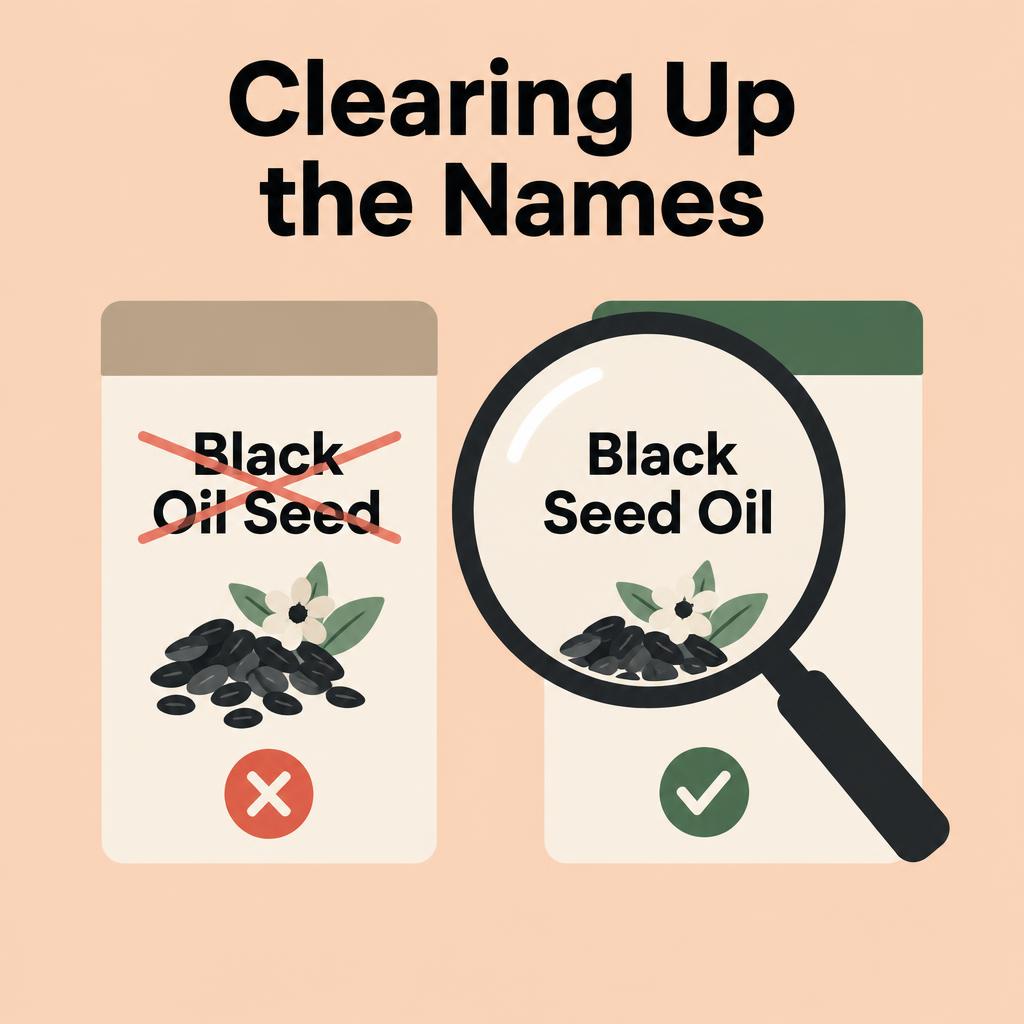
Black Oil Seed Oil or Black Seed Oil? Clearing Up the Names
Black oil seed oil, black seed oil, black cumin: the names get tangled. Here is what each one actually means.
Nigella sativa
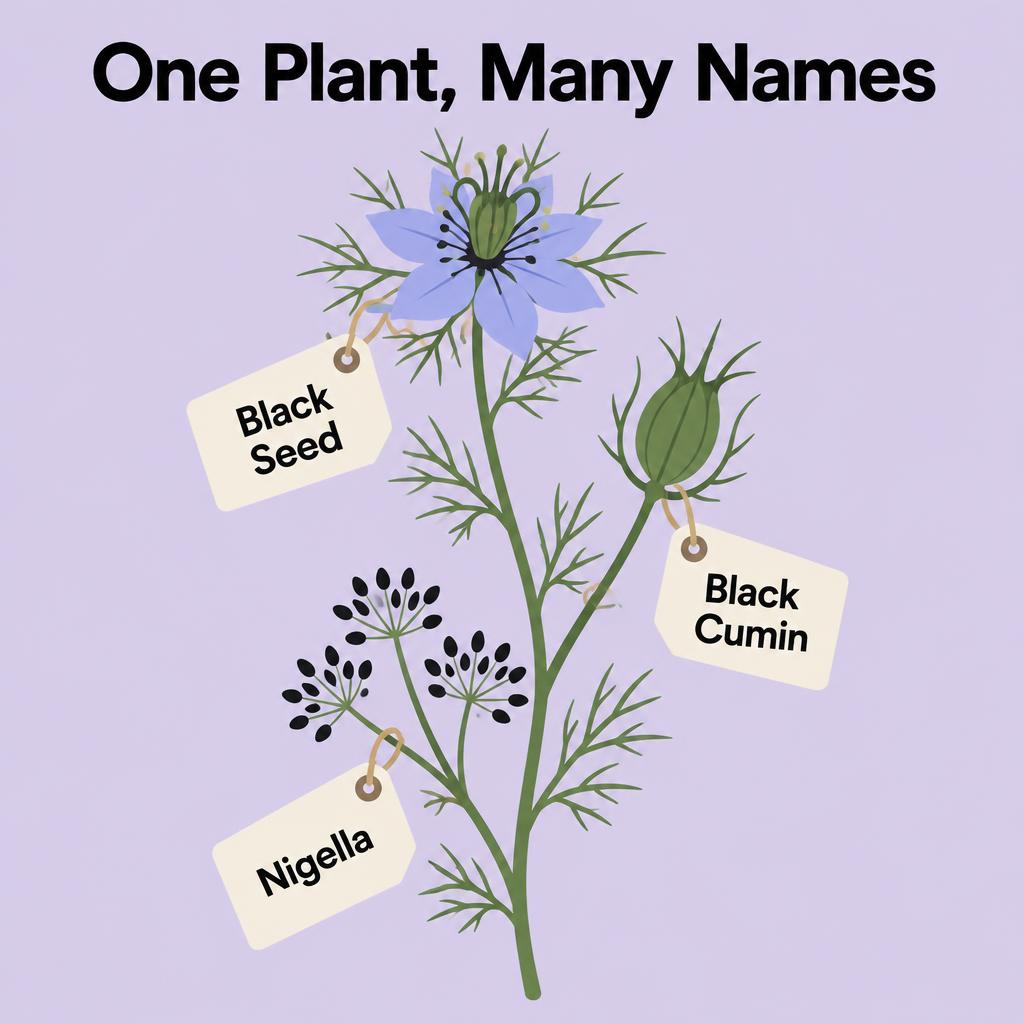
Black Seed vs Black Cumin Seed Oil: One Plant, Many Names
Black seed oil and black cumin seed oil come from the same plant, Nigella sativa. Here is why the two names exist and what to look for.
Nigella sativa
Black Caraway Seed Oil: Is It the Same as Black Seed Oil?
Black caraway and black seed are two different plants that share a confusing nickname. Here is how to tell them apart.
Nigella sativa
Black Seed Oil vs Whole Black Seeds: Which Is Better?
Whole black seeds or the pressed oil? Here is how they compare on active compounds, convenience and research.
Nigella sativa
Black Cumin Seed Oil Benefits: What Studies Show
What human studies and research reviews actually show about black cumin seed oil, explained in plain English.
Sources
- Li Z, et al. Nigella sativa and health outcomes: An overview of systematic reviews and meta-analyses. Frontiers in Nutrition. 2023;10:1107750.
- Ahmad A, et al. A review on therapeutic potential of Nigella sativa: A miracle herb. Asian Pacific Journal of Tropical Biomedicine. 2013;3(5):337–352.
- NHS. Vitamins, supplements and nutrition: herbal remedies and supplements.
