United Kingdom
Ethiopian Black Seed Oil: What Makes It Different?
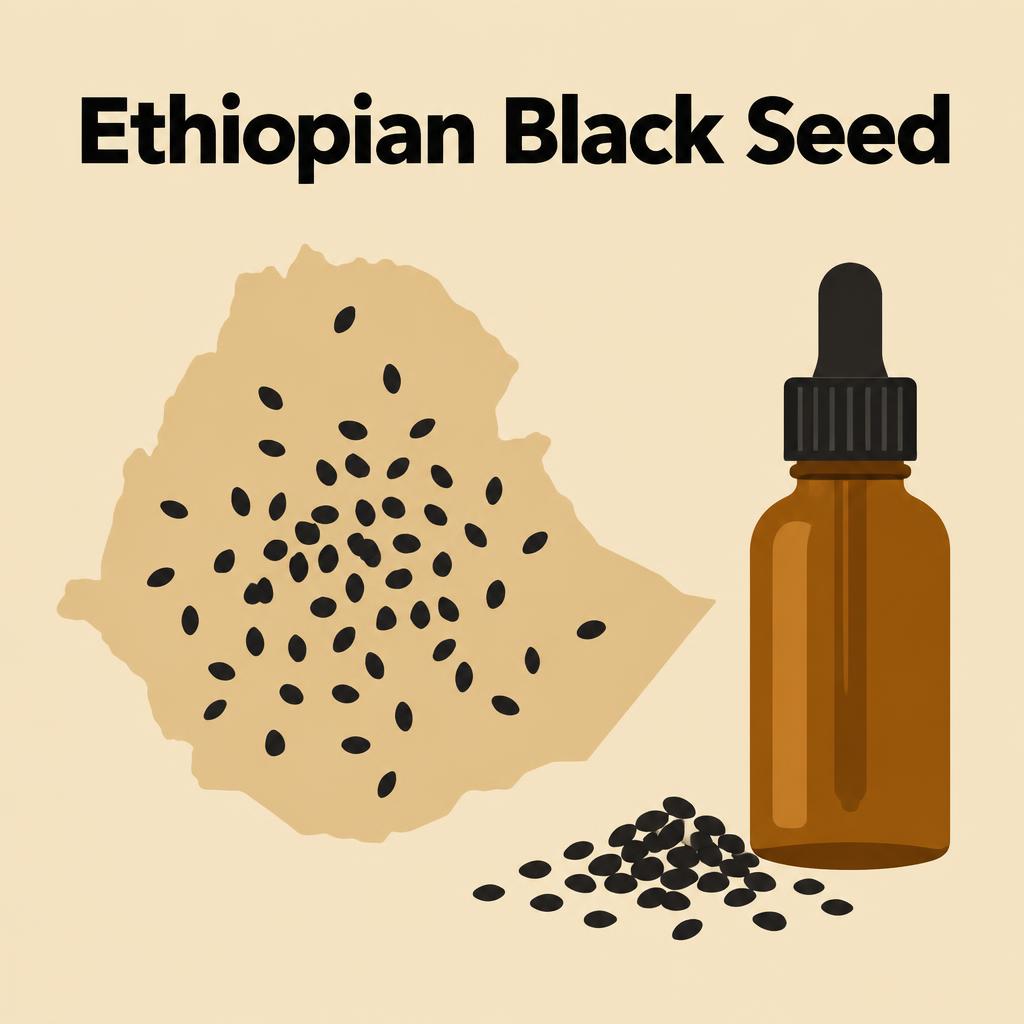
Ethiopia has a long history with Nigella sativa. Here is what makes Ethiopian black seed oil distinctive and why origin matters.
Key takeaways
- Ethiopia has cultivated and used Nigella sativa for centuries.
- Growing conditions influence the seed's oil and thymoquinone content.
- Origin, pressing method and testing tell you more than origin alone.
Black seed oil is produced in many countries, but Ethiopian black seed oil has a particular reputation. Here is what sits behind it.
A long tradition
Nigella sativa has grown in Ethiopia for centuries, where the seeds are known as tikur azmud and used in food and traditional wellness practices. That long relationship means established growing knowledge and seed varieties suited to the land.[1]
Why origin can matter
Like wine grapes or coffee, oil seeds are shaped by where they grow. Soil, altitude, rainfall and sunshine all influence the oil's composition, including its thymoquinone content, the compound most black seed oil research focuses on.[2] Ethiopian highland conditions suit Nigella sativa well.
What matters alongside origin
- Cold pressing: pressing without heat protects the oil's delicate compounds.
- Freshness: black seed oil is best fresh and stored away from light and heat.
- Testing: a stated thymoquinone content tells you the maker verifies each batch.
- Purity: the label should list 100% Nigella sativa oil with no fillers.
How to use it
Ethiopian black seed oil is used the same way as any quality black seed oil: a daily label serving, taken with food, kept consistent over weeks. The liquid format also suits skin and hair routines, where the oil's fatty acids help keep skin feeling soft.
Antidote Supplements
Antidote Supplements Ethiopian Black Seed Oil is pressed from Ethiopian Nigella sativa seed and comes as 50 mL liquid drops; follow the label directions. The Antidote Supplements combination softgels contain 3,000 mg black seed oil and 100 mg oregano oil extract per three-softgel serving, with up to 4.64% naturally occurring thymoquinone and 80 servings in each 240-softgel pouch.
The bottom line
Ethiopian black seed oil draws on centuries of cultivation and highland growing conditions. Pair origin with cold pressing, freshness and tested thymoquinone content for the full picture.
Medical reviewer
Dr Akhter Hossain
MBBS, FRACGP
Read this next
Black Seed Oil
Black Seed Oil: Benefits, Uses and Side Effects (Complete Guide)
The complete UK guide to black seed oil: what it is, what the research shows, how to take it and who should check first.
Nigella sativa
Black Seed Oil (Nigella Sativa): The Science Behind the Seed
What makes Nigella sativa so studied? A look at the science behind black seed oil, from thymoquinone to human trials.
Black Seed Oil
Black Seed Oil Benefits: 10 Reasons People Take It
From metabolic support to antioxidant intake, here are the ten most common reasons people take black seed oil every day.
Black Seed Oil
Black Cumin Seed Oil: A Complete Guide
Black cumin seed oil is black seed oil by another name. This guide covers what it is, the research and how to take it.
Black Seed Oil
Advantages of Black Seed Oil: Why It's Been Used for Centuries
Black seed oil has been used for over two thousand years. Here is why it has lasted, and what modern research adds.
How to Use
Black Seed Oil Capsules vs Liquid: Which Is Better?
Capsules or liquid drops? Here is how the two formats compare on taste, convenience, dose control and value.
Sources
- Ahmad A, et al. A review on therapeutic potential of Nigella sativa: A miracle herb. Asian Pacific Journal of Tropical Biomedicine. 2013;3(5):337–352.
- Li Z, et al. Nigella sativa and health outcomes: An overview of systematic reviews and meta-analyses. Frontiers in Nutrition. 2023;10:1107750.
- NHS. Vitamins, supplements and nutrition: herbal remedies and supplements.
