United States
How to Take Black Seed Oil: A Simple Guide
The simple way to take black seed oil: how much, when, with what, and the small tricks that make the daily habit effortless.
Key takeaways
- The standard daily amount is one to two teaspoons of liquid oil, or the softgel equivalent.
- Take it with food to avoid stomach upset and improve absorption.
- Morning or night both work; consistency matters far more than timing.
- Mixing the liquid into honey, juice or a smoothie solves the strong taste.
How much to take
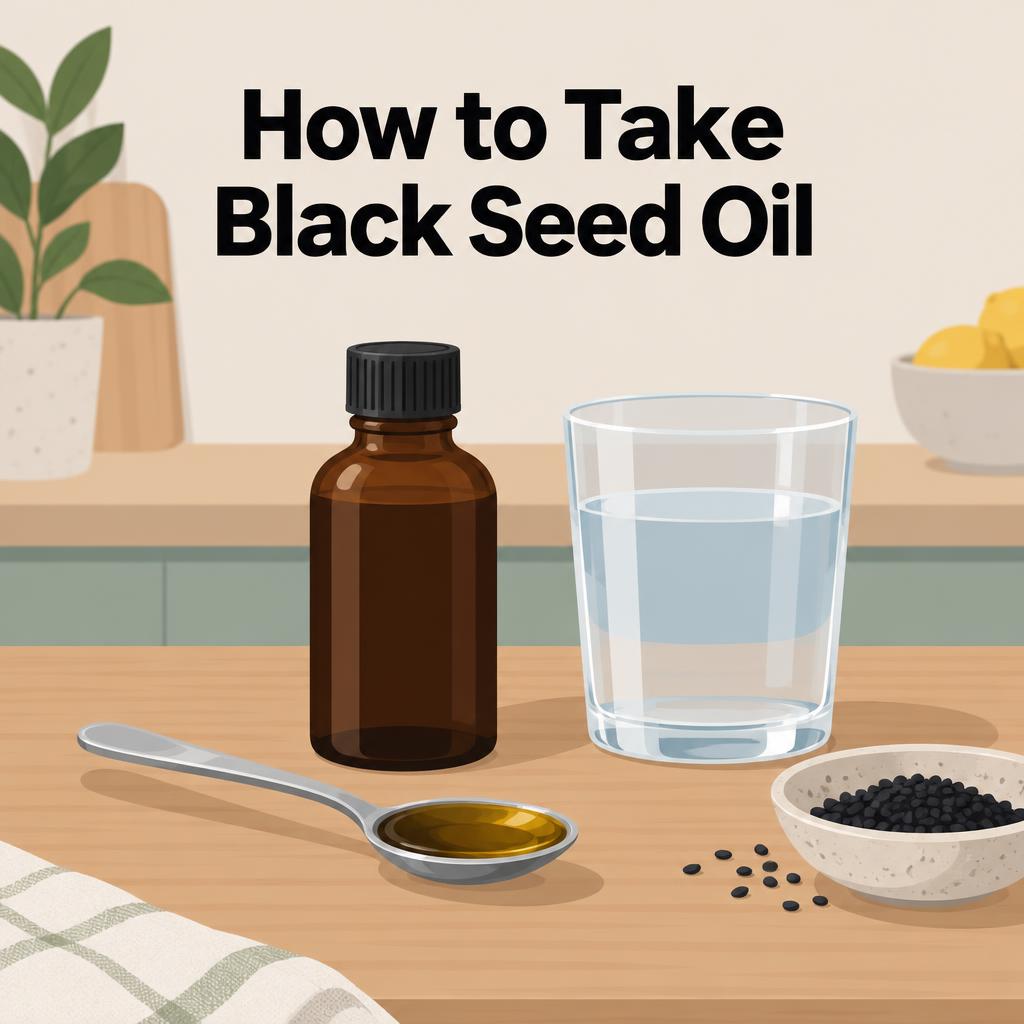
The amount used across most human research is one to two teaspoons of black seed oil per day, roughly 2.5 to 5 ml. If you are new to it, start at one teaspoon for the first week, then move up if you like. More is not better here: the studies that found benefits used these modest, food-level amounts.
When to take it
There is no magic hour. Morning works well because it anchors the habit to breakfast; night works for people who like a wind-down routine. The only rule that matters is picking a time you can repeat daily, because the research behind black seed oil ran for weeks of consistent use, not occasional doses.
Always with food
Taking black seed oil with a meal does two useful things. It prevents the mild stomach upset some people feel on an empty stomach, and the fat in your meal helps your body absorb the oil's fat-soluble compounds. A spoonful alongside breakfast or stirred into food is all it takes.
Dealing with the taste
Black seed oil has a strong, peppery, slightly bitter taste that some people love and others really do not. Easy fixes: mix it into a spoonful of honey, stir it into juice or a smoothie, or drizzle it over salad. If the taste is a dealbreaker, softgels deliver the same oil with no taste at all.
Building the habit
The people who get results are the people who make it automatic. Keep the bottle next to something you use every morning, pair it with an existing meal, and give the routine at least eight to twelve weeks before judging it. That is the timeframe the clinical research actually used, and it is a fair test.
The bottom line
Take one to two teaspoons of black seed oil daily with food, at whatever time you can keep consistent, and use honey, juice or softgels if the taste puts you off. Consistency over eight to twelve weeks is what the research supports, so make the habit easy to keep.
Medical reviewer
Dr Mackie Abu-Bakr
MBBS, MRCS, MRCGP, FRACGP
Read this next
Black Seed Oil
What Does Black Seed Oil Do? A Quick Answer
The short answer: black seed oil supports your immune system, inflammation response and metabolic health. Here is the slightly longer one, with the research.
Black Seed Oil
Black Seed Oil Capsules vs Liquid: Which Is Better?
Capsules and liquid deliver the same black seed oil, but they suit different people. Here is an honest comparison to help you pick.

Black Seed Oil
Is Black Seed Oil Good for You? An Honest Look
An honest, hype-free answer to whether black seed oil is good for you: what the human research supports, where it is thin, and who it suits.
Black Seed Oil
Black Seed Oil: Benefits, Uses and Side Effects (Complete Guide)
Black seed oil has been used for over two thousand years and is now backed by dozens of human trials. Here is the complete picture: benefits, uses and safety.

Black Seed Oil
Black Seed Oil Benefits: 10 Reasons People Take It
From immune support to skin and hair, here are the ten most researched and most loved reasons people take black seed oil every day.
Black Seed Oil
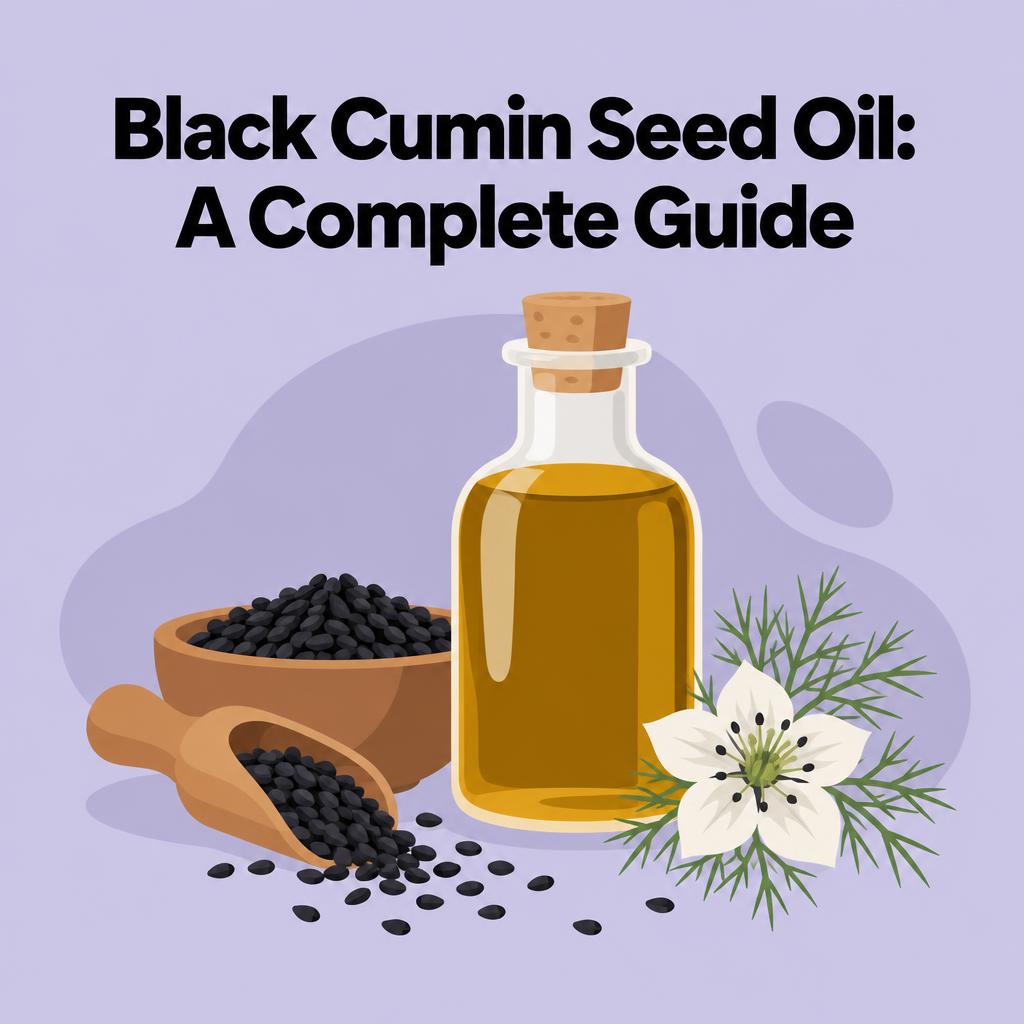
Black Cumin Seed Oil: A Complete Guide
Black cumin seed oil is simply another name for black seed oil, from Nigella sativa. Here is what the name means, what the oil does, and how to use it.
Sources
- Hannan MA, et al. Black cumin (Nigella sativa L.): a comprehensive review on phytochemistry, health benefits, molecular pharmacology, and safety. Nutrients. 2021.
- Tavakkoli A, et al. Review on clinical trials of black seed (Nigella sativa) and its active constituent, thymoquinone. Journal of Pharmacopuncture. 2017.
