United States
Black Seed Oil: Benefits, Uses and Side Effects (Complete Guide)
Black seed oil has been used for over two thousand years and is now backed by dozens of human trials. Here is the complete picture: benefits, uses and safety.
Key takeaways
- Black seed oil is cold-pressed from Nigella sativa seeds and is rich in thymoquinone.
- Human trials cover blood sugar, cholesterol, blood pressure, airways and inflammation.
- It is taken by the spoonful or in softgels, and applied to skin and hair.
- Side effects are uncommon at labelled amounts; check first if you take medication or are pregnant.
What black seed oil is
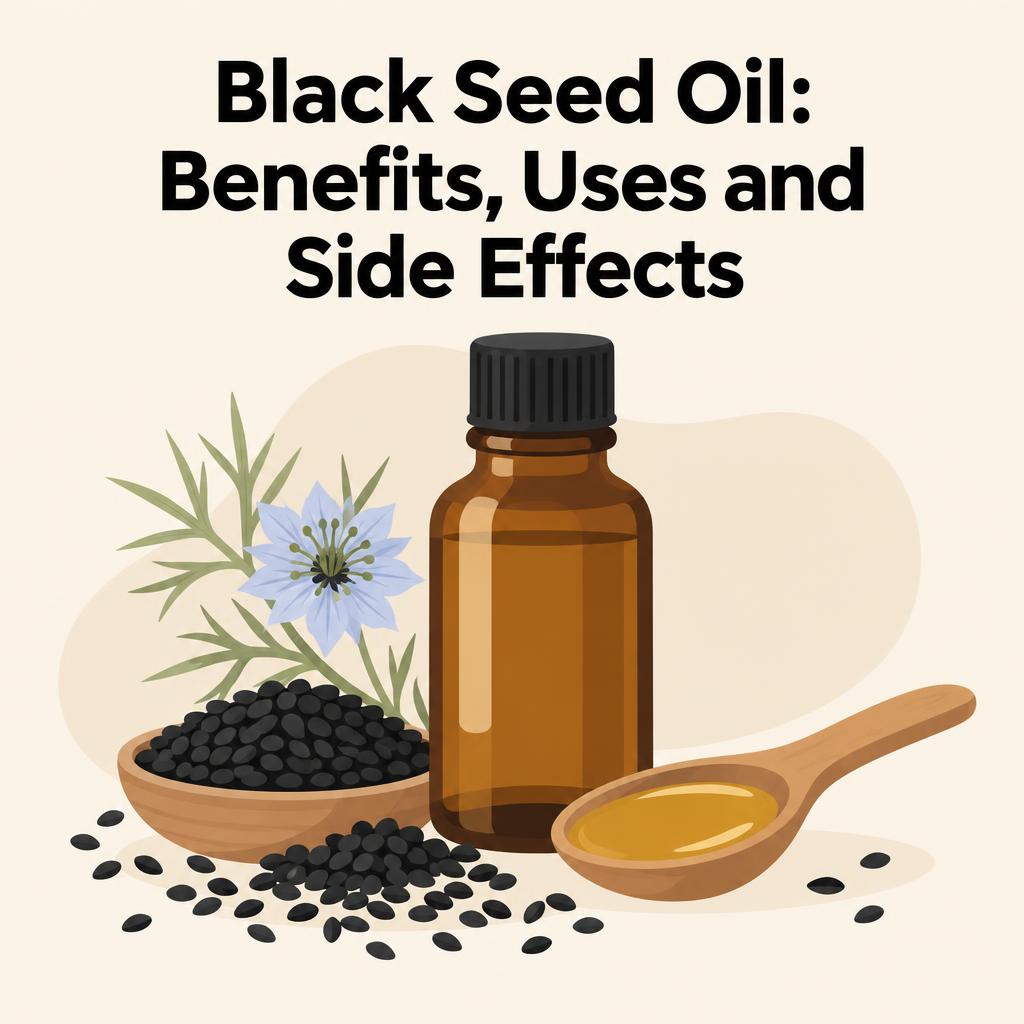
Black seed oil is cold-pressed from the seeds of Nigella sativa, a flowering plant native to the Middle East, Africa and South Asia. Its signature compound is thymoquinone, an antioxidant studied across dozens of human trials. The oil has been a staple of traditional wellness practice for over two thousand years, and modern research is catching up with that history.
The main benefits studied
Human trials have examined black seed oil for blood sugar control, cholesterol and triglyceride levels, blood pressure, allergic rhinitis, asthma symptoms, and markers of inflammation. Reviews of these trials describe results as consistently promising, though mostly from small studies. It is best thought of as broad, gentle daily support rather than a targeted treatment.
Skin and hair uses
Beyond swallowing it, black seed oil is widely used on skin and hair. People massage it into the scalp to support hair condition, and apply it to dry or blemish-prone skin for its soothing, antioxidant properties. A liquid dropper bottle is the practical format for topical use, since you can apply exactly what you need.
How to take it
Most studies use roughly one to two teaspoons daily, taken with food. The taste is peppery and warming; mixing with honey or juice is the classic solution. Softgel capsules deliver the same oil with no taste and exact measured servings, which is why they are the format people most often maintain long term.
Side effects and who should check first
Black seed oil is well tolerated by most adults at labelled amounts, with occasional mild stomach upset the most common complaint. Check with your doctor or pharmacist first if you are pregnant, take blood pressure, blood sugar or blood-thinning medication, or have surgery planned. This is standard caution for any concentrated botanical.
Choosing a quality oil
Look for cold-pressed oil, a stated thymoquinone content (naturally occurring levels up to around 4 to 5 per cent mark a potent oil), dark or opaque packaging, and a brand that publishes full supplement facts. Ethiopian black seed oil is prized for its naturally high thymoquinone levels.
The bottom line
Black seed oil is a well-researched traditional oil rich in thymoquinone, with human trials covering metabolism, airways and inflammation, plus popular skin and hair uses. Take one to two teaspoons daily with food, or choose softgels, and check with a professional first if you take medication.
Medical reviewer
Dr Akhter Hossain
MBBS, FRACGP
Read this next
Safety
Black Seed Oil Side Effects: Who Should Be Careful
Black seed oil is well tolerated by most adults, but some people should take care. The honest safety picture.
Black Seed Oil
What Is Black Seed Oil Good For? The Most Common Uses
The most common reasons people take black seed oil, from daily wellness to skin and hair, with realistic expectations.
Black Seed Oil
Is Black Seed Oil Good for Skin?
Black seed oil has a long history in skin care, and early research on thymoquinone is promising. Here is what it may do for skin, how people use it and what to expect.
Black Seed Oil
Black Seed Oil Benefits: 10 Reasons People Take It
From immune support to skin and hair, here are the ten most researched and most loved reasons people take black seed oil every day.
Black Seed Oil
Black Cumin Seed Oil: A Complete Guide
Black cumin seed oil is simply another name for black seed oil, from Nigella sativa. Here is what the name means, what the oil does, and how to use it.
Black Seed Oil
Black Seed Oil Capsules vs Liquid: Which Is Better?
Capsules and liquid deliver the same black seed oil, but they suit different people. Here is an honest comparison to help you pick.
