United States
Black Seed Oil Capsules vs Liquid: Which Is Better?
Capsules and liquid deliver the same black seed oil, but they suit different people. Here is an honest comparison to help you pick.
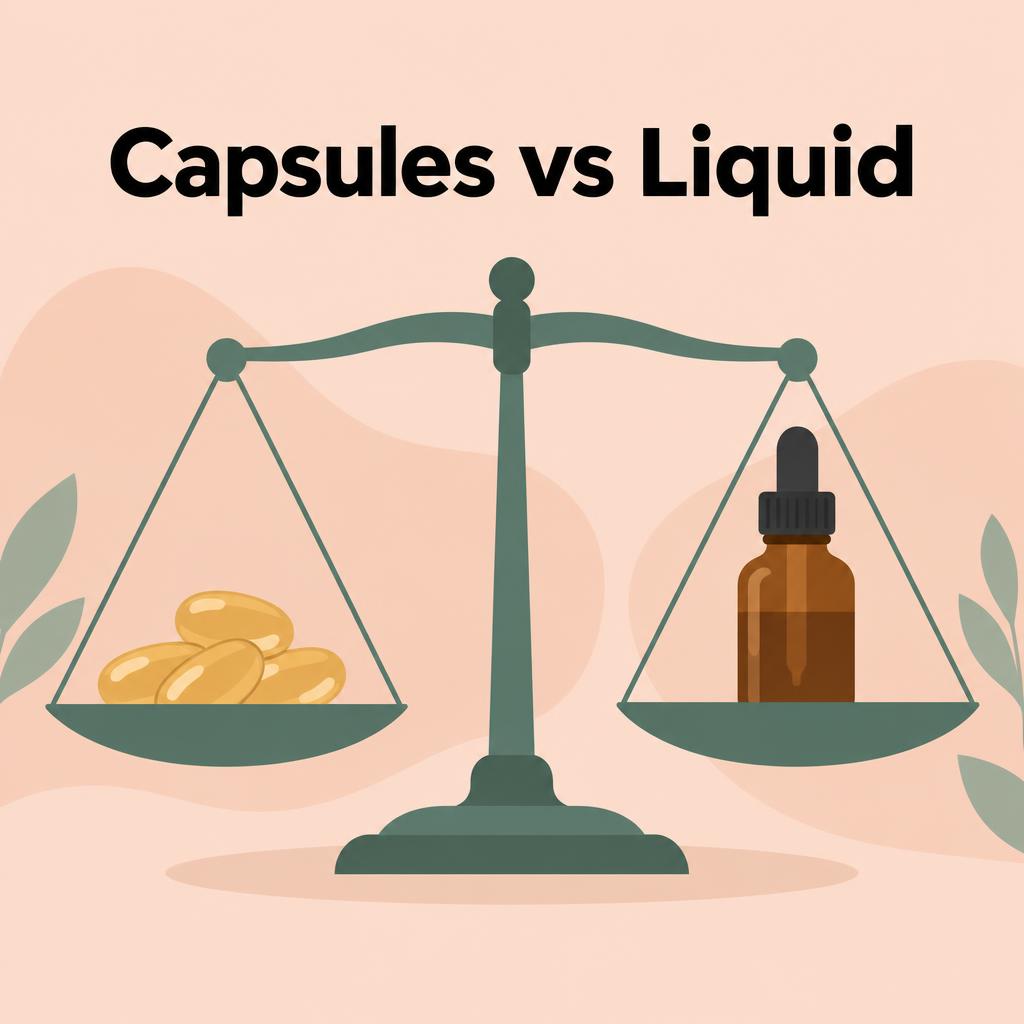
Key takeaways
- Both formats deliver the same oil; the difference is convenience, taste and versatility.
- Liquid suits topical use on skin and hair, and flexible measuring.
- Capsules suit daily routines: no taste, exact servings, travel-friendly.
- Judge value by cost per day, not per bottle.
Same oil, different experience
Whether you swallow a teaspoon of liquid or three softgels, the black seed oil itself is the same, assuming equal quality. What differs is everything around the oil: taste, measuring, storage, portability and whether you can also use it on your skin and hair. Choosing well is about matching the format to your life.
The case for liquid
Liquid black seed oil is the traditional format and the most versatile. You can adjust the amount drop by drop, mix it into honey, juice or smoothies, drizzle it over food after cooking, and use the same bottle on your skin and scalp. If topical use matters to you, liquid is the only practical choice. The trade-offs are the peppery taste, imprecise spoon measuring, and a bottle that needs cool, dark storage once opened.
The case for capsules
Softgel capsules solve the taste problem completely and deliver an exact measured serving every time. They travel well, need no refrigeration thought, and make a daily routine effortless, which matters because black seed oil's benefits build with consistency over weeks and months. Combination softgels also let you pair black seed oil with oregano oil in the same serving, something liquids make awkward.
Cost and value
Compare cost per day rather than sticker price. A large pouch of 240 softgels taken as three per day lasts 80 days, which often beats smaller liquid bottles on daily cost. Liquids vary widely in price per ounce, and cheap oils frequently skimp on thymoquinone content, so a suspiciously low price is its own warning.
Which should you pick?
Pick liquid if you want skin and hair use, enjoy the traditional ritual, or want flexible amounts. Pick capsules if taste would stop you, if you want exact servings, or if you plan to take the oil daily for months. Many people keep both: a dropper bottle in the bathroom for skin and hair, and softgels in the kitchen for daily swallowing.
Quality matters more than format
Whichever you choose, the oil inside is what counts. Look for cold-pressed Nigella sativa oil with a stated thymoquinone content, naturally occurring levels up to around 4 to 5 per cent mark a potent oil, and a brand that publishes full supplement facts.
The bottom line
Liquid black seed oil wins on versatility and topical use; capsules win on taste, precision and daily consistency. Both deliver the same oil, so choose the format you will actually stick with, and judge quality by thymoquinone content either way.
Medical reviewer
Dr Mackie Abu-Bakr
MBBS, MRCS, MRCGP, FRACGP
Read this next
How to Use
Black Seed Oil Capsules vs Liquid: Which Is Better?
Capsules or liquid drops? Here is how the two formats compare on taste, convenience, dose control and value.
How to Use
How to Take Black Seed Oil: A Simple Guide
The simplest ways to take black seed oil daily: how much, when, with what, and how to make the habit stick.
Black Seed Oil
Black Seed Oil: Benefits, Uses and Side Effects (Complete Guide)
Black seed oil has been used for over two thousand years and is now backed by dozens of human trials. Here is the complete picture: benefits, uses and safety.

Black Seed Oil
Black Seed Oil Benefits: 10 Reasons People Take It
From immune support to skin and hair, here are the ten most researched and most loved reasons people take black seed oil every day.
Black Seed Oil
Black Cumin Seed Oil: A Complete Guide
Black cumin seed oil is simply another name for black seed oil, from Nigella sativa. Here is what the name means, what the oil does, and how to use it.
Black Seed Oil
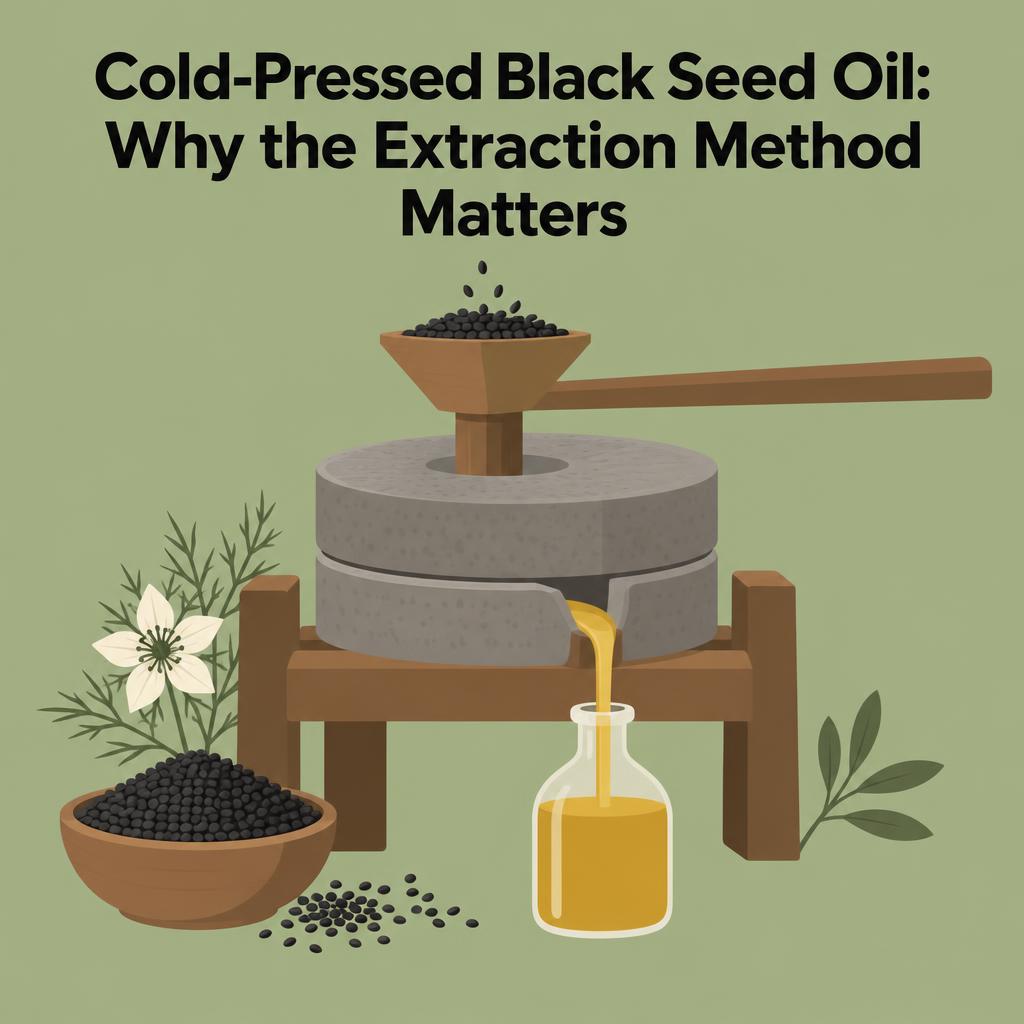
Cold-Pressed Black Seed Oil: Why the Extraction Method Matters
Cold-pressed is more than a marketing phrase for black seed oil. Here is how extraction affects the thymoquinone and quality of the oil you buy.
