United States
Cold-Pressed Black Seed Oil: Why the Extraction Method Matters
Cold-pressed is more than a marketing phrase for black seed oil. Here is how extraction affects the thymoquinone and quality of the oil you buy.
Key takeaways
- Cold-pressing extracts oil without heat or chemical solvents, protecting delicate compounds.
- Heat and solvent extraction can degrade thymoquinone, the oil's signature compound.
- Cold-pressed oil keeps the full flavour, aroma and fatty acid profile of the seed.
- Always check the label for the extraction method and a stated thymoquinone level.
What cold-pressed means
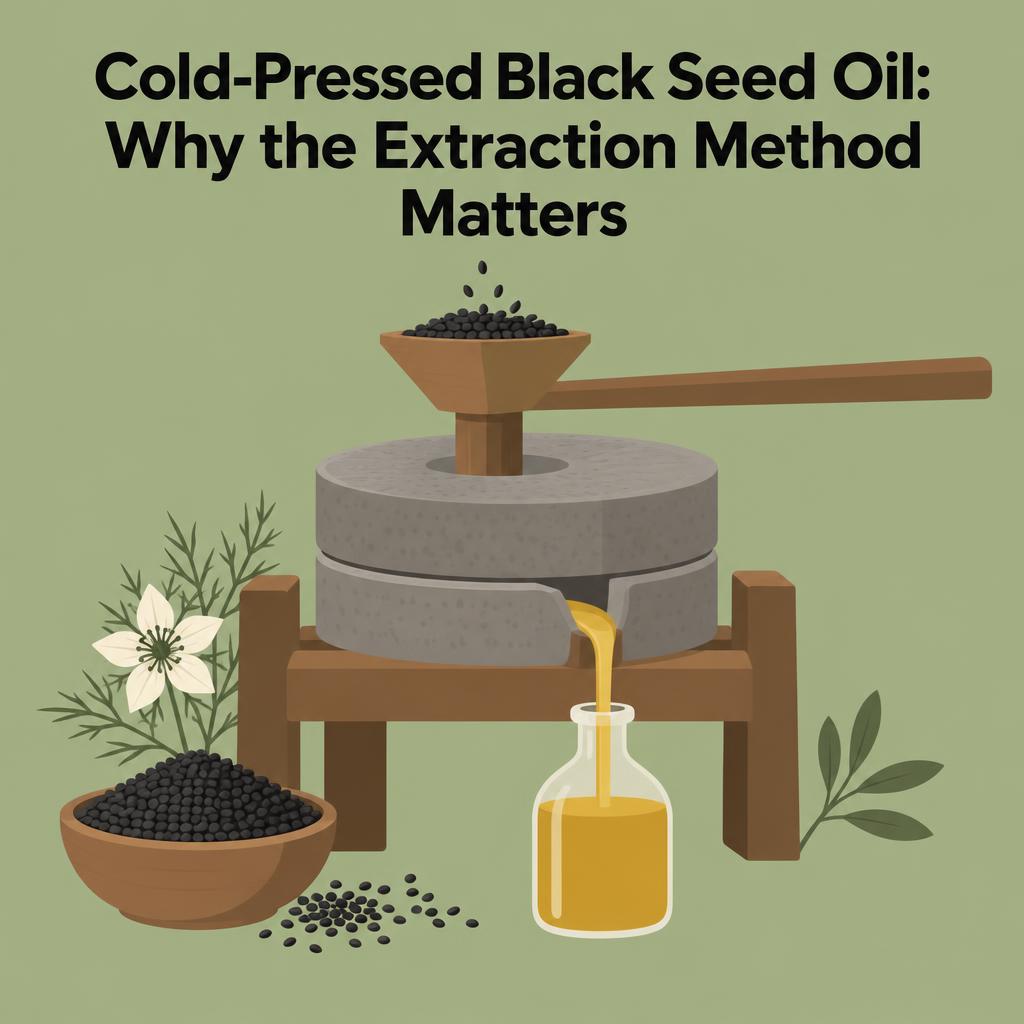
Cold-pressing extracts oil by mechanically pressing the seeds at low temperatures, without chemical solvents and without the high heat used in industrial refining. It is the traditional method, and for a delicate oil like black seed, it is the one that protects what makes the oil valuable.
Why heat is the enemy
Thymoquinone, black seed oil's signature antioxidant, is sensitive to heat and oxidation. High-temperature extraction and refining can degrade it and alter the oil's fatty acid profile. An oil can be genuinely from Nigella sativa seeds yet deliver a fraction of the thymoquinone if it was processed aggressively.
Solvent extraction: the other shortcut
Some mass-market oils are extracted with chemical solvents to squeeze out every last drop, then refined to remove residues. This yields more oil per seed but produces a blander, less characterful product, and it is the opposite of what black seed oil buyers are looking for. Cold-pressed, unrefined oil keeps the seed's full profile intact.
What cold-pressed oil looks and tastes like
A good cold-pressed black seed oil is dark golden to amber, with a peppery, warming, slightly bitter taste and a distinctive aroma. That intensity is a feature, not a flaw: it signals the volatile compounds are still present. A pale, flavourless black seed oil should raise questions.
How to verify what you are buying
The label should say cold-pressed and name Nigella sativa. Better brands go further and state the thymoquinone content, with naturally occurring levels up to around 4 to 5 per cent marking a genuinely potent oil. Dark or opaque packaging protects the oil after pressing, since light degrades it too.
Does it matter for capsules too?
Yes. The oil inside a softgel is only as good as its extraction. Quality capsule products use cold-pressed black seed oil and say so on the label, along with the thymoquinone level. The format changes; the quality rules do not.
The bottom line
Cold-pressing protects the thymoquinone and character that make black seed oil worth buying, while heat and solvent extraction can strip them away. Check the label for cold-pressed Nigella sativa oil with a stated thymoquinone level, in light-protective packaging.
Medical reviewer
Dr Nisar Hussain
MBBS, DTCD, FRACGP
Read this next
Black Seed Oil
How Is Black Seed Oil Made? (And Can You Make It at Home?)
From seed to bottle, here is how black seed oil is pressed, why cold-pressing matters for quality, and whether making it at home is realistic.
Ethiopian Black Seed Oil
Ethiopian Black Seed Oil: What Makes It Different?
Ethiopia has a long history with Nigella sativa. Here is what makes Ethiopian black seed oil distinctive and why origin matters.
Black Seed Oil
Black Seed Oil: Benefits, Uses and Side Effects (Complete Guide)
Black seed oil has been used for over two thousand years and is now backed by dozens of human trials. Here is the complete picture: benefits, uses and safety.
Black Seed Oil
Black Seed Oil Benefits: 10 Reasons People Take It
From immune support to skin and hair, here are the ten most researched and most loved reasons people take black seed oil every day.
Black Seed Oil
Black Cumin Seed Oil: A Complete Guide
Black cumin seed oil is simply another name for black seed oil, from Nigella sativa. Here is what the name means, what the oil does, and how to use it.
Black Seed Oil
Black Seed Oil Capsules vs Liquid: Which Is Better?
Capsules and liquid deliver the same black seed oil, but they suit different people. Here is an honest comparison to help you pick.
