United Kingdom
What Is Black Seed Oil Made From?
Black seed oil comes from one plant: Nigella sativa. Here is what the plant looks like, where it grows and why the seed source matters for quality.
Key takeaways
- Black seed oil is pressed from the seeds of Nigella sativa, a flowering annual.
- The plant is not related to cumin, caraway or blackcurrant, despite the nicknames.
- Growing region affects the oil's chemistry, including thymoquinone content.
- Ethiopian seeds are especially prized for potency.
One plant, one seed
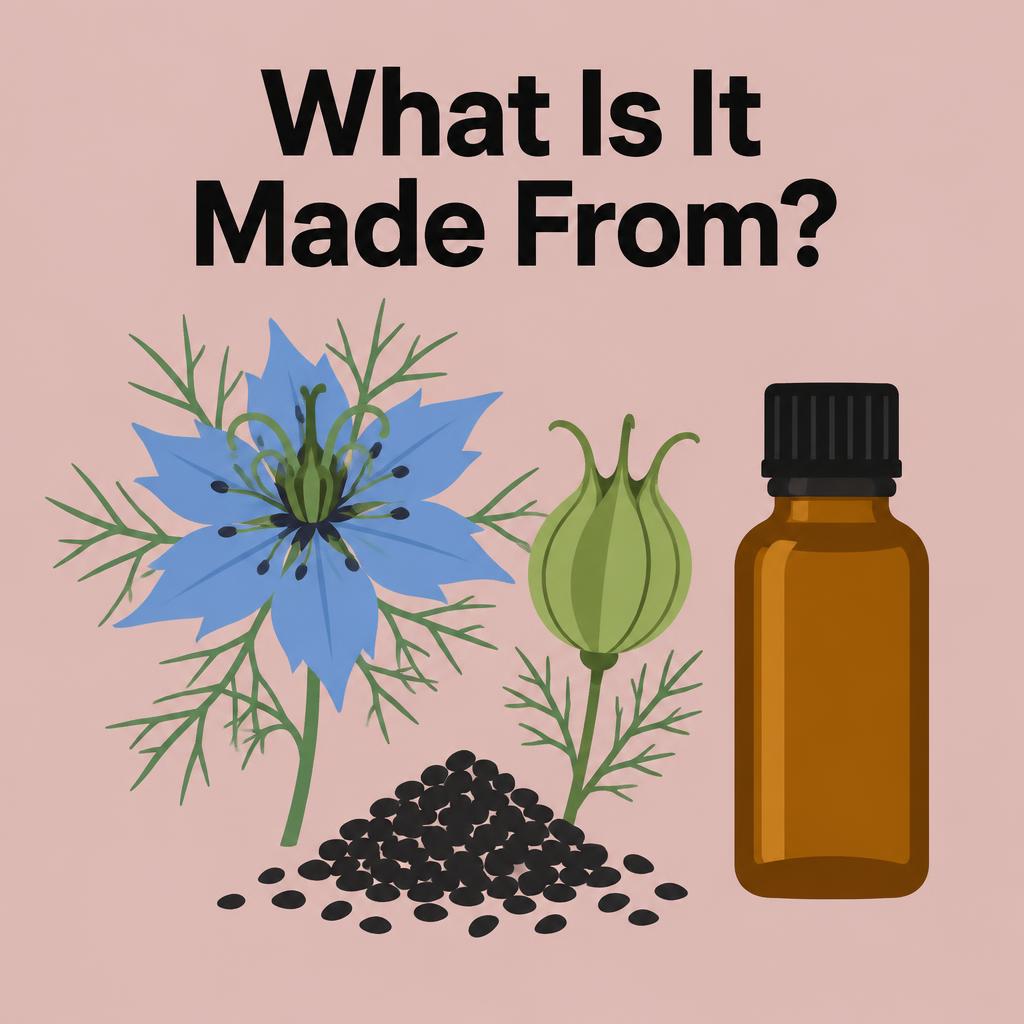
Black seed oil is made from the seeds of Nigella sativa, a delicate annual with pale blue or white flowers and feathery leaves. After flowering, the plant forms a seed pod packed with small, matte black, triangular seeds. Those seeds, and nothing else, are the source of the oil.
Clearing up the naming confusion
Nigella sativa has collected a crowd of nicknames: black cumin, black caraway, kalonji, black seed. Botanically it is none of the cums or caraways. It belongs to the buttercup family, while true cumin is in the carrot family. The shared name is about appearance, not relation, which is why checking the Latin name on a label is the reliable move.
Where it grows
Nigella sativa is cultivated across a band from the Mediterranean through the Middle East to South Asia, with major growing regions in Ethiopia, Egypt, Turkey, Syria and India. Climate and soil shape the seed's chemistry, so origin is not just a story on the label.
Why origin matters
Studies comparing seeds from different regions find meaningful differences in thymoquinone content, the oil's most studied compound. Ethiopian seeds in particular have a long-standing reputation for high potency, which is why some premium oils state Ethiopian origin explicitly.
When a brand tells you where its seeds come from and presses them cold, it is giving you the two facts that most predict what is in the bottle.
What is in the seed
The seeds are roughly a third oil by weight. That oil carries thymoquinone, thymohydroquinone, p-cymene and carvacrol among its aromatic compounds, alongside essential fatty acids, mainly linoleic and oleic acid. The seeds also contain protein, fibre, minerals and alkaloids, though the oil itself is where supplement interest concentrates.
From field to bottle
After harvest the pods are dried and threshed to release the seeds, which are cleaned and cold-pressed. The fewer steps between seed and bottle, and the cooler those steps, the closer the oil stays to what the plant made.
The bottom line
Black seed oil comes exclusively from the seeds of Nigella sativa, a buttercup-family plant unrelated to cumin. Origin matters, with Ethiopian seeds especially prized, and a label that names the species and the source is telling you the right things.
Medical reviewer
Dr Ali Ziabari
MBChB, FRACGP
Read this next
Black Seed Oil
What Is Black Seed Oil? A Simple Explanation
Black seed oil explained simply: where it comes from, what is in it and why people have used it for centuries.
Ethiopian Black Seed Oil
Ethiopian Black Seed Oil: What Makes It Different?
Ethiopia has a long history with Nigella sativa. Here is what makes Ethiopian black seed oil distinctive and why origin matters.
Black Seed Oil
Black Seed Oil: Benefits, Uses and Side Effects (Complete Guide)
The complete UK guide to black seed oil: what it is, what the research shows, how to take it and who should check first.
Black Seed Oil
Black Seed Oil Benefits: 10 Reasons People Take It
From metabolic support to antioxidant intake, here are the ten most common reasons people take black seed oil every day.
Black Seed Oil
Black Cumin Seed Oil: A Complete Guide
Black cumin seed oil is black seed oil by another name. This guide covers what it is, the research and how to take it.
Black Seed Oil
Advantages of Black Seed Oil: Why It's Been Used for Centuries
Black seed oil has been used for over two thousand years. Here is why it has lasted, and what modern research adds.
