United States
What Is Black Seed Oil Used For?
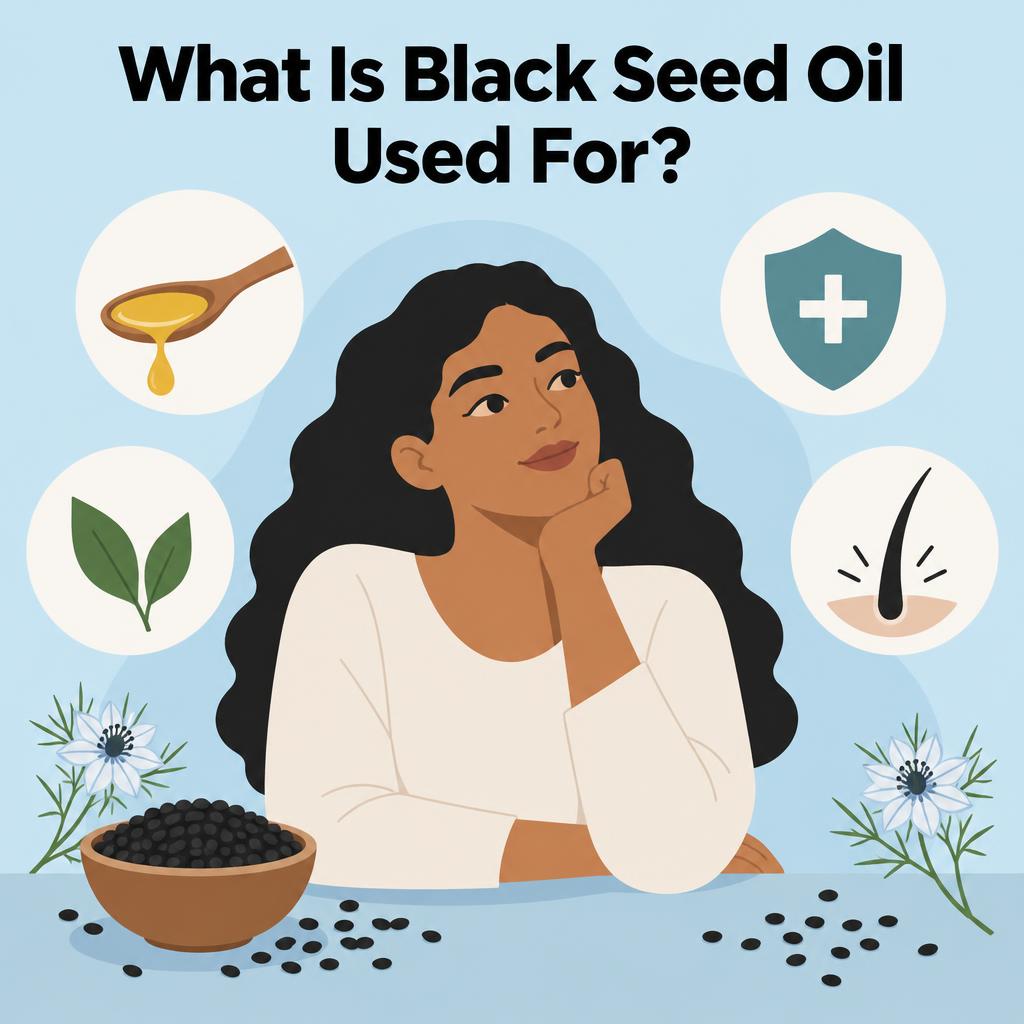
Black seed oil is used for daily immune and metabolic support, plus skin and hair care. Here is the full picture, with the evidence behind each use.
Key takeaways
- The main internal uses are daily immune support and healthy metabolic markers.
- The main external uses are moisturising skin and nourishing hair and scalp.
- Human trials typically used one to two teaspoons daily for eight to twelve weeks.
- A stated thymoquinone content separates oils that deliver from oils that disappoint.
Daily immune support
The oldest and most popular use of black seed oil is as a daily immune tonic. Modern trials have examined its effects on immune markers and seasonal respiratory comfort with encouraging results, and its signature compound thymoquinone is the focus of much of this research. One to two teaspoons daily with food is the pattern the studies used.
Metabolic health
The most consistent human evidence covers metabolic markers. Trials running eight to twelve weeks have reported modest improvements in fasting blood sugar, cholesterol ratios and blood pressure. These are supportive, food-level effects, which is exactly how black seed oil is best used: steady daily support alongside a healthy lifestyle.
Digestive comfort
Traditionally, black seed oil is taken for a settled, comfortable digestion, and it remains a popular use today. Taking your daily serving with a meal, as you should anyway, doubles as digestive support. Its antimicrobial compounds are also a research focus for gut microbial balance.
Skin care
Applied to skin, black seed oil moisturises dry patches and calms easily irritated skin. A few drops pressed into clean, slightly damp skin is the classic technique, and its fatty acids and antioxidants make it a natural final step in a routine. Patch test first, as with any new oil.
Hair and scalp care
A weekly scalp massage with black seed oil is a tradition spanning centuries. Work a teaspoon into the scalp, leave it for thirty minutes or more, then wash. While human trials on hair growth are limited, the oil's nourishing fatty acids make it a sensible, time-tested treatment for scalp comfort and shine.
Choosing an oil that delivers
Every use above depends on a genuine, potent oil. Look for the botanical name Nigella sativa, cold-pressed extraction, dark glass and a stated thymoquinone content. Ethiopian-origin oils are prized for naturally high thymoquinone, sometimes above 4 percent. A 50 ml dropper bottle handles every use in this guide, internal and external.
The bottom line
Black seed oil is used for daily immune and metabolic support, digestive comfort, and topically for skin and hair. Take one to two teaspoons daily with food, apply a few drops to skin or scalp, and choose a cold-pressed oil with a stated thymoquinone content.
Medical reviewer
Dr Nidham Oda
MBChB, FRACGP
Read this next
Black Seed Oil
What Is Black Seed Oil Good For? The Most Common Uses
Black seed oil is used for immune support, metabolism, airways, skin, hair and more. Here are the most common uses and what the research says about each.
Black Seed Oil
What Does Black Seed Oil Do? A Quick Answer
The short answer: black seed oil supports your immune system, inflammation response and metabolic health. Here is the slightly longer one, with the research.
Black Seed Oil
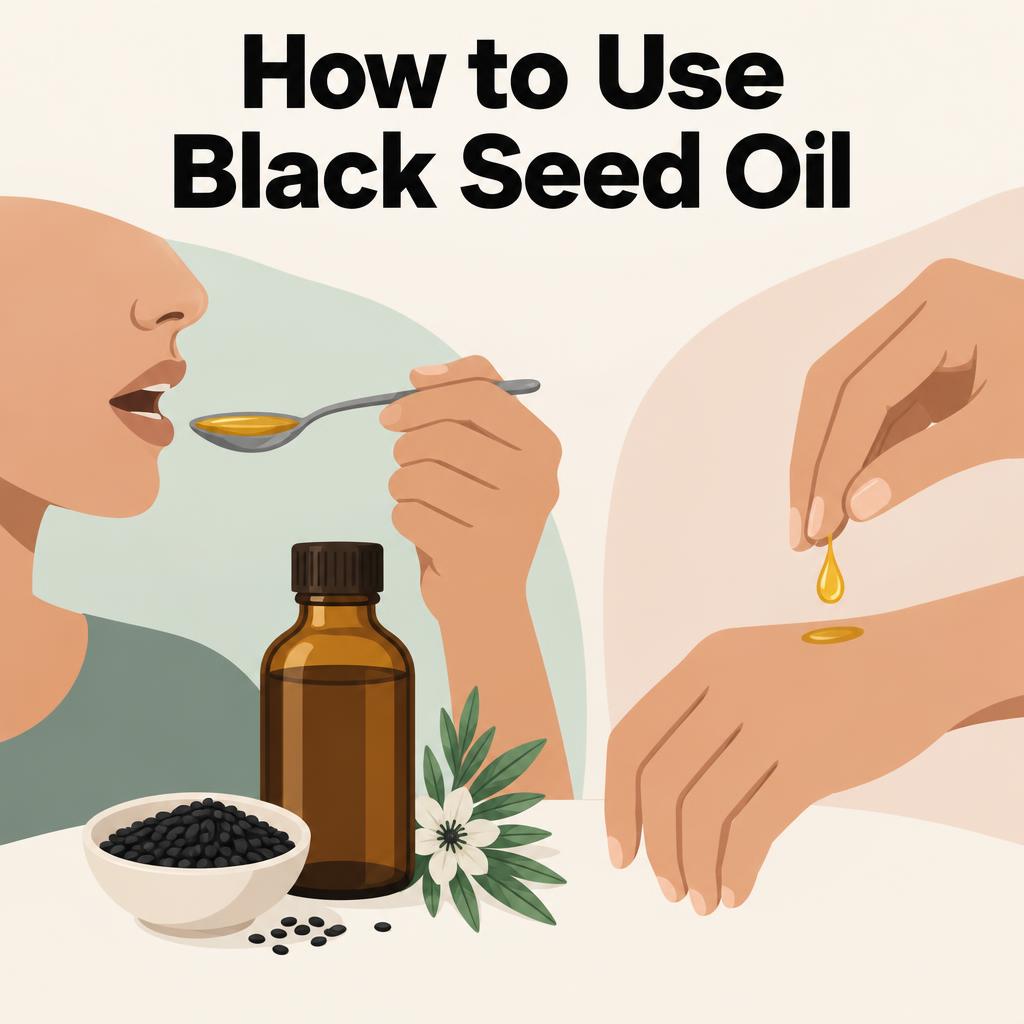
How to Use Black Seed Oil (Inside and Out)
Black seed oil works two ways: taken by mouth for whole-body support, and massaged into skin and hair. Here is how to do both well.
Black Seed Oil
Black Seed Oil: Benefits, Uses and Side Effects (Complete Guide)
Black seed oil has been used for over two thousand years and is now backed by dozens of human trials. Here is the complete picture: benefits, uses and safety.
Black Seed Oil
Black Seed Oil Benefits: 10 Reasons People Take It
From immune support to skin and hair, here are the ten most researched and most loved reasons people take black seed oil every day.
Black Seed Oil
Black Cumin Seed Oil: A Complete Guide
Black cumin seed oil is simply another name for black seed oil, from Nigella sativa. Here is what the name means, what the oil does, and how to use it.
Sources
- Hannan MA, et al. Black cumin (Nigella sativa L.): a comprehensive review on phytochemistry, health benefits, molecular pharmacology, and safety. Nutrients. 2021.
- Tavakkoli A, et al. Review on clinical trials of black seed (Nigella sativa) and its active constituent, thymoquinone. Journal of Pharmacopuncture. 2017.
