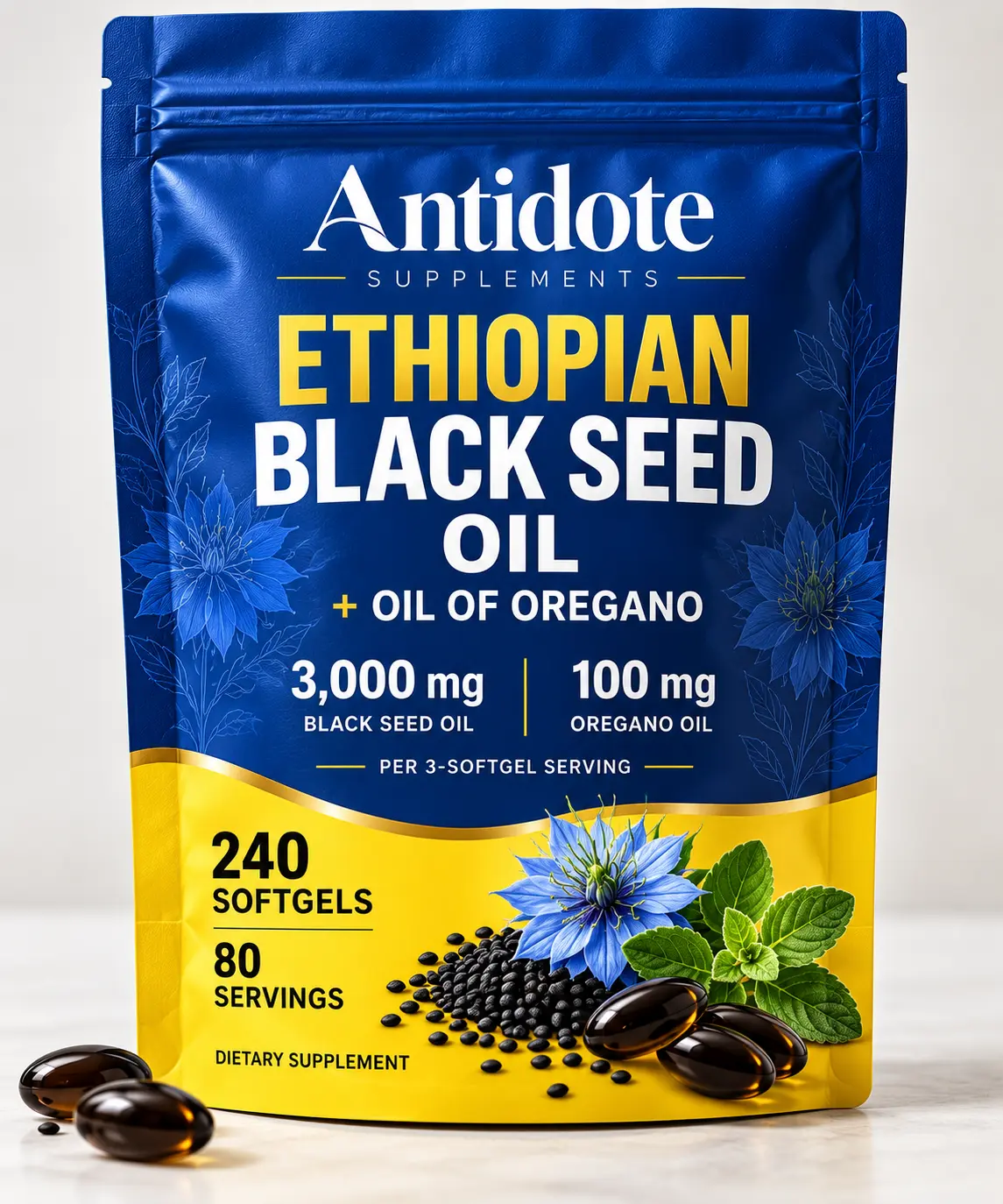
Black Seed Oil for Allergies and Hay Fever
Small trials suggest less sneezing and congestion. Here's what was found.
Key takeaways
- Small trials found Nigella sativa reduced nasal congestion, sneezing and itching.
- It may be a gentle add-on to antihistamines.
- More research is needed.
What the research says
A clinical study found that Nigella sativa oil reduced symptoms such as nasal congestion, itching, runny nose and sneezing in people with allergic rhinitis.[1] Its anti-inflammatory and antihistamine-like effects are thought to be involved.[2]
Seasonal allergies tips
- Keep windows closed on high-pollen days
- Shower after being outdoors
- Rinse nasal passages with saline
- Use antihistamines or steroid nasal sprays as advised
Frequently asked questions
How long does black seed oil take to help allergies?
Studies looked at results after a few weeks of use.
The bottom line
Black seed oil shows early promise for hay fever symptoms and may be a gentle add-on to standard allergy treatment.
Read this next
Respiratory & Allergies
Black Seed Oil for Asthma
A placebo-controlled trial found improved asthma control. Here's the context.
Respiratory & Allergies
Natural Support for Seasonal Allergies: Black Seed Oil and More
What may help during pollen season — and what to try first.
Black Seed Oil
What Does Black Seed Oil Taste Like?
Bold, bitter and peppery — here's what to expect from black seed oil's taste, and how to skip it.
Black Seed Oil
Is Black Seed Oil a Binder? What the Term Actually Means
'Binder' is a wellness term, not a medical one. Here's where black seed oil and oregano oil fit.
Skin
Black Seed Oil for Hair Loss: Does It Help Hair Grow Back?
What small studies show about black seed oil for thinning hair, and how it compares with proven treatments.
Skin
Black Seed Oil for Acne: Can It Clear Breakouts?
A clinical trial found a black seed gel reduced acne. Here's how to use it safely.
Sources
- Nikakhlagh S, Rahim F, Aryani FH, et al. Herbal treatment of allergic rhinitis: the use of Nigella sativa. Am J Otolaryngol. 2011;32(5):402-407.
- Tavakkoli A, Mahdian V, Razavi BM, Hosseinzadeh H. Review on clinical trials of black seed (Nigella sativa) and its active constituent, thymoquinone. J Pharmacopuncture. 2017;20(3):179-193.