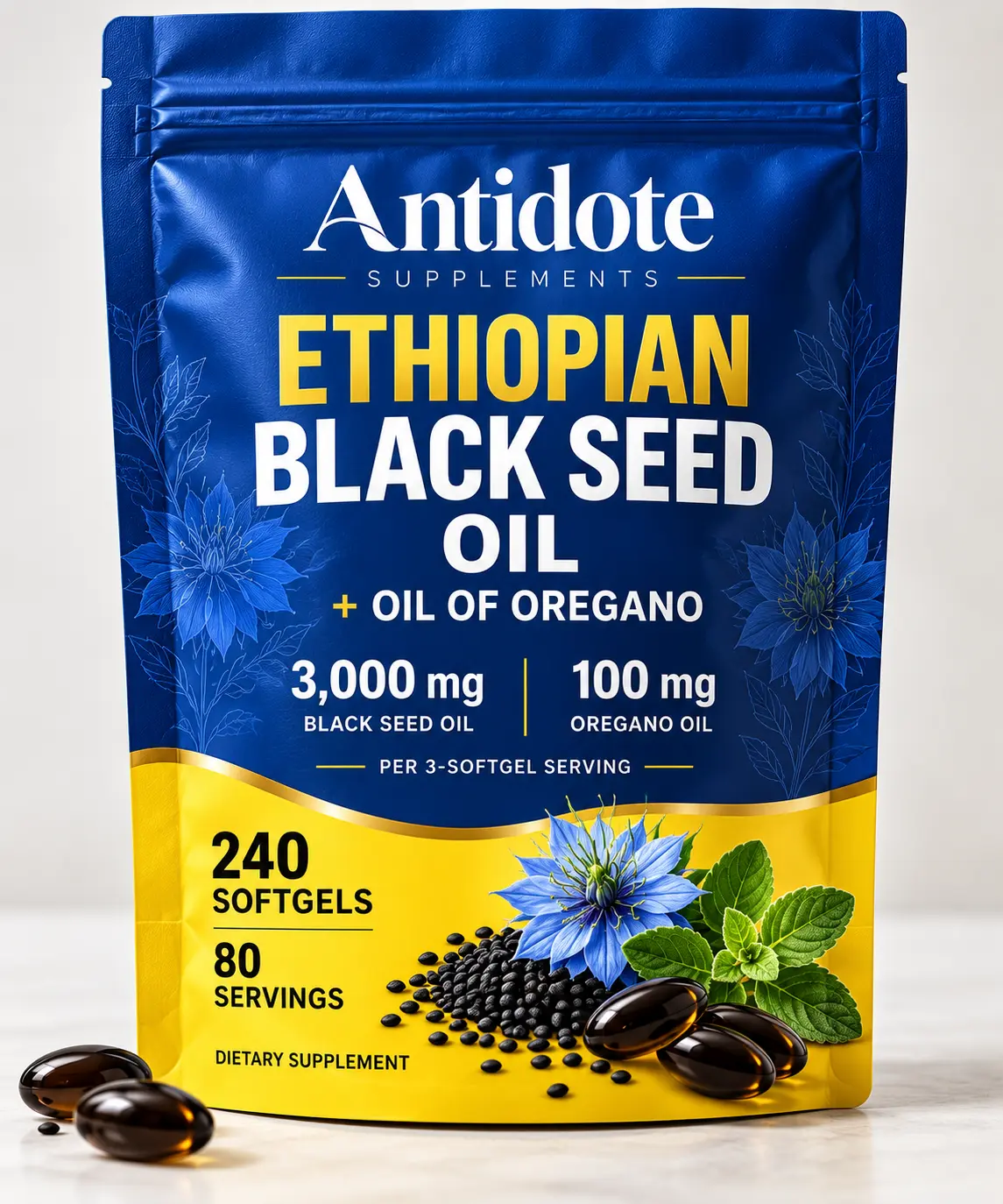
Natural Remedies for Indigestion: Does Black Seed Oil Help?
Simple steps and black seed oil evidence for an upset stomach after meals.
Key takeaways
- Black seed oil with honey improved dyspepsia in a trial.
- Smaller meals and less fatty food help most people.
- Trouble swallowing, weight loss or vomiting need urgent review.
Indigestion means discomfort, burning or fullness in the upper stomach after eating.
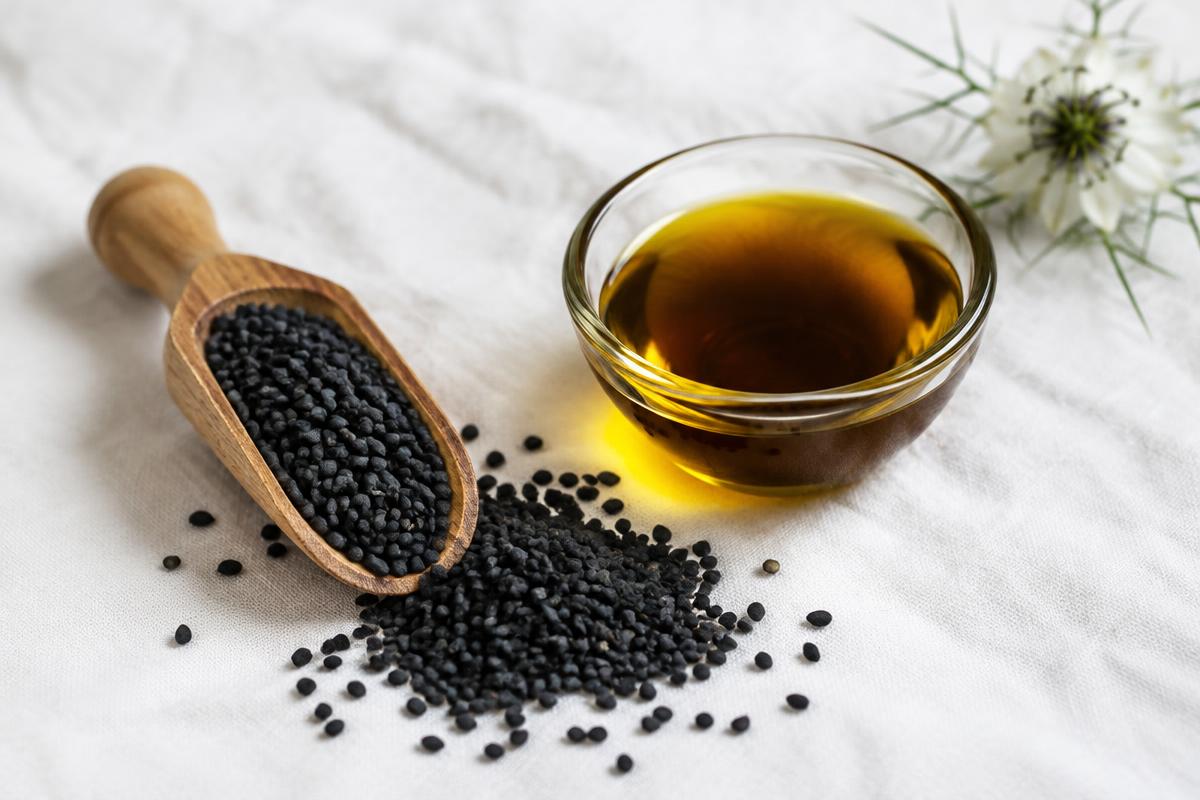
Black seed oil
Clinical evidence comes from functional dyspepsia — see black seed oil for dyspepsia.[1]
Other natural remedies
- Ginger tea
- Peppermint (avoid if you have reflux)
- Eating slowly
- Avoiding late meals
When to see a doctor
Black seed oil and oregano oil are not a substitute for diagnosis or prescribed treatment. See a healthcare professional if symptoms are severe, getting worse or not improving.
Frequently asked questions
Can I take black seed oil with antacids?
Usually yes, but space them a couple of hours apart and check with a pharmacist.
The bottom line
Black seed oil may ease indigestion for some people. Lifestyle tweaks help most.
Read this next
Black Seed Oil
What Does Black Seed Oil Taste Like?
Bold, bitter and peppery — here's what to expect from black seed oil's taste, and how to skip it.
Black Seed Oil
Is Black Seed Oil a Binder? What the Term Actually Means
'Binder' is a wellness term, not a medical one. Here's where black seed oil and oregano oil fit.
Skin
Black Seed Oil for Hair Loss: Does It Help Hair Grow Back?
What small studies show about black seed oil for thinning hair, and how it compares with proven treatments.
Skin
Black Seed Oil for Acne: Can It Clear Breakouts?
A clinical trial found a black seed gel reduced acne. Here's how to use it safely.
Skin
Black Seed Oil for Psoriasis: Face, Scalp and Body
What's known about black seed oil for psoriasis plaques — and how it fits with medical treatment.
Metabolic Health
Black Seed Oil for Type 2 Diabetes and Blood Sugar
Meta-analyses suggest black seed modestly lowers blood sugar. Here's what that means for you.