United Kingdom
What Is in Black Seed Oil? Thymoquinone and Other Compounds Explained
Black seed oil contains over a hundred identified compounds. Here is what thymoquinone, nigellone and the oil's fatty acids actually are, in plain English.
Key takeaways
- Thymoquinone is the most studied active compound in black seed oil.
- The oil also contains nigellone, thymohydroquinone and a range of fatty acids.
- Thymoquinone content varies widely between products, from under 1% to nearly 5%.
- Cold pressing helps preserve these heat-sensitive compounds.
The star compound: thymoquinone
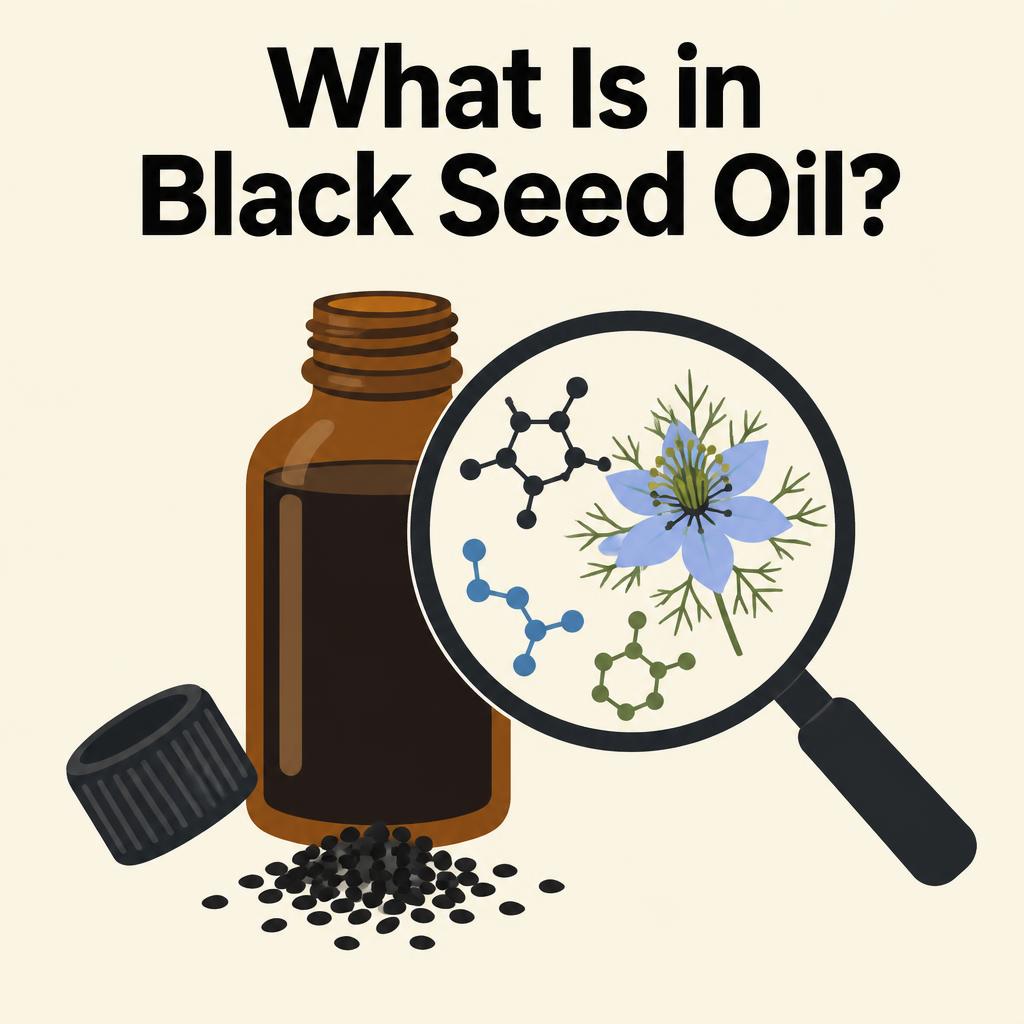
Thymoquinone, often shortened to TQ, is the compound researchers focus on most. Laboratory and animal studies link it to antioxidant and anti-inflammatory activity, and it is the main reason black seed oil attracts scientific interest.
Human trials are still relatively small, so thymoquinone is best thought of as promising rather than proven. What is clear is that oils with a higher, verified TQ content deliver more of the compound per serving.
Supporting compounds
Black seed oil is not a one-compound product. It also contains nigellone, thymohydroquinone, thymol and carvacrol in smaller amounts, plus plant sterols. Researchers suspect these compounds work together, which is one reason whole oil is studied alongside isolated thymoquinone.
The fatty acid base
Like any seed oil, black seed oil is mostly fatty acids. Linoleic acid (an omega-6) and oleic acid (an omega-9) make up the bulk, with smaller amounts of palmitic and stearic acids. These give the oil its emollient feel, which is why it is also used on skin and hair.
Why content varies between bottles
Seed origin, harvest conditions, storage and the pressing method all affect the final chemistry. Ethiopian Nigella sativa seed is prized for high thymoquinone levels, and cold pressing without heat or solvents keeps those compounds intact.
The Antidote Supplements Ethiopian black seed oil is tested at up to 4.64% naturally occurring thymoquinone, which sits at the high end of what published analyses report for Nigella sativa oils.
How to read a label
Look for the species name Nigella sativa, the country of origin, a cold-pressed claim and, ideally, a stated thymoquinone percentage backed by third-party testing. A brand that publishes its test results is telling you it has nothing to hide.
The bottom line
Black seed oil's reputation rests mainly on thymoquinone, supported by nigellone, thymol and a fatty acid base. Content varies a lot between products, so choose a cold-pressed oil with a stated, tested TQ percentage.
Medical reviewer
Dr Areej Al-Jawazery
MBChB, FRACGP
Read this next
Nigella sativa
Black Seed Oil (Nigella Sativa): The Science Behind the Seed
What makes Nigella sativa so studied? A look at the science behind black seed oil, from thymoquinone to human trials.
Buying Guides
Cold-Pressed Black Seed Oil: Why the Extraction Method Matters
What cold-pressed actually means for black seed oil, why it matters for quality, and how to spot the real thing.
Ethiopian Black Seed Oil
Ethiopian Black Seed Oil: What Makes It Different?
Ethiopia has a long history with Nigella sativa. Here is what makes Ethiopian black seed oil distinctive and why origin matters.
Black Seed Oil
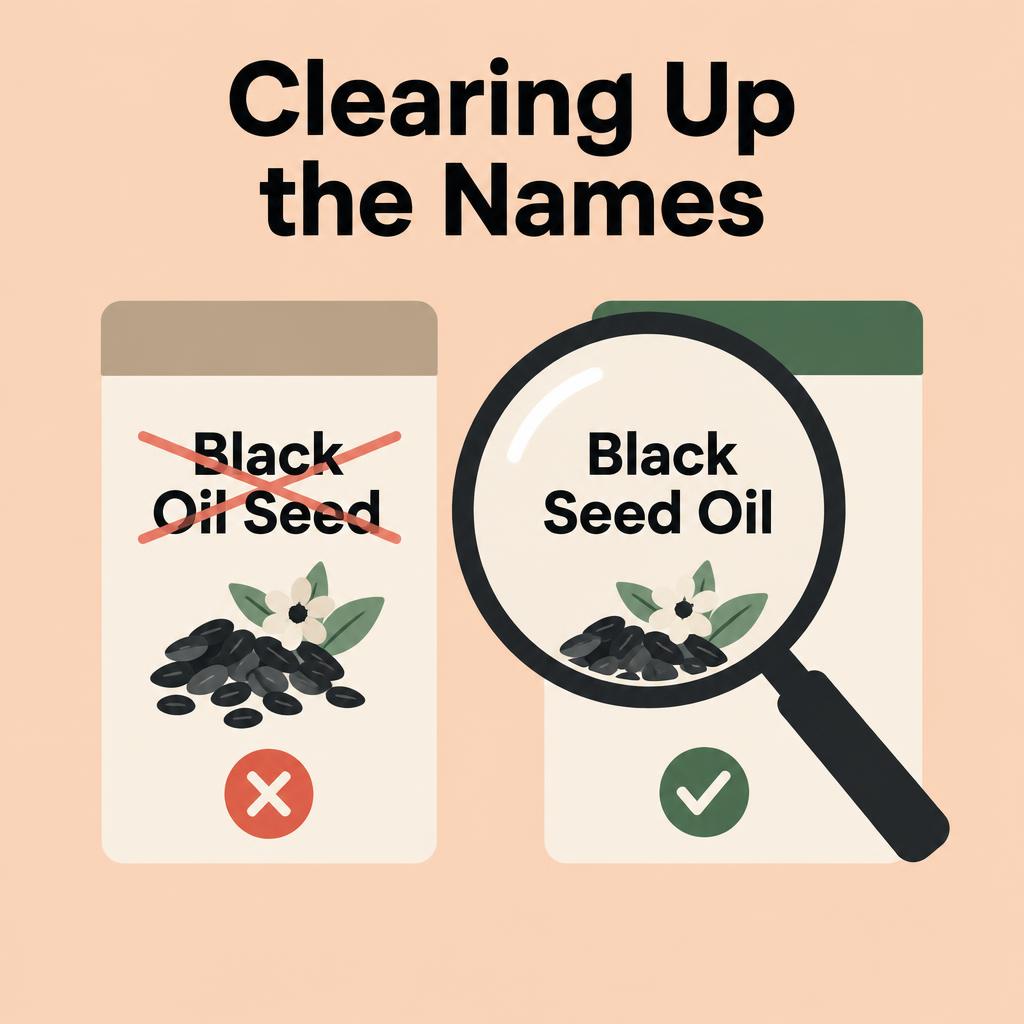
Black Oil Seed Oil or Black Seed Oil? Clearing Up the Names
Black oil seed oil, black seed oil, black cumin: the names get tangled. Here is what each one actually means.
Nigella sativa
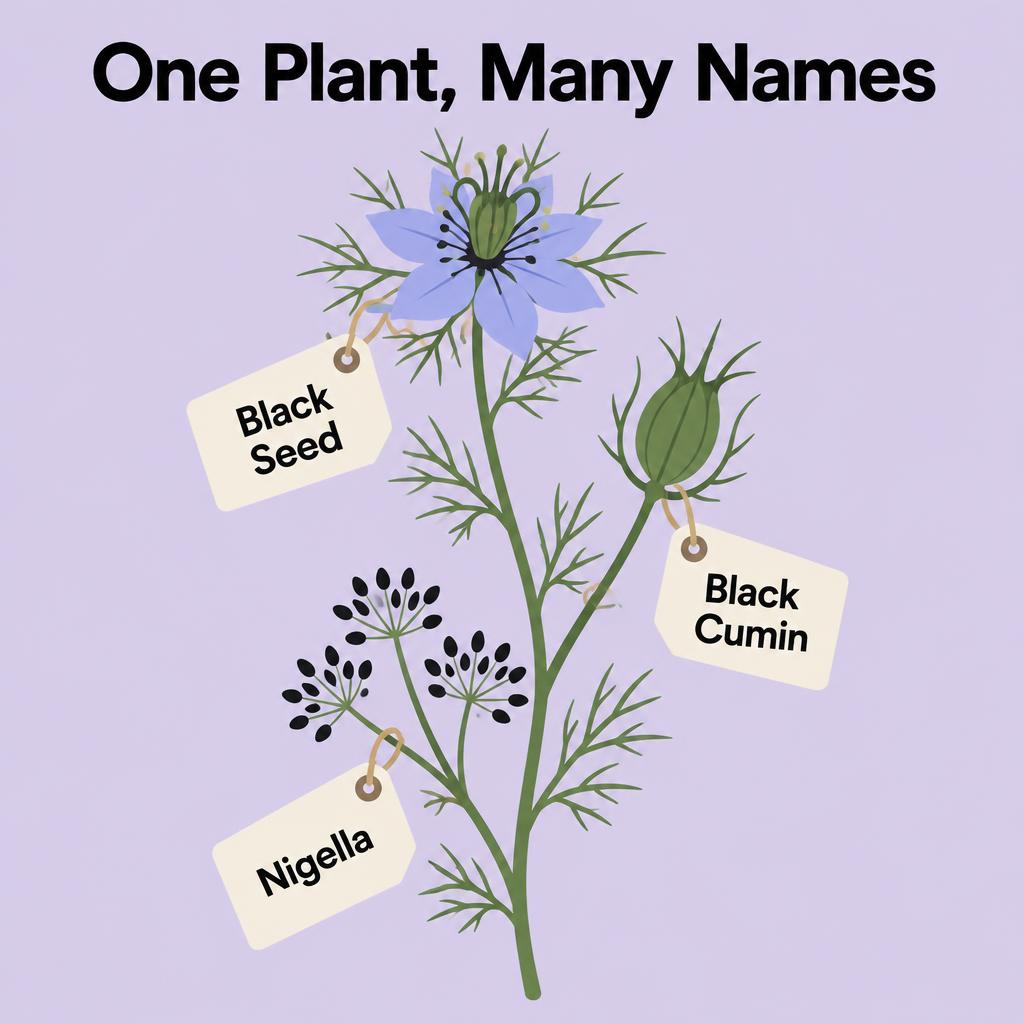
Black Seed vs Black Cumin Seed Oil: One Plant, Many Names
Black seed oil and black cumin seed oil come from the same plant, Nigella sativa. Here is why the two names exist and what to look for.
Nigella sativa
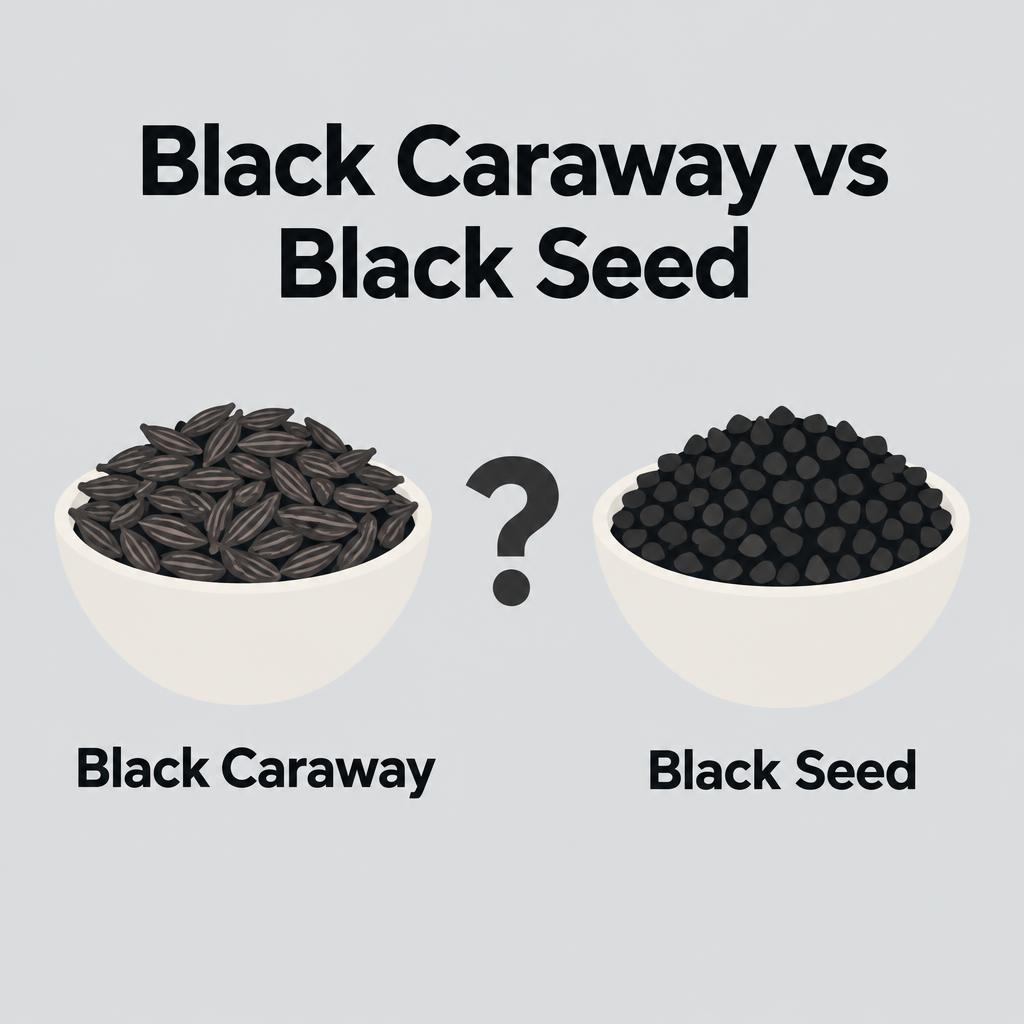
Black Caraway Seed Oil: Is It the Same as Black Seed Oil?
Black caraway and black seed are two different plants that share a confusing nickname. Here is how to tell them apart.
