United Kingdom
Cold-Pressed Black Seed Oil: Why the Extraction Method Matters
What cold-pressed actually means for black seed oil, why it matters for quality, and how to spot the real thing.
Key takeaways
- Cold pressing extracts the oil without heat or chemical solvents.
- Heat and solvents can degrade the delicate compounds the oil is valued for.
- Cold-pressed on the label should come with other quality signals like a stated thymoquinone content.
Nearly every quality black seed oil says cold-pressed on the label. Here is what that actually means and why it is worth insisting on.
What cold pressing means
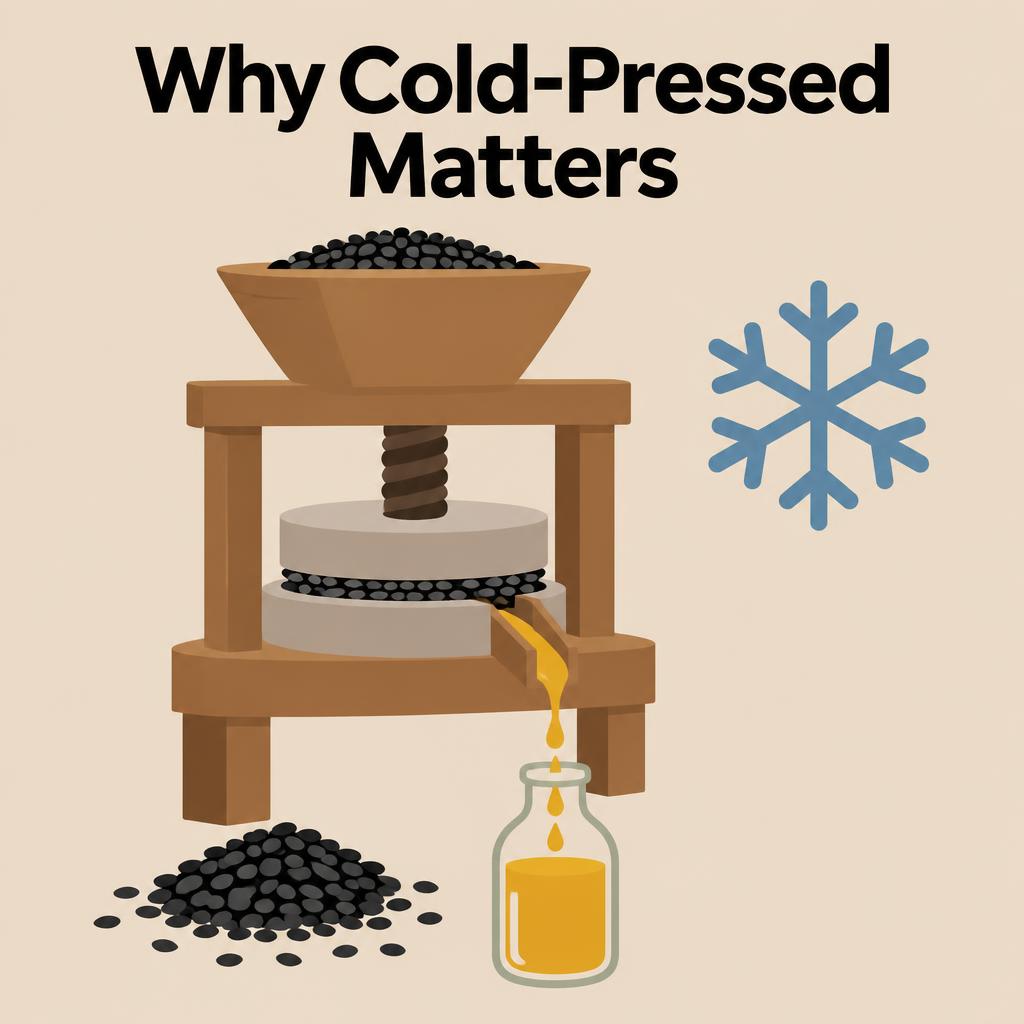
Cold pressing extracts oil by mechanically pressing the seeds, without added heat and without chemical solvents. The oil comes out as close to its natural state as possible, which matters for an oil valued for delicate plant compounds.[1]
Why the method matters
Black seed oil is prized for thymoquinone and its fatty acid profile. High heat and solvent extraction can degrade or alter these compounds.[2] Cold pressing protects what you are actually paying for. It is the same reason extra virgin olive oil commands respect: gentle extraction preserves quality.
The alternatives to avoid
- Solvent extraction: uses chemicals to pull more oil from the seeds; cheaper, but not what you want in a wellness oil.
- Heat extraction: faster and higher yield, but heat-sensitive compounds suffer.
- Refined oil: further processing that strips flavour, colour and compounds.
Cold-pressed is necessary, not sufficient
Cold pressing is the baseline, not the whole story. Also look for a stated thymoquinone content, a recent pressing or bottling date, dark glass packaging and a brand willing to answer questions about its sourcing.[3]
Antidote Supplements
Antidote Supplements Ethiopian Black Seed Oil comes as 50 mL liquid drops; follow the label directions.
The bottom line
Cold pressing protects the delicate compounds that make black seed oil worth buying. Treat it as the baseline, then check thymoquinone content, freshness and packaging too.
Medical reviewer
Dr Nisar Hussain
MBBS, DTCD, FRACGP
Read this next
Buying Guides
Black Seed Oil in the UK: How to Choose a Quality Oil
The UK market has plenty of black seed oils. Here is how to spot a quality one: species, pressing, thymoquinone and freshness.

Buying Guides
Organic Black Seed Oil: Is It Worth Paying More?
Organic black seed oil costs more. Here is what the organic label actually guarantees and when it is worth the extra.
Comparisons
Black Cumin Seed Oil Tablets vs Capsules vs Oil
Tablets, capsules or liquid oil: which black cumin seed oil format is right for you, and what each does best.
Comparisons
Black Seed Oil Pills: Do They Work as Well as the Oil?
Do black seed oil pills work as well as the liquid oil? What the evidence and the practical differences say.
Black Seed Oil
Black Seed Oil: Benefits, Uses and Side Effects (Complete Guide)
The complete UK guide to black seed oil: what it is, what the research shows, how to take it and who should check first.
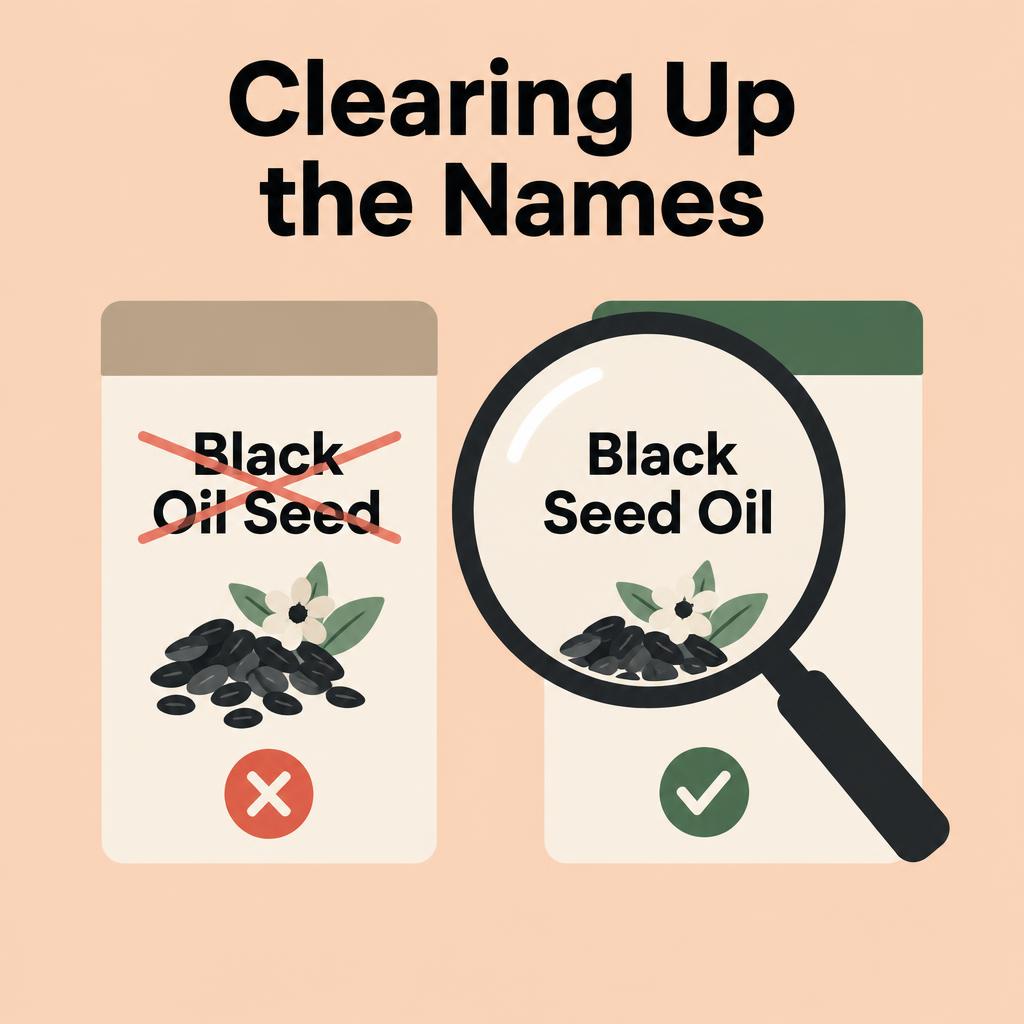
Black Seed Oil
Black Oil Seed Oil or Black Seed Oil? Clearing Up the Names
Black oil seed oil, black seed oil, black cumin: the names get tangled. Here is what each one actually means.
Sources
- Ahmad A, et al. A review on therapeutic potential of Nigella sativa: A miracle herb. Asian Pacific Journal of Tropical Biomedicine. 2013;3(5):337-352.
- Khader M, Eckl PM. Thymoquinone: an emerging natural drug with a wide range of medical applications. Iranian Journal of Basic Medical Sciences. 2014;17(12):950-957.
- Li Z, et al. Nigella sativa and health outcomes: An overview of systematic reviews and meta-analyses. Frontiers in Nutrition. 2023;10:1107750.
