United Kingdom
Black Cumin Seed Oil Tablets vs Capsules vs Oil
Tablets, capsules or liquid oil: which black cumin seed oil format is right for you, and what each does best.
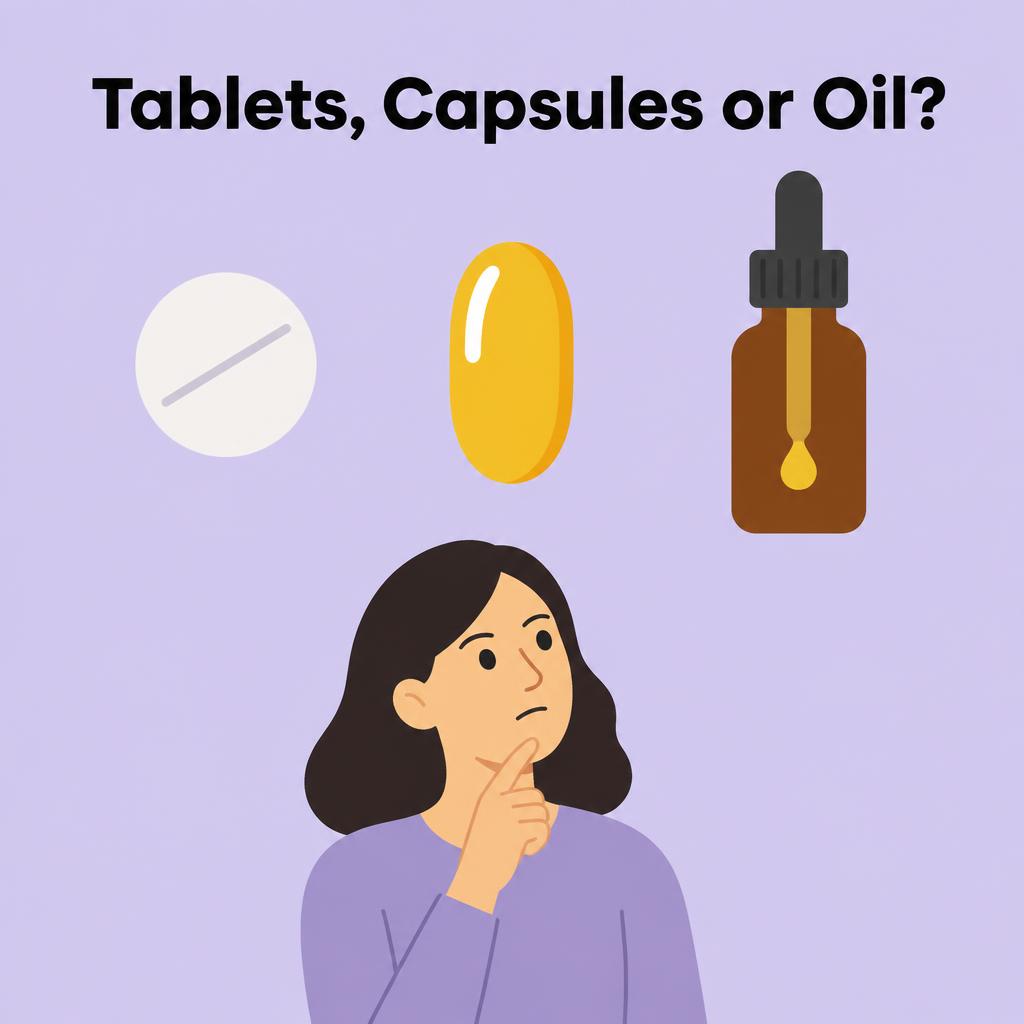
Key takeaways
- Liquid oil is the most versatile and the traditional format.
- Softgel capsules remove the peppery taste and give measured servings.
- Tablets are rare for this oil because the oil itself does not compress well.
Black cumin seed oil, another name for black seed oil, comes in three main formats. Each has genuine strengths, so the best choice depends on how you plan to use it.
Liquid oil
The traditional format and the most versatile. You can measure flexible amounts, take it straight or mixed into food, and use it in hair and skin routines. The trade offs are the strong, peppery taste and the need to measure each serving.[1]
Softgel capsules
The most convenient format. Every serving is identical, there is no taste, and the softgel protects the oil from air and light. The trade off is less flexibility: you take the serving the maker chose, and softgels are for swallowing only.
Tablets
Genuine black seed oil tablets are uncommon, because an oil does not compress into a tablet the way a powder does. Products labelled tablets are usually powdered seed or extract pressed into a pill, which is a different product from the oil itself. Read the label carefully if you see one.
Which should you choose
- Choose liquid if you want flexibility, tradition and topical use in your routine.
- Choose softgels if you want convenience, consistency and no taste.
- Be cautious with tablets: check whether you are buying the oil or a powdered extract.
Antidote Supplements
Antidote Supplements Ethiopian Black Seed Oil comes as 50 mL liquid drops; follow the label directions.
The bottom line
Liquid black cumin seed oil is the versatile traditional choice, softgels are the convenient measured choice, and tablets are rarely the actual oil. Match the format to how you will really use it.
Medical reviewer
Dr Monzer Adba
MBBS, FRACGP
Read this next
Buying Guides
Black Seed Oil in the UK: How to Choose a Quality Oil
The UK market has plenty of black seed oils. Here is how to spot a quality one: species, pressing, thymoquinone and freshness.

Buying Guides
Organic Black Seed Oil: Is It Worth Paying More?
Organic black seed oil costs more. Here is what the organic label actually guarantees and when it is worth the extra.
Comparisons
Black Seed Oil Pills: Do They Work as Well as the Oil?
Do black seed oil pills work as well as the liquid oil? What the evidence and the practical differences say.
Buying Guides
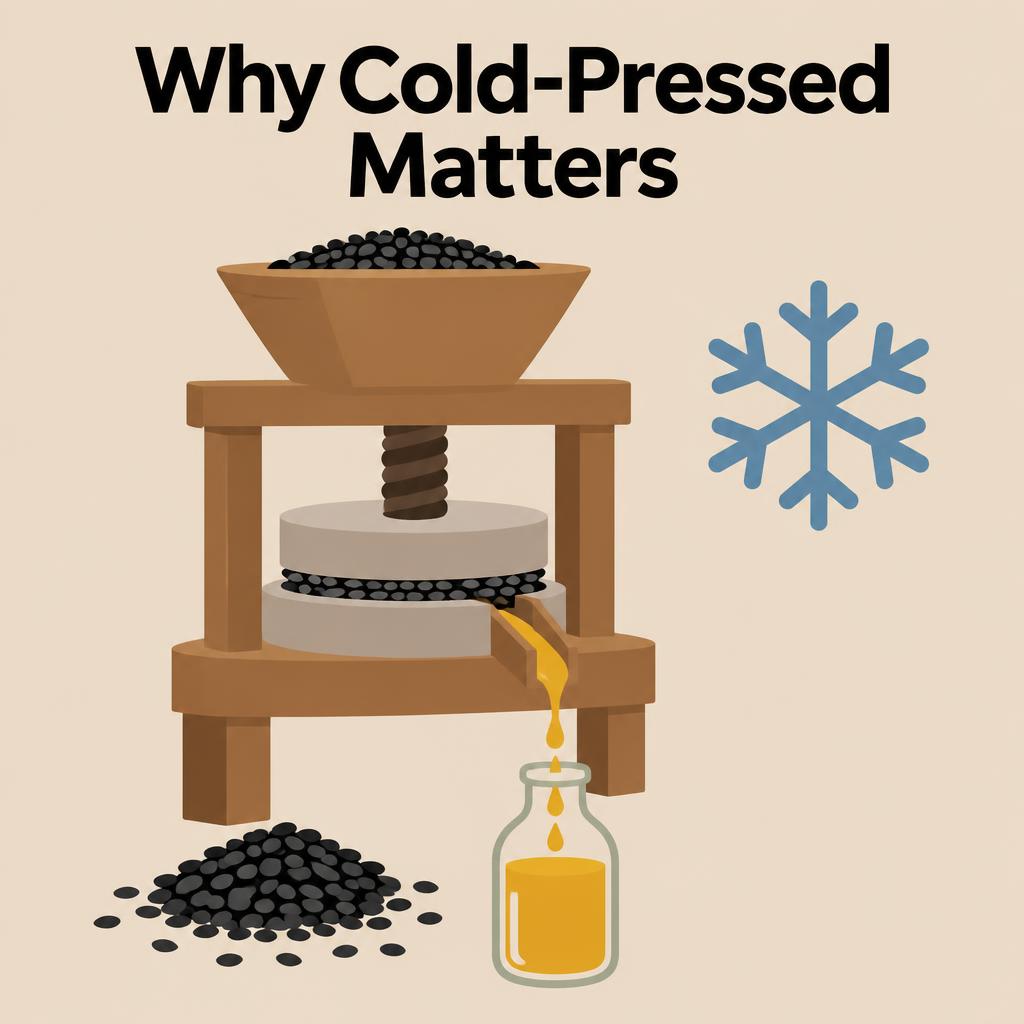
Cold-Pressed Black Seed Oil: Why the Extraction Method Matters
What cold-pressed actually means for black seed oil, why it matters for quality, and how to spot the real thing.
Black Seed Oil
Black Seed Oil: Benefits, Uses and Side Effects (Complete Guide)
The complete UK guide to black seed oil: what it is, what the research shows, how to take it and who should check first.
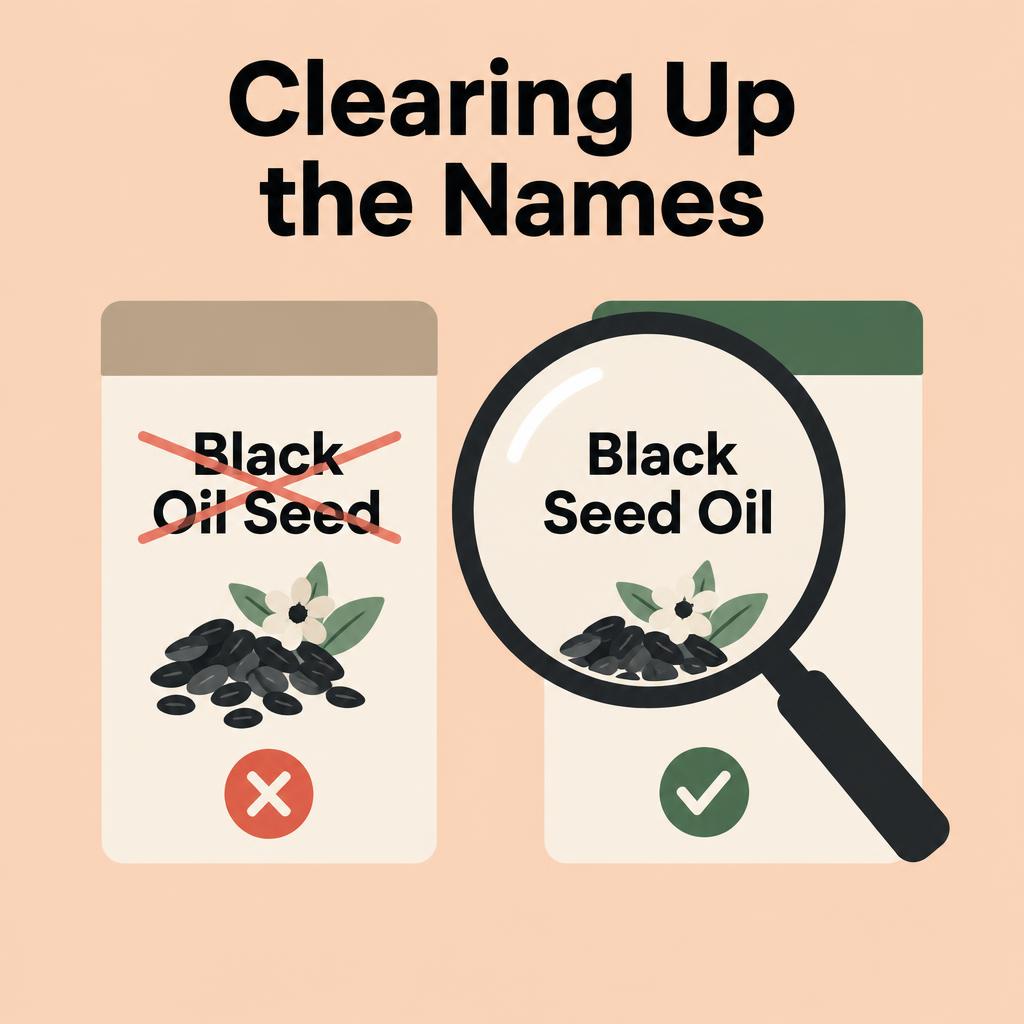
Black Seed Oil
Black Oil Seed Oil or Black Seed Oil? Clearing Up the Names
Black oil seed oil, black seed oil, black cumin: the names get tangled. Here is what each one actually means.
Sources
- Ahmad A, et al. A review on therapeutic potential of Nigella sativa: A miracle herb. Asian Pacific Journal of Tropical Biomedicine. 2013;3(5):337-352.
- Li Z, et al. Nigella sativa and health outcomes: An overview of systematic reviews and meta-analyses. Frontiers in Nutrition. 2023;10:1107750.
- Khader M, Eckl PM. Thymoquinone: an emerging natural drug with a wide range of medical applications. Iranian Journal of Basic Medical Sciences. 2014;17(12):950-957.
