United States
Black Caraway Seed Oil: Is It the Same as Black Seed Oil?
Black caraway is one of the many confusing names attached to black seed oil. Here is how to tell what is actually in the bottle.
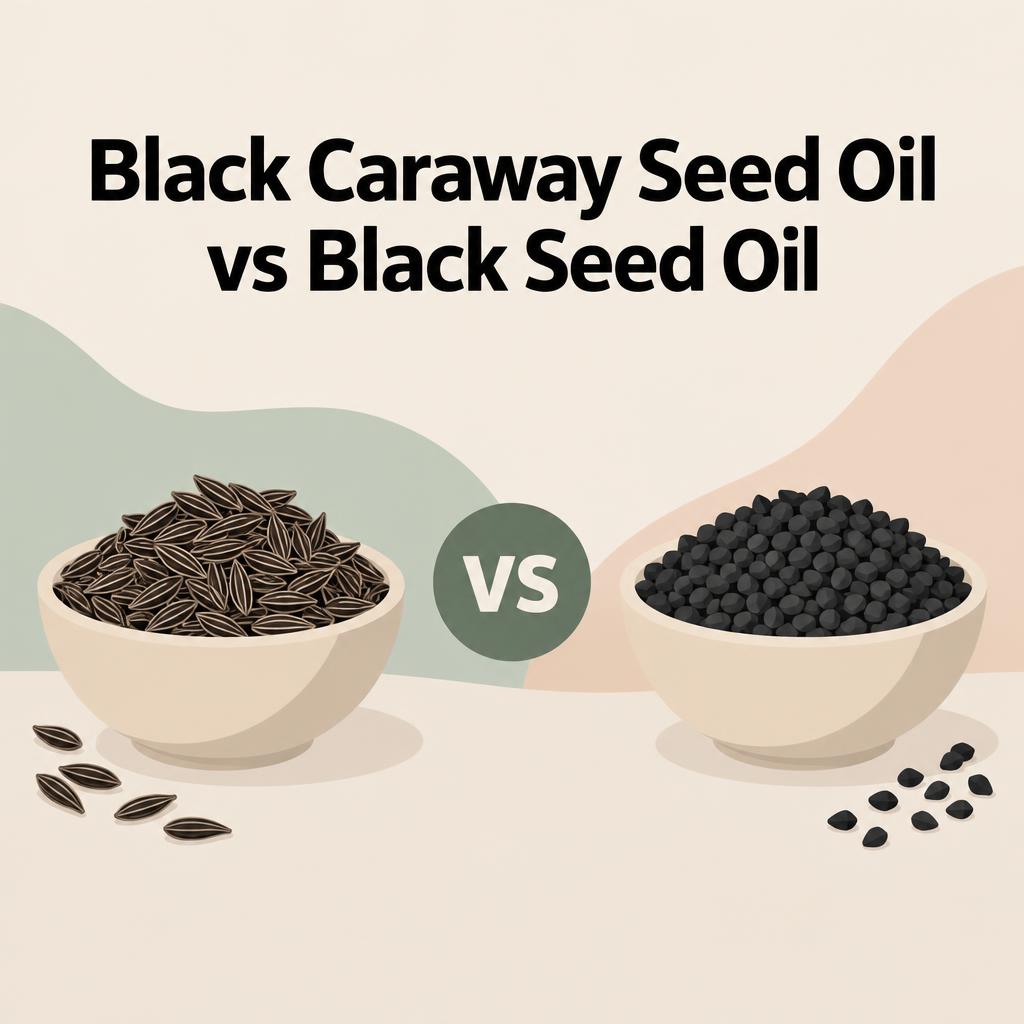
Key takeaways
- Black seed oil comes from Nigella sativa, also called black cumin or kalonji.
- Black caraway is a loose folk name sometimes applied to Nigella sativa, but true caraway is a different plant, Carum carvi.
- The only reliable check is the Latin name on the label: Nigella sativa.
- The studied benefits, including thymoquinone content, belong to Nigella sativa oil specifically.
A naming mess, explained
Few supplements suffer from more name confusion than black seed oil. Depending on the brand and the country, the same oil is sold as black cumin seed oil, kalonji oil, black caraway seed oil or simply black seed oil. Some of these names are harmless synonyms. Others point to completely different plants. The only way through is the botanical name.
What black seed oil really is
True black seed oil is pressed from the seeds of Nigella sativa, a flowering plant in the buttercup family grown across Ethiopia, the Middle East and South Asia. Its signature compound, thymoquinone, is behind most of the published research on immune, metabolic and inflammatory support. This is the oil with the evidence base.
So what is black caraway
Caraway proper is Carum carvi, a relative of parsley with crescent-shaped seeds used in rye bread and European cooking. In some regions, Nigella sativa seeds are casually called black caraway, which is where the confusion starts. An oil labelled black caraway seed oil could be Nigella sativa under a folk name, or it could be actual caraway oil, which has a different chemistry and none of the thymoquinone research.
How to check a bottle
Ignore the front-label marketing names and find the Latin binomial in the ingredients or supplement facts. You want Nigella sativa, ideally with the country of origin and a stated thymoquinone content. If the label says Carum carvi, it is caraway oil, a different product. If no Latin name appears at all, that alone is a reason to choose a different brand.
Why it matters for results
The human trials on black seed oil, covering blood sugar, cholesterol, blood pressure and immune markers, all used Nigella sativa oil. Buying a lookalike oil means buying none of that evidence. A clear label with the botanical name, a stated thymoquinone percentage and cold-pressed extraction is the simplest quality filter you can apply.
The bottom line
Black caraway seed oil is usually just black seed oil under a folk name, but the only way to be sure is the Latin name on the label: Nigella sativa. That is the plant behind all the research, so check for it, plus a stated thymoquinone content, before you buy.
Medical reviewer
Dr Ali Ziabari
MBChB, FRACGP
Read this next
Black Seed Oil
Is Black Seed Oil Made from Cumin? The Naming Mix-Up Explained
Black seed oil is not made from cumin, despite the nicknames. Here is where the confusion comes from and how to be sure you are buying the real thing.
Black Seed Oil
Black Currant Seed Oil vs Black Seed Oil: Don't Mix Them Up
Black currant seed oil and black seed oil sound alike but come from completely different plants and do different things. Here is how to tell them apart.
Black Seed Oil
What Is Black Seed Oil? A Simple Explanation
Black seed oil explained simply: where it comes from, what is in it, what the research says and how people use it every day.
Black Seed Oil
Black Seed Oil: Benefits, Uses and Side Effects (Complete Guide)
Black seed oil has been used for over two thousand years and is now backed by dozens of human trials. Here is the complete picture: benefits, uses and safety.
Black Seed Oil
Black Seed Oil Benefits: 10 Reasons People Take It
From immune support to skin and hair, here are the ten most researched and most loved reasons people take black seed oil every day.
Black Seed Oil
Black Cumin Seed Oil: A Complete Guide
Black cumin seed oil is simply another name for black seed oil, from Nigella sativa. Here is what the name means, what the oil does, and how to use it.
Sources
- Hannan MA, et al. Black cumin (Nigella sativa L.): a comprehensive review on phytochemistry, health benefits, molecular pharmacology, and safety. Nutrients. 2021.
- Tavakkoli A, et al. Review on clinical trials of black seed (Nigella sativa) and its active constituent, thymoquinone. Journal of Pharmacopuncture. 2017.
