United States
Is Black Seed Oil Made from Cumin? The Naming Mix-Up Explained
Black seed oil is not made from cumin, despite the nicknames. Here is where the confusion comes from and how to be sure you are buying the real thing.
Key takeaways
- Black seed oil comes from Nigella sativa, not from culinary cumin or caraway.
- Nicknames like black cumin and black caraway caused the lasting confusion.
- The Latin name Nigella sativa on the label is the definitive check.
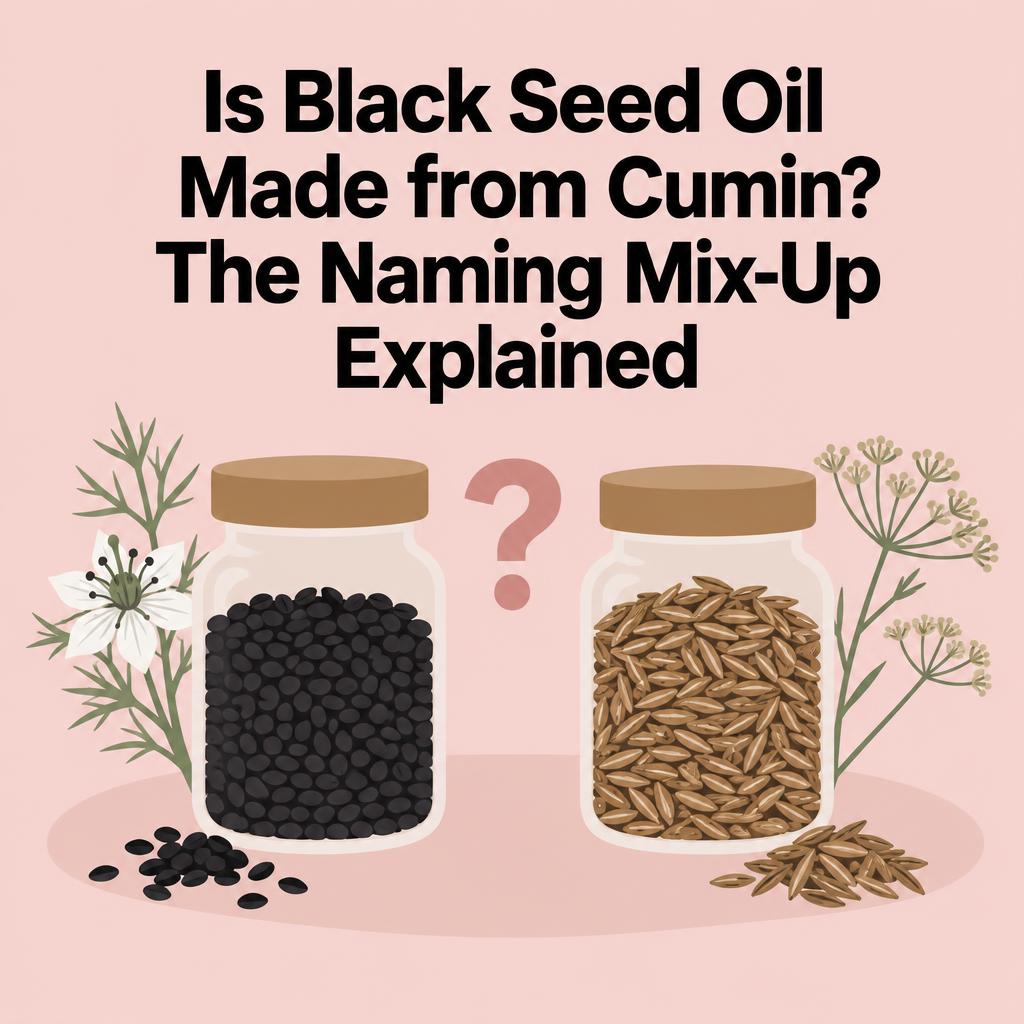
- The seeds look similar at a glance but come from unrelated plants.
The short answer: no
Black seed oil is pressed from the seeds of Nigella sativa, a flowering plant in the buttercup family. It is not made from cumin (Cuminum cyminum) or caraway (Carum carvi), which are entirely different plants in the carrot family. You could not make black seed oil from the cumin in your spice rack if you tried.
Where the confusion came from
Nigella seeds are small, black and crescent-shaped, and to early traders they looked like dark cumin seeds. Nicknames like black cumin, black caraway and Roman coriander spread across languages and centuries, and they stuck. Even today, product listings and recipes use these names interchangeably, which keeps the mix-up alive.
How the plants differ
Nigella sativa is an annual with pale blue or white flowers and a seed pod full of black seeds. Cumin is a different annual with umbrella-like flower clusters and ridged, brownish seeds. They share no close botanical relationship, and their oils have completely different chemistry: black seed oil's signature compound, thymoquinone, is not a feature of cumin oil.
Why it matters when buying
If you buy black seed oil wanting its researched benefits, you need the real Nigella sativa oil. The definitive check is the Latin name on the label: it should say Nigella sativa. Terms like black cumin seed oil are fine as long as that Latin name appears. If a label only says cumin oil, it is a different product.
Other names for the same oil
You may also see black seed oil sold as kalonji oil, nigella oil, black cumin seed oil or black caraway seed oil. All refer to Nigella sativa when labelled correctly. The variety of names is confusing, but they point to one oil with one research base.
A quick buying checklist
Check for the Latin name Nigella sativa, cold-pressed extraction, a stated thymoquinone content and dark or opaque packaging. Those four details tell you more than any name on the front of the bottle.
The bottom line
Black seed oil is not made from cumin; it comes from Nigella sativa, and the cumin nicknames are a historical naming accident. When buying, trust the Latin name on the label, not the nickname on the front.
Medical reviewer
Dr Usha Venkataraman
MBBS, FRACGP
Read this next
Black Seed Oil
Black Seed Oil: Benefits, Uses and Side Effects (Complete Guide)
Black seed oil has been used for over two thousand years and is now backed by dozens of human trials. Here is the complete picture: benefits, uses and safety.
Black Seed Oil
Black Seed Oil Benefits: 10 Reasons People Take It
From immune support to skin and hair, here are the ten most researched and most loved reasons people take black seed oil every day.
Black Seed Oil
Black Cumin Seed Oil: A Complete Guide
Black cumin seed oil is simply another name for black seed oil, from Nigella sativa. Here is what the name means, what the oil does, and how to use it.
Black Seed Oil
Black Seed Oil Capsules vs Liquid: Which Is Better?
Capsules and liquid deliver the same black seed oil, but they suit different people. Here is an honest comparison to help you pick.
Black Seed Oil
Cold-Pressed Black Seed Oil: Why the Extraction Method Matters
Cold-pressed is more than a marketing phrase for black seed oil. Here is how extraction affects the thymoquinone and quality of the oil you buy.
Black Seed Oil
What Is Black Seed Oil Good For? The Most Common Uses
Black seed oil is used for immune support, metabolism, airways, skin, hair and more. Here are the most common uses and what the research says about each.
