Australia
Black Seed Oil Benefits for Women: Australian Evidence Guide
Explore women's interest in Nigella sativa research while separating general metabolic findings from claims about hormones, fertility and pregnancy.
Key takeaways
- General Nigella findings do not automatically establish women-specific benefits.
- A supplement has not been established here as a hormone, fertility or menopause treatment.
- Pregnancy, breastfeeding and medicines require individual suitability advice.
Women may be interested in black seed oil as part of a thoughtful wellbeing routine. Nigella sativa has attracted research on metabolic and inflammatory measures, offering a basis for informed questions rather than only traditional-use claims.
The best starting point is your actual goal. Supporting general wellbeing, managing a diagnosed condition and treating a menstrual symptom are different questions. A finding in one group cannot answer all three.
What is being researched?
A 2023 overview brought together 20 meta-analyses of Nigella sativa and health outcomes. It described encouraging signals across several measures, but most assessed outcomes had low or very low certainty.[1] The preparations and participants varied.
That overview does not establish that all women benefit from a daily oil. It also does not show that a particular retail bottle produces the same outcomes as a study preparation.
Ask whether the participants match you
Age, diagnosis, medicines and life stage can change how relevant a study is. Research in people with a metabolic condition should not be presented as proof of benefit for healthy women or for pregnancy.
Look for women-specific results where that is the question. A pooled result from a mixed group is not evidence that women have a different or larger response.
Hormones, periods and fertility are separate outcomes
The evidence cited here does not establish black seed oil as a treatment for irregular periods, infertility, PCOS or menopause symptoms. A change in a laboratory marker is not the same as a measured improvement in cycles, conception or quality of life.
If your goal concerns these symptoms, discuss it with a GP rather than choosing a supplement based on a general claim of hormone balance. Keep recommended investigations and treatment in place.
Pregnancy and breastfeeding need particular care
Using a spice in food is not equivalent to taking a concentrated supplement. NCCIH advises discussing supplements with a healthcare professional, particularly during pregnancy, breastfeeding or when taking medicines.[2]
This guide does not establish a safe black seed oil regimen during pregnancy or breastfeeding. Ask your maternity clinician or pharmacist before starting or continuing it; do not infer infant safety from natural origin.
Make the discussion practical
- Describe the health goal you want to address.
- Bring your medicine and supplement list.
- Show the exact ingredient label and serving.
- Ask whether research applies to your circumstances.
- Agree how any unwanted effects or persistent symptoms will be assessed.
Adding several new products together makes it harder to know which change affected you. A simple routine and realistic expectations can make your decisions clearer.
The standalone liquid versus the combination
Antidote Supplements Ethiopian Black Seed Oil is a 50 mL standalone liquid. The separate oregano-combination product is a softgel containing an additional botanical. Neither should be described as a women-specific treatment or assumed equivalent to the studies above.
Antidote Supplements confirms Australian delivery. Choose by the complete formulation and suitability, not by a promise of fertility improvement or guaranteed hormonal effects.
The bottom line
Black seed research offers reasons for measured interest, but women-specific goals need women-specific evidence. Do not treat general metabolic findings as proof of hormone, fertility or menopause benefits. Discuss life stage, medicines and the actual formulation before starting a supplement.
Medical reviewer
Dr Areej Al-Jawazery
MBChB, FRACGP
Read this next
Nigella sativa
Black Seed Oil (Nigella Sativa): The Science Behind the Seed, Australian Guide
Understand how laboratory studies, human trials and systematic reviews contribute to the evidence for Nigella sativa.
Safety
Black Seed Oil Side Effects: Who Should Be Careful in Australia
Review black seed oil suitability, unwanted reactions and medicine discussions without treating natural origin as a safety guarantee.
Black Seed Oil
Black Seed Oil: Benefits, Uses and Side Effects (Complete Guide for Australia)
A practical Australian guide to Nigella sativa, the research behind its benefits, and how to compare liquid oils with softgels.
Ethiopian Black Seed Oil
Ethiopian Black Seed Oil: What Makes It Different? Australian Guide
Explore Ethiopian origin, thymoquinone label claims and the differences between standalone liquid and combination softgels.
Black Seed Oil
Cold-Pressed Black Seed Oil: Why the Extraction Method Matters in Australia
Understand mechanical pressing, heat and processing claims, plus the batch information that matters more than a cold-pressed label alone.
Black Seed Oil
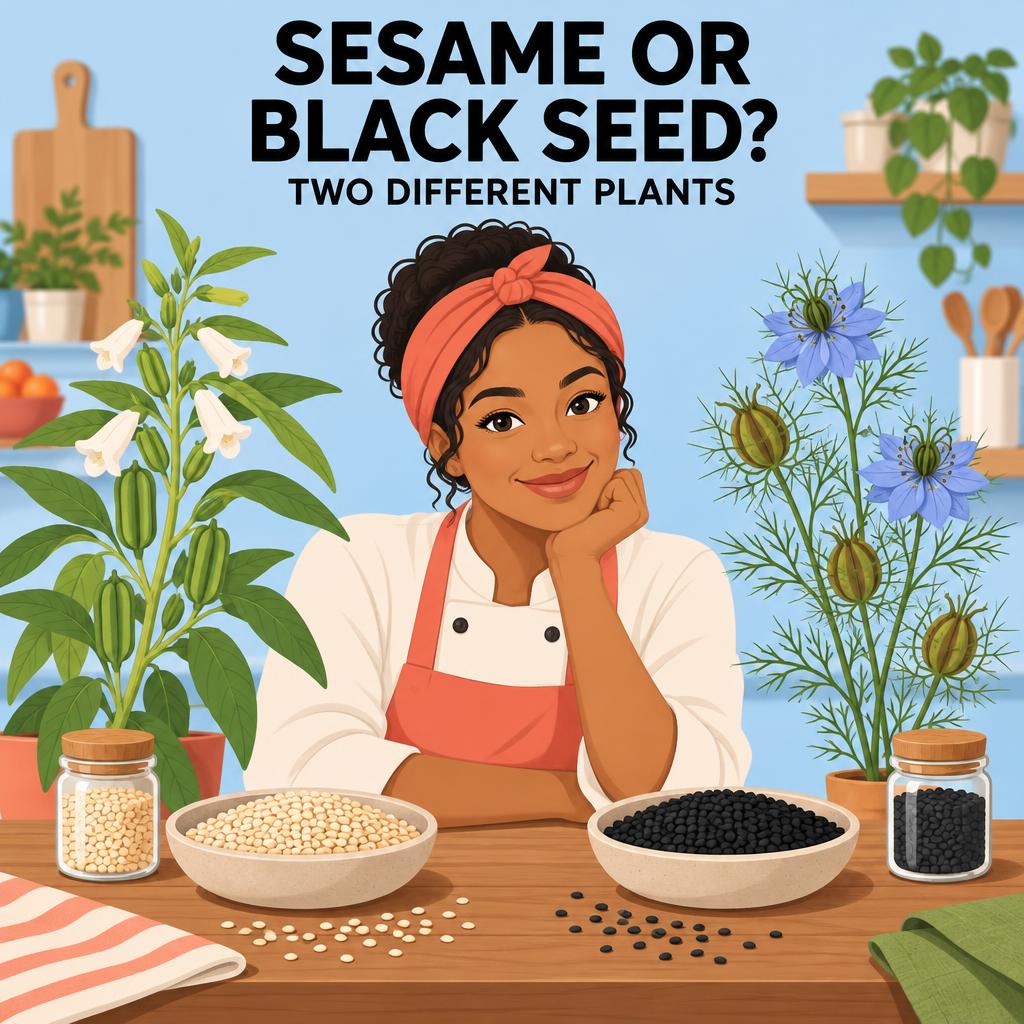
Black Sesame Seed Oil vs Black Seed Oil: What's the Difference? Australian Guide
Black sesame and Nigella sativa are different plants. Compare their names, food uses and product labels before choosing an oil.
