Australia
Black Seed Oil Side Effects: Who Should Be Careful in Australia
Review black seed oil suitability, unwanted reactions and medicine discussions without treating natural origin as a safety guarantee.
Key takeaways
- Suitability depends on the formulation, medicines and individual circumstances.
- Stop and seek advice for unwanted reactions rather than calling them detox.
- Research on Nigella does not prove every retail oil is free of side effects.
A clear product label and a medicine review can make a black seed oil decision more informed. Nigella sativa research offers reasons for interest, but a useful wellbeing choice also needs to suit the person taking it.
This guide focuses on avoidable mix-ups and when to ask for advice. It does not assign an unverified side-effect rate or promise that natural oils are safe for everyone.
Identify the complete product
Standalone liquid oil, whole seed, seed powder and combination capsules have different formulations. Check the intended route, full ingredients and labelled serving. Additional botanicals and capsule-shell ingredients also matter.
Do not assume an oral label establishes a cosmetic application method. An oral supplement used on the face or scalp may create a different exposure, and this guide provides no topical dilution regimen.
What should you do about an unwanted reaction?
Digestive discomfort or an allergic-type reaction can be reasons to stop and seek advice. The sources cited here do not quantify these risks for the Antidote Supplements retail oil. Keep the package so a clinician can identify exactly what you took.
A rash, persistent discomfort or feeling unwell should not be described as detoxification. Severe breathing difficulty or collapse requires emergency help; call 000 in Australia.
Medicines and monitoring need discussion
Nigella studies have investigated measures such as blood glucose and blood pressure.[1] These findings are a reason to discuss suitability when using medicines for those conditions, not proof of a predictable interaction or a reason to reduce prescribed treatment yourself.
Tell your pharmacist about all medicines and supplements, including combination products. NCCIH advises discussing supplement use because interactions and individual circumstances can matter.[2] Ask about planned surgery as well.
Pregnancy, breastfeeding and children
The evidence cited here does not establish a safe supplement regimen during pregnancy or breastfeeding. Ask a relevant clinician before starting or continuing a concentrated oil. Culinary exposure does not establish the safety of a supplement serving.
Do not scale an adult serving down to create a child's dose. Age-specific suitability needs professional advice, and a product intended for adults should not be assumed appropriate for children.
Use the actual directions
- Read the route, serving and warnings on your product.
- Do not borrow a dose from a different oil or research preparation.
- Avoid stacking several products containing the same ingredient without advice.
- Store the bottle securely and follow its storage instructions.
- Seek assessment for persistent symptoms instead of increasing the amount.
Taking more is not evidence of greater benefit. If the directions leave timing or duration unclear, ask the supplier or a pharmacist rather than inventing a cycle.
What the research can and cannot establish
The 2023 Nigella overview found mostly low or very low certainty across assessed health outcomes.[1] A benefit signal does not demonstrate long-term safety for all populations. Safety reporting also needs to match the formulation, dose and duration under consideration.
A study preparation is not automatically the retail oil you own. The absence of a reported reaction in one trial cannot guarantee that another product will suit you.
The Antidote Supplements liquid example
Antidote Supplements Ethiopian Black Seed Oil is a 50 mL standalone liquid. Its supplied label suggests 2.5 to 5 mL daily or as directed by a healthcare practitioner. This is a product-specific direction, not personalised medical advice.
The separate oregano softgels add another botanical and have their own serving information. Antidote Supplements confirms Australian delivery; neither shipping availability nor a TQ claim establishes that a product is suitable for every individual.
The bottom line
Use the exact product directions and discuss medicines, life stage and health conditions before starting black seed oil. Stop for unwanted reactions and seek urgent help when needed. Natural origin, a constituent claim or a positive study finding cannot guarantee individual safety.
Medical reviewer
Dr Hossein Samaei
MD, FRACGP
Read this next
Black Seed Oil
Black Seed Oil Benefits for Women: Australian Evidence Guide
Explore women's interest in Nigella sativa research while separating general metabolic findings from claims about hormones, fertility and pregnancy.
Nigella sativa
Black Seed Oil (Nigella Sativa): The Science Behind the Seed, Australian Guide
Understand how laboratory studies, human trials and systematic reviews contribute to the evidence for Nigella sativa.
Black Seed Oil
Black Seed Oil: Benefits, Uses and Side Effects (Complete Guide for Australia)
A practical Australian guide to Nigella sativa, the research behind its benefits, and how to compare liquid oils with softgels.
Ethiopian Black Seed Oil
Ethiopian Black Seed Oil: What Makes It Different? Australian Guide
Explore Ethiopian origin, thymoquinone label claims and the differences between standalone liquid and combination softgels.
Black Seed Oil
Cold-Pressed Black Seed Oil: Why the Extraction Method Matters in Australia
Understand mechanical pressing, heat and processing claims, plus the batch information that matters more than a cold-pressed label alone.
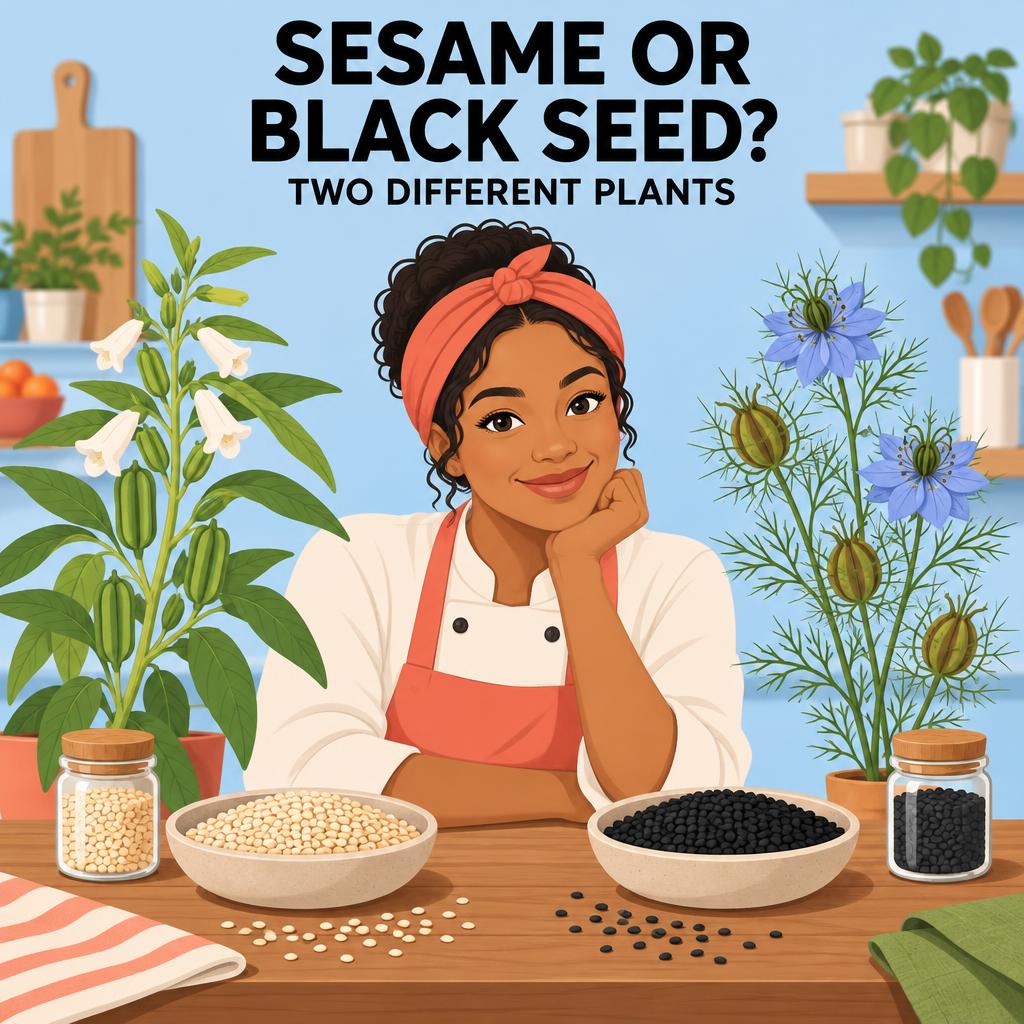
Black Seed Oil
Black Sesame Seed Oil vs Black Seed Oil: What's the Difference? Australian Guide
Black sesame and Nigella sativa are different plants. Compare their names, food uses and product labels before choosing an oil.
