Australia
Black Sesame Seed Oil vs Black Seed Oil: What's the Difference? Australian Guide
Black sesame and Nigella sativa are different plants. Compare their names, food uses and product labels before choosing an oil.
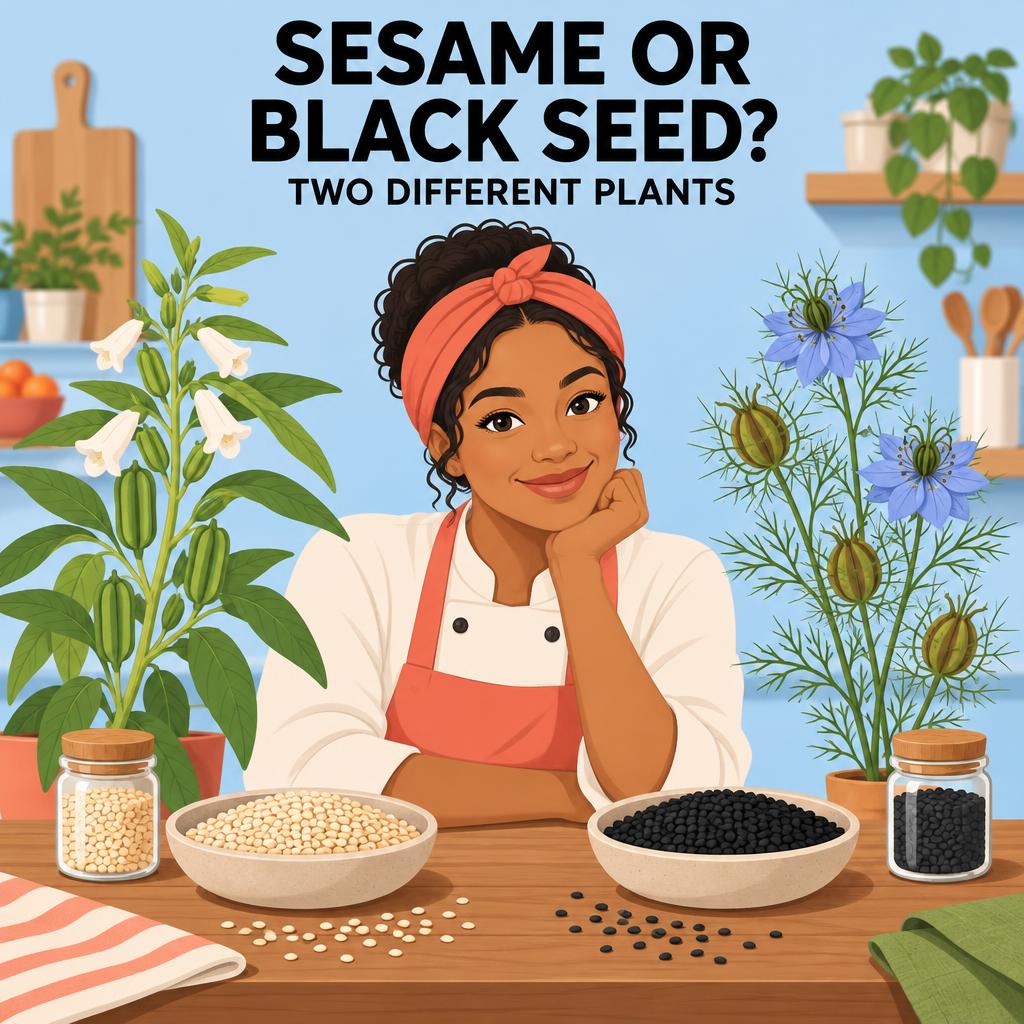
Key takeaways
- Black sesame oil comes from sesame, not Nigella sativa.
- A shared dark seed colour does not make two oils interchangeable.
- Check botanical names and intended use, especially if you have a sesame allergy.
Black sesame oil and black seed oil offer different ingredients for different purposes. Sesame products are familiar in many kitchens, while Nigella sativa oil is often discussed in botanical supplement research. Understanding the names helps you find the product you actually want.
The confusion is understandable: both names mention a dark seed. But colour is not botanical identity. This Australian guide compares the two plants, not two brands of the same oil.
Which plants do the names refer to?
Sesame is Sesamum indicum. Nigella black seed is Nigella sativa. Kew's botanical records identify them as distinct species in different plant families.[1][2] Black sesame refers to sesame seeds with a dark seed coat, not another name for Nigella.
Black cumin can be another common name for Nigella, though common names vary. That does not turn black sesame into black cumin. The scientific name on the ingredient list is the most useful way to resolve the naming issue.
Compare the intended use rather than seed colour
| Label description | Plant to look for | Practical question |
|---|---|---|
| Black sesame seed oil | Sesamum indicum | Is it a food oil, cosmetic or another preparation? |
| Black seed oil | Nigella sativa | Is it an oral supplement, food product or external-use preparation? |
| Black seed oil with oregano | Nigella plus the declared oregano ingredient | How much of each botanical is in the serving? |
The name of an oil does not by itself authorise every route of use. Cooking products, oral supplements and cosmetics should be used according to their own directions. A bottle intended for one purpose should not be assumed suitable for another.
What about flavour and kitchen substitution?
Sesame oils are commonly chosen for food flavour, with differences between toasted and other preparations. Nigella oil has its own taste and product directions. If a recipe asks for sesame oil, buying a Nigella supplement does not give you an equivalent ingredient.
Likewise, a culinary sesame oil is not a substitute for the Nigella preparation used in a health study. A recipe preference and a research question need different comparisons.
Do their health claims transfer?
No. Research belongs to the ingredient and preparation actually studied. A 2023 overview examined Nigella sativa systematic reviews, not black sesame products.[3] Its findings cannot be used to claim the same effects for sesame because the seeds are both dark.
The overview also found mostly low or very low certainty for assessed outcomes. It supports scientific interest in Nigella, not a conclusion that black seed oil is a proven treatment or universally healthier than sesame oil.
Allergy and label checks
If you have a sesame allergy, do not assume a sesame-derived oil is suitable just because it is an oil. Discuss the specific product with your clinician and check its ingredient and allergen information. Nigella is a different plant, but that does not guarantee freedom from cross-contact or other allergens.
- Read the scientific ingredient name.
- Check whether the oil is blended with another oil.
- Read the intended-use directions.
- Check allergen and cross-contact information relevant to you.
- Ask the seller if the front label and ingredient list seem inconsistent.
Which oil does Antidote Supplements sell?
Antidote Supplements' standalone Ethiopian Black Seed Oil is a 50 mL Nigella oil, not a black sesame oil. Its separate combination product is black seed oil with oregano extract in softgels. The brand sold on this site is not presented as a sesame-oil replacement.
The owner confirms delivery to Australia. Check the current label and checkout details rather than inferring ingredients from a bottle colour or an illustration. The supplied liquid directions describe oral use, not a topical sesame-style application.
Choose for the purpose you have in mind
For cooking, select a suitable food product with the flavour you want. For a botanical supplement, identify the actual plant and discuss suitability if you take medicines or have a condition. Persistent symptoms deserve medical assessment rather than a switch between similarly named oils.
The bottom line
Black sesame and black seed oil come from different plants. Read Sesamum indicum versus Nigella sativa on the label and choose by intended use, allergies and ingredients. Research on one oil does not establish the effects of the other.
Medical reviewer
Dr Shasi Prahalapan
MBBS
Read this next
Comparisons
Black Seed Oil vs Black Cumin Seed Oil: Are They the Same Thing? Australia Guide
When two different product names identify the same ingredient, compare processing, serving amounts and added oils instead.
Black Seed Oil
Black Seed Oil: Benefits, Uses and Side Effects (Complete Guide for Australia)
A practical Australian guide to Nigella sativa, the research behind its benefits, and how to compare liquid oils with softgels.
Ethiopian Black Seed Oil
Ethiopian Black Seed Oil: What Makes It Different? Australian Guide
Explore Ethiopian origin, thymoquinone label claims and the differences between standalone liquid and combination softgels.
Black Seed Oil
Cold-Pressed Black Seed Oil: Why the Extraction Method Matters in Australia
Understand mechanical pressing, heat and processing claims, plus the batch information that matters more than a cold-pressed label alone.
Black Seed Oil
Black Currant Seed Oil vs Black Seed Oil: Don't Mix Them Up in Australia
Learn why black currant berry seed oil and Nigella black seed oil are different ingredients, and how to check the right product label.
How to Use
Black Seed Oil for Hair: How to Use It and What to Expect in Australia
Separate hair conditioning from regrowth claims, choose a product intended for scalp use and know when shedding needs assessment.
Sources
- Royal Botanic Gardens, Kew. Plants of the World Online: Sesamum indicum L. botanical classification.
- Royal Botanic Gardens, Kew. Plants of the World Online: Nigella sativa L. botanical classification.
- Li Z, et al. Nigella sativa and health outcomes: An overview of systematic reviews and meta-analyses. Frontiers in Nutrition. 2023;10:1107750.
