United States
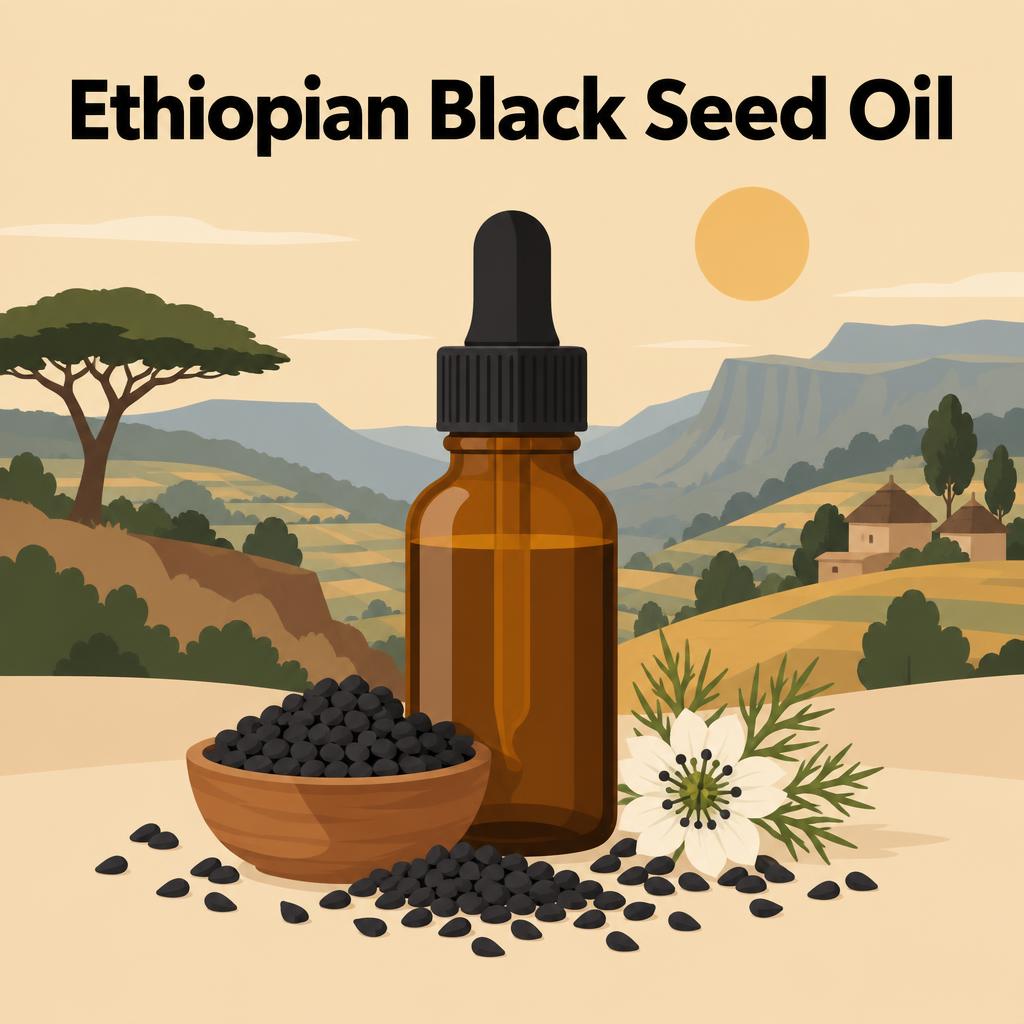
Ethiopian Black Seed Oil: What Makes It Different?
Ethiopian black seed oil has a reputation as the most potent in the world. Here is why the origin matters and what to look for on the label.
Key takeaways
- Ethiopian Nigella sativa seed is prized for naturally high thymoquinone levels.
- Growing conditions and seed variety drive potency more than processing does.
- The best Ethiopian oils reach naturally occurring thymoquinone levels up to around 4 to 5 per cent.
- Look for the origin stated on the label alongside cold-pressed extraction.
Why origin matters for black seed oil
Black seed oil is only as good as the seed it is pressed from, and Nigella sativa grown in different regions produces oil with noticeably different thymoquinone levels. Ethiopia's highland climate, altitude and soil produce seeds that are widely regarded as the most potent in the world, and Ethiopian black seed oil has built its reputation on exactly that.
The thymoquinone advantage
Thymoquinone is the signature active compound behind most of black seed oil's researched benefits. Typical commodity black seed oils contain somewhere around 1 to 2 per cent. The best Ethiopian batches reach naturally occurring levels up to around 4 to 5 per cent, meaningfully more per teaspoon. That is a natural property of the seed, not the result of fortification or processing tricks.
How it tastes
Potency you can taste: Ethiopian black seed oil is famously bold, peppery and warming, noticeably stronger than milder oils from other regions. Many long-time users treat that intensity as a mark of authenticity. If the taste is too much, mixing with honey or juice is the classic answer, or choose softgels made with Ethiopian oil.
What to look for on the label
A genuine Ethiopian black seed oil should state the origin clearly, name Nigella sativa, describe cold-pressed extraction, and ideally publish its thymoquinone content. Dark or opaque packaging protects the oil from light. Be cautious of products that say Ethiopian-style or blend undisclosed origins.
Liquid or softgels
Ethiopian black seed oil works in both formats. The liquid dropper bottle suits people who take it by the spoonful or use it on skin and hair. Softgels suit daily oral use, delivering a measured amount with no taste. A combination softgel pairing Ethiopian black seed oil with oregano oil extract covers both oils in one serving.
Is it worth seeking out?
If you are choosing a black seed oil for daily use, starting with the most potent widely available seed source is a sensible default. You take the same amount and get more of the compound the research is about. Combined with cold-pressed extraction and proper packaging, Ethiopian origin is one of the strongest quality signals on a label.
The bottom line
Ethiopian black seed oil earns its reputation through naturally high thymoquinone levels, up to around 4 to 5 per cent in the best batches. Look for the origin stated on the label, cold-pressed extraction and a published thymoquinone content.
Medical reviewer
Dr Areej Al-Jawazery
MBChB, FRACGP
Read this next
Black Seed Oil
Black Seed Oil: Benefits, Uses and Side Effects (Complete Guide)
Black seed oil has been used for over two thousand years and is now backed by dozens of human trials. Here is the complete picture: benefits, uses and safety.
Black Seed Oil
Cold-Pressed Black Seed Oil: Why the Extraction Method Matters
Cold-pressed is more than a marketing phrase for black seed oil. Here is how extraction affects the thymoquinone and quality of the oil you buy.
Black Seed Oil
Organic Black Seed Oil: Is It Worth Paying More?
Organic black seed oil costs more than conventional. Here is what the organic label actually guarantees, what it does not, and how to decide.
Black Seed Oil
Black Seed Oil Benefits: 10 Reasons People Take It
From immune support to skin and hair, here are the ten most researched and most loved reasons people take black seed oil every day.
Black Seed Oil
Black Cumin Seed Oil: A Complete Guide
Black cumin seed oil is simply another name for black seed oil, from Nigella sativa. Here is what the name means, what the oil does, and how to use it.
Black Seed Oil
Black Seed Oil Capsules vs Liquid: Which Is Better?
Capsules and liquid deliver the same black seed oil, but they suit different people. Here is an honest comparison to help you pick.
