United States
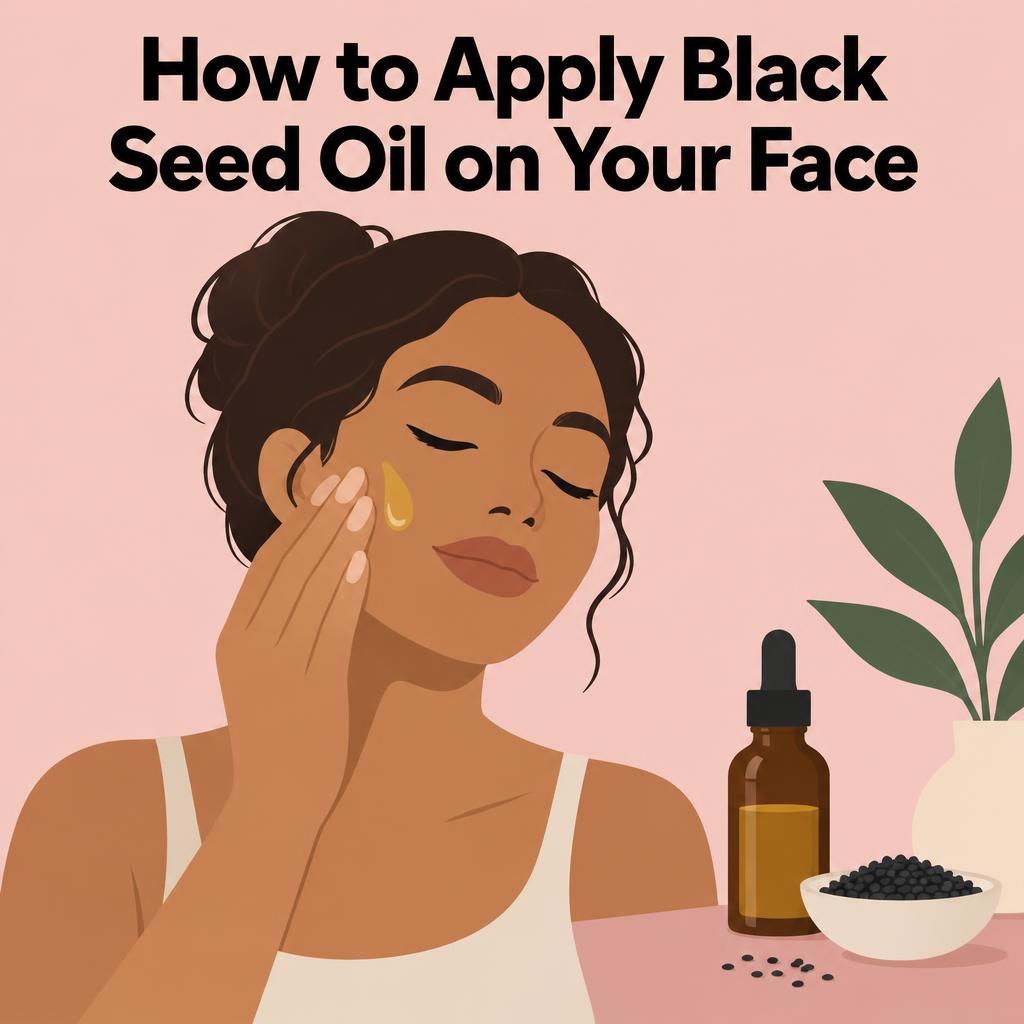
How to Apply Black Seed Oil on Your Face
A few drops of black seed oil can moisturise and calm facial skin. Here is the right way to apply it, step by step.
Key takeaways
- Apply two to three drops to clean, slightly damp skin as the last step of your routine.
- Patch test on your inner arm or jawline before first use.
- Use it at night to start, since facial skin renews during sleep.
- Choose a pure, cold-pressed Nigella sativa oil in dark glass.
Why people put black seed oil on their face
Black seed oil has been a skin remedy for centuries, and its modern fans use it for moisture, calm and a healthy glow. Its fatty acids soften and support the skin barrier, while thymoquinone and other antioxidant compounds suit it to easily irritated, blemish-prone skin. It is a rich oil, so technique matters: a little, applied well, goes a long way.
Step one: patch test
Before the oil goes anywhere near your face, patch test it. Apply a drop to your inner arm or along your jawline and wait twenty-four hours. Redness or itching means this oil is not for your skin. No reaction means you are good to proceed.
Step two: cleanse and leave skin slightly damp
Apply black seed oil after cleansing, while your skin is still slightly damp. Damp skin helps the oil spread thinly and absorb evenly, and it locks in the water already on your skin. This is the single biggest technique upgrade for any facial oil.
Step three: use two to three drops
Warm two to three drops between your palms, then press gently over your face and neck. Pressing, not rubbing, keeps the application even and gentle. Use it as the final step of your routine, after any water-based serums or moisturisers, since oil seals everything beneath it.
Step four: start at night
Begin with night-time use, three or four evenings a week, and see how your skin responds over two weeks. Many people stay at nightly use; some add mornings once they know their skin loves it. If you wear makeup, give the oil ten minutes to settle before applying anything on top.
Choosing the right oil
Facial skin deserves the best bottle you own. Look for pure, cold-pressed Nigella sativa oil in dark glass, with nothing added and a stated thymoquinone content. A 50 ml dropper bottle is ideal for facial use: the dropper keeps dosing to drops, and the oil stays fresh to the last one.
The bottom line
Apply two to three drops of black seed oil to clean, slightly damp skin as the last step of your routine, starting with night-time use after a patch test. Choose a pure cold-pressed oil in dark glass and give it two steady weeks.
Medical reviewer
Dr Chinedu Oraetue
MBBS, FRACGP
Read this next
Black Seed Oil
How to Use Black Seed Oil (Inside and Out)
Black seed oil works two ways: taken by mouth for whole-body support, and massaged into skin and hair. Here is how to do both well.
Black Seed Oil
What Is Black Seed Oil Good For? The Most Common Uses
Black seed oil is used for immune support, metabolism, airways, skin, hair and more. Here are the most common uses and what the research says about each.

How to Use
How to Consume Black Seed Oil: Spoon, Capsule or in Food?
Straight off the spoon, blended into food, or swallowed as a softgel: every way to consume black seed oil, with the pros and cons of each.
Black Seed Oil
Black Seed Oil: Benefits, Uses and Side Effects (Complete Guide)
Black seed oil has been used for over two thousand years and is now backed by dozens of human trials. Here is the complete picture: benefits, uses and safety.

Black Seed Oil
Black Seed Oil Benefits: 10 Reasons People Take It
From immune support to skin and hair, here are the ten most researched and most loved reasons people take black seed oil every day.
Black Seed Oil
Black Cumin Seed Oil: A Complete Guide
Black cumin seed oil is simply another name for black seed oil, from Nigella sativa. Here is what the name means, what the oil does, and how to use it.
Sources
- Hannan MA, et al. Black cumin (Nigella sativa L.): a comprehensive review on phytochemistry, health benefits, molecular pharmacology, and safety. Nutrients. 2021.
- Tavakkoli A, et al. Review on clinical trials of black seed (Nigella sativa) and its active constituent, thymoquinone. Journal of Pharmacopuncture. 2017.
