United Kingdom
What Is Black Cumin Seed Oil Used For?
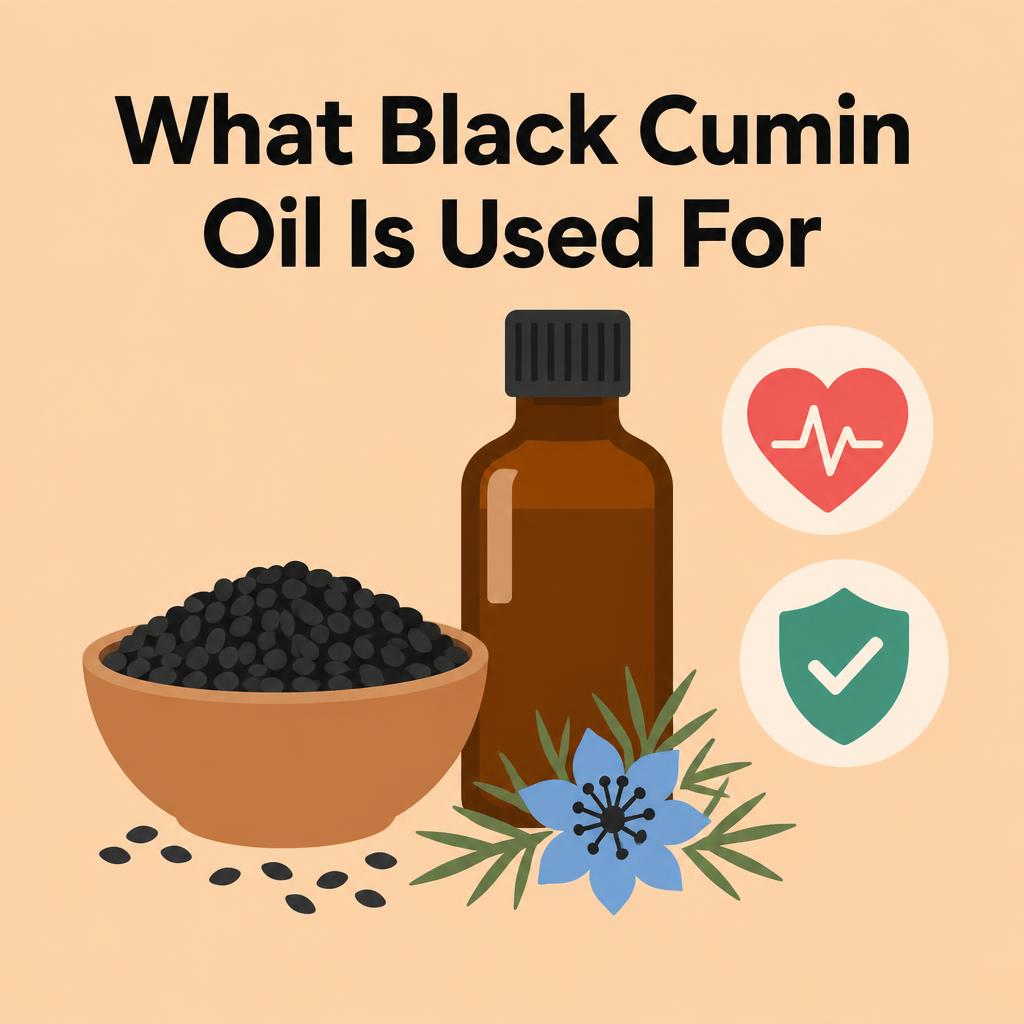
Black cumin seed oil, better known as black seed oil, is used for everything from immune support to skin and hair. Here are its main evidence-backed uses.
Key takeaways
- Black cumin seed oil is another name for black seed oil, from Nigella sativa.
- Its best-studied uses involve metabolic health, airways and inflammation.
- It is also widely used for skin, hair and general immune support.
- Most benefits in studies appeared after eight to twelve weeks of daily use.
First, the name
Black cumin seed oil and black seed oil are the same thing: oil pressed from the seeds of Nigella sativa. The plant is not true cumin, but the nickname stuck, so both names appear on labels and in research. Everything below applies whichever name your bottle uses.
Metabolic health
Some of the strongest human research on black seed oil covers blood sugar and cholesterol. Trials in people with type 2 diabetes and metabolic concerns have found improvements in fasting blood glucose, HbA1c and lipid profiles, typically over eight to twelve weeks of daily use. These are supportive findings, not a replacement for prescribed treatment.
Airways and allergies
Several trials have looked at black seed oil in asthma and allergic rhinitis, with improvements in symptoms and lung function measures. Thymoquinone's soothing effect on inflamed airways is the proposed mechanism, and traditional use for coughs and congestion stretches back centuries.
Inflammation and immune balance
Thymoquinone shows anti-inflammatory and immune-modulating activity across many laboratory and animal studies, and human trials in conditions like rheumatoid arthritis have reported reduced symptoms and inflammatory markers. This broad calming effect on overactive inflammation underlies many of the oil's traditional uses.
Skin and hair
Applied to the skin or taken orally, black seed oil is used for dry, irritated and blemish-prone skin, with small trials in eczema and acne showing promise. For hair, early studies link it with reduced shedding and improved density, and it is a popular scalp oil in its own right.
Digestion and beyond
Traditional uses include bloating, indigestion and general digestive comfort, and early research explores gut microbial balance and even H. pylori. Smaller studies touch blood pressure, weight management and mood. The pattern across all of this is consistent: broad, gentle, multi-system support rather than one dramatic effect.
The bottom line
Black cumin seed oil is used mainly for metabolic health, airways and allergies, inflammation, skin, hair and digestion. The strongest human evidence is in metabolic and airway research, with most benefits appearing after consistent daily use over two to three months.
Medical reviewer
Dr Chinedu Oraetue
MBBS, FRACGP
Read this next
Black Seed Oil
What Is Black Cumin Seed Oil?
Black cumin seed oil is another name for black seed oil. What it is, where it comes from and why the names cause confusion.
Black Seed Oil
What Is Black Seed Oil Good For? The Most Common Uses
The most common reasons people take black seed oil, from daily wellness to skin and hair, with realistic expectations.

Nigella sativa
Black Cumin Seed Oil Benefits: What Studies Show
What human studies and research reviews actually show about black cumin seed oil, explained in plain English.
Black Seed Oil
Black Seed Oil: Benefits, Uses and Side Effects (Complete Guide)
The complete UK guide to black seed oil: what it is, what the research shows, how to take it and who should check first.

Black Seed Oil
Black Seed Oil Benefits: 10 Reasons People Take It
From metabolic support to antioxidant intake, here are the ten most common reasons people take black seed oil every day.
Black Seed Oil
Black Cumin Seed Oil: A Complete Guide
Black cumin seed oil is black seed oil by another name. This guide covers what it is, the research and how to take it.
