United States
When to Take Black Seed Oil: Morning or Night?
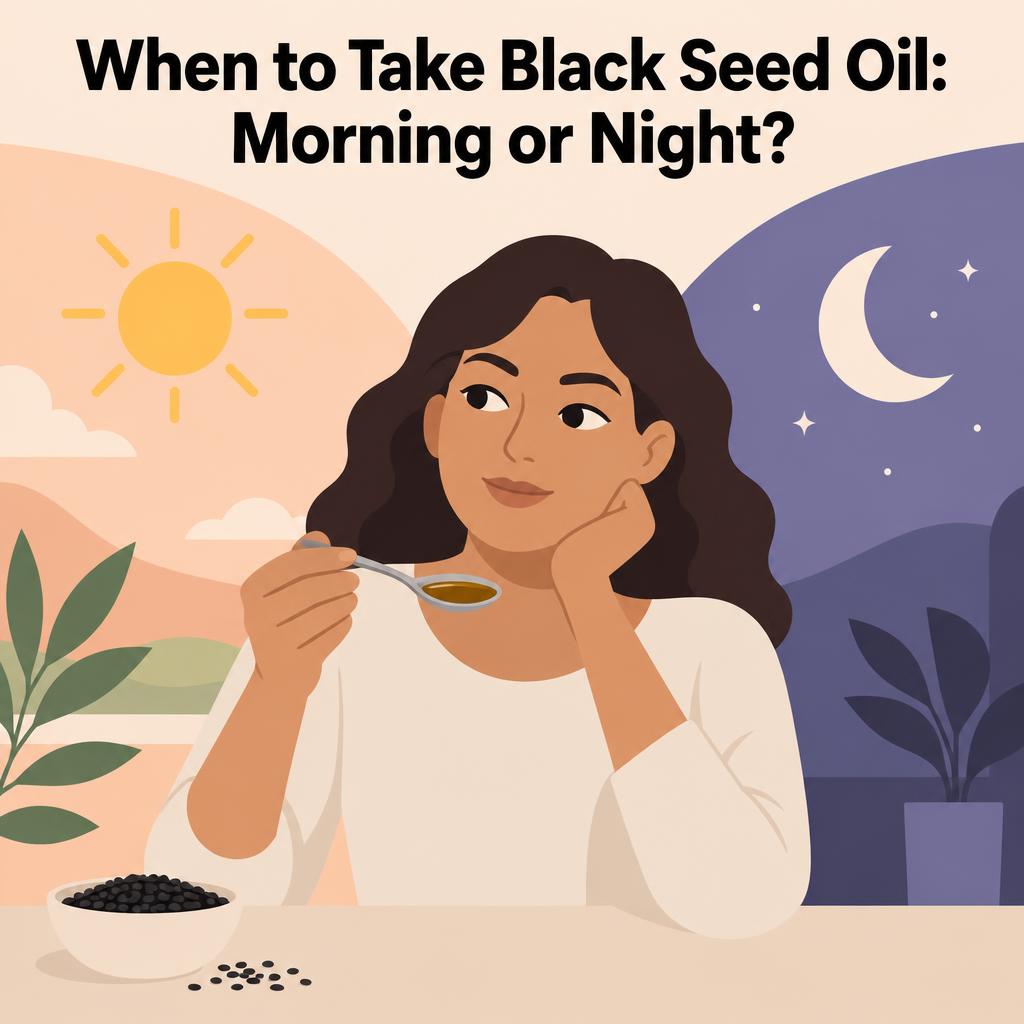
Morning or night? The honest answer is that consistency matters more than timing. Here is how to pick the slot you will actually keep.
Key takeaways
- No trial has shown morning dosing beats night dosing, or the reverse.
- The best time is the meal you never skip, because consistency drives results.
- Always take black seed oil with food for comfort and absorption.
- Splitting the daily serving between two meals is a perfectly good option.
The honest answer
There is no clinical evidence that black seed oil works better in the morning than at night. The human trials behind its benefits measured daily consistency over eight to twelve weeks, not the clock time of each dose. The best time to take black seed oil is the time you will actually take it, every single day.
The case for morning
Morning works well for most people because breakfast is the most reliable meal of the day. Anchoring your serving to breakfast builds the habit fast, and taking the oil early means you never reach bedtime realising you forgot. If you use black seed oil for daytime energy and general wellness support, morning is a natural fit.
The case for night
Some people prefer the evening, especially those who find the oil mildly calming or who pair it with a wind-down routine. Others simply digest it more comfortably with dinner, their largest meal. If your evenings are more predictable than your mornings, night dosing is the smarter choice.
Why food matters more than the clock
Whatever slot you choose, take black seed oil with a meal. Food prevents the mild stomach upset some people notice on an empty stomach, and dietary fat helps your body absorb the oil's fat-soluble compounds, including thymoquinone. This single habit matters more than the morning-versus-night question.
The split-serving option
You do not have to take your full daily amount at once. Splitting one teaspoon at breakfast and one at dinner suits people who find a full two-teaspoon serving heavy, and it keeps the oil's compounds in your system across the day. Both patterns appear in traditional use.
Building a habit that lasts
Pick your slot, put the bottle where you will see it at that meal, and give the routine eight to twelve weeks before judging results. That is the timeframe the research used, and it is a fair test. A simple daily ritual beats a complicated schedule you abandon by week two.
The bottom line
Take black seed oil whenever you will take it most consistently, morning or night, always with food. Split the serving between two meals if a full serving feels heavy, and judge results after eight to twelve steady weeks.
Medical reviewer
Dr Darren So
FRACGP, DCH, MBBS, BSc, RANZCOG, MYMH
Read this next
Black Seed Oil
How Much Black Seed Oil Should You Take Daily?
The research-backed daily amount of black seed oil is one to two teaspoons. Here is how that translates to drops, softgels and your routine.
Black Seed Oil
How to Take Black Seed Oil: A Simple Guide
The simple way to take black seed oil: how much, when, with what, and the small tricks that make the daily habit effortless.
Black Seed Oil
How to Take Black Cumin Seed Oil
Black cumin seed oil is black seed oil by another name. Here is the simple daily routine: how much, when, and how to make it stick.
Black Seed Oil
Black Seed Oil: Benefits, Uses and Side Effects (Complete Guide)
Black seed oil has been used for over two thousand years and is now backed by dozens of human trials. Here is the complete picture: benefits, uses and safety.
Black Seed Oil
Black Seed Oil Benefits: 10 Reasons People Take It
From immune support to skin and hair, here are the ten most researched and most loved reasons people take black seed oil every day.
Black Seed Oil
Black Cumin Seed Oil: A Complete Guide
Black cumin seed oil is simply another name for black seed oil, from Nigella sativa. Here is what the name means, what the oil does, and how to use it.
Sources
- Hannan MA, et al. Black cumin (Nigella sativa L.): a comprehensive review on phytochemistry, health benefits, molecular pharmacology, and safety. Nutrients. 2021.
- Tavakkoli A, et al. Review on clinical trials of black seed (Nigella sativa) and its active constituent, thymoquinone. Journal of Pharmacopuncture. 2017.
